- +1-315-215-1633
- sales@thebrainyinsights.com

The global upcycled foods market was valued at USD 64 billion in 2024 and grew at a CAGR of 8% from 2025 to 2034. The market is expected to reach USD 138.17 billion by 2034. The increasing demand for sustainability will drive the growth of the global upcycled foods market.
Upcycled foods are the food products which are manufactured using the ingredients that could have ended up as waste but are not harmful and unhealthy to consume. Such ingredients may be leftover food, manufacturing by-products, or normally discarded edible food parts, such as fruit peels, pulp or spent grains. The intention of upcycled food is to minimize food waste as well as to enhance sustainability and gain maximum value using the food supply system. Upcycling is innovation-driven conversion of ingredients into value-added products with the involvement of culinary creativity. Such a solution fits into the patterns of the circular economy. The list of products covered by the upcycled food industry is broad and includes food ingredients or snacks, canned food/drinks, condiments, baking goods, pet food, and supplements. As an example, one can upcycle the pulp of juiced fruits and vegetables into flours. Upcycling of food is often being implemented in many startups and existing food companies in order to create new food products that match the demands of environmentally friendly consumers. Certification organizations like the Upcycled Food Association provide certification programs to make it easy for consumers to determine products containing verified upcycled ingredients to increase transparency and consumer confidence. The upcycled food market has been a major beneficiary in the face of the growing global concern over food loss and waste which are estimated to take up more than a third of all the food produced. This problem can be resolved by upcycled foods as they provide a scalable solution to this problem and aid sustainable agriculture, reduce greenhouse gases, and help with food security. Countries, non-governmental organizations, and even businesses are helping to push such initiatives and innovations to include upcycled ingredients in the mass food supply.
Get an overview of this study by requesting a free sample
The increasing need to reduce waste and achieve sustainability – Innovation is one of the drivers of product development. Food innovators and entrepreneurs are getting more and more creative in the processing of by-products and excess products, including fruit pulp, vegetable peels or spent grains, to create new, value-added products. This not only assists in minimizing waste but also come up with new tastes and nutritional values making it attractive for the present-day consumers. The increased attention to sustainability as a factor in the form of environmental, social, and governance (ESG) objectives are being embraced by many food businesses and compel them to practice the principles of the circular economy through reducing wastes and increasing resource utilization. With such ideas, the upcycled foods are an appropriate addition to these goals, as the companies can demonstrate their green-friendly ways of doing business. This can further build brand-loyalty and will result in the attraction of an expanding group of shoppers who want significant buying options. New technology in food processing and preservation also makes upcycling more reliable and scalable in that food waste can be safely converted into marketable ingredients. Companies can also cut on the costs of raw materials thus getting better profit margins without affecting the quality of the product because they will be able to use what could otherwise have gone to waste.
Production and supply chain inefficiencies – Product quality and continuity are one large obstacle. The use of by-products or excess ingredients in upcycled foods can be variable in terms of composition terms and freshness since they are based on by-products, so it may be challenging to guarantee standardization in taste, texture, and the nutritional content of the final product. This fluctuation makes it difficult to manufacturers that have to cope with consumer demands and governmental regulations. The chain of upcycled ingredients supply is also very difficult. Processing and sorting of food waste or excess products takes specific logistics and infrastructure thus, making it a complex operation and quite expensive. There are technology constraints, which imply that upcycling can only be scalable and efficient to a certain extent. Despite these impressive developments, other processes are still expensive or not working on large scale. This will also make it difficult to compete with the conventional food products basing on price and availability. The additional processing required by upcycled foods, mostly certifications and other quality controls, evidence to increase manufacturing cost against the non-compounds of traditional foods. These expenses can be converted to price increases on the consumers, and this is likely to inhibit the market’s growth.
Evolving consumer behaviours and regulations – the rise in consumer awareness concerning the ecological consequences of food waste is driving the market’s growth. With the increased knowledge about sustainability and climate change, individuals are proactively searching socially responsible products, one of which is upcycled food that will help save this waste and contribute to a more sustainable economy. Any increase in eco-consciousness of consumers is an influential force that persuades brands and retailers into making more upcycled products available. The factor of a government policy and the governmental initiatives is also important. Numerous nations have issued policies and campaigns to decrease the amount of food waste and enhance sustainability within food channels. These policies establish an enabling environment to upcycled food products that promote innovations and offer incentives to companies to use a model of the circular economy. Also, the whole food industry is being driven into sustainability by the issues of climate change. As the production of food is a major contributor to greenhouse gas emission, upcycling enables the mitigation of carbon footprint due to the overall decrease of wastes and maximal utilization of raw materials. There is an additional boost given by non-governmental organizations (NGOs) and certification organizations, which create awareness, contribute to research, and offer certifications which make consumers find credible upcycled products. Such certifications raise the levels of consumer trust and acceptance in the market.
The regions analyzed for the market include North America, Europe, South America, Asia Pacific, the Middle East, and Africa. North America emerged as the most significant global upcycled foods market, with a 37% market revenue share in 2024.
The North American region is the dominant region in the world upcycled foods market because of the combination of better consumer awareness, developed infrastructure, favourable regulatory conditions, and higher involvement of the industry. The increased consciousness contributes to the growth of the market since the shopkeepers are proactive in terms of consuming upcycled foods because they save food and feed into environmental sustainability. This is coupled with the availability of new innovative startups and established food companies that will aggressively invest in research and development which will expand market farther in North America. These enterprises use cutting-edge-technologies to turn food by-products into high-quality, safe, and nutritious ingredients so that upcycled products will be more affordable and attractive. Further North America is well-endowed with supply chains and distribution networks, supermarkets and access to online retailing, which enable effective penetration within the market and availability of the products. The government policies and initiatives in the respective region also play an instrumental role in assisting upcycled foods. Several sustainability initiatives, food waste reduction objectives, and incentives support the implementation of circular economy principles among businesses, which results in creating a favourable environment in the market.
North America Region Upcycled Foods Market Share in 2024 - 37%
www.thebrainyinsights.com
Check the geographical analysis of this market by requesting a free sample
The product type segment is divided into snacks and bars, bakery products, beverages, condiments and sauces, dairy alternatives, pet food, supplements and others. The snacks and bars segment dominated the market, with a market share of around 33% in 2024. Their comparatively easy formulations enable the manufacturers to explore with various by-products to develop creative new designs which are attractive and make the product appealing to the health conscious and environmentally conscious customers. Further, Snacks and Bars serve as the ideal medium of increasing the demand of convenient and easy to carry food items, a pattern that is only picking up pace across continental spreads, with hectic schedules taking precedence. This segment dominance is also aided by consumer preferences of wellness and sustainability. Most consumers are interested in natural, clean label snacks that also helps to avoid the waste of food. The perfect option is upcycled snacks and bars, which not only have nutritional advantages but also take care of reducing food waste. Such a balance between health and sustainability is very appealing to both millennials and Gen Z customers, who are the main target groups in the market that will continue the development. Also, the manufacturing attitude to snacks and bars is that they typically do not have to be as complexly processed as other categories of food, thus upcycling is possible at an industrial level with a greater level of affordability. Distribution and other retail adoption are also eased by the fact that they have a longer shelf life than fresh products.
The source ingredient segment is divided into fruit and vegetable waste, grain and cereal by-products, dairy and meat by-products, coffee and tea waste and others. The fruit and vegetable waste segment dominated the market, with a market share of around 36% in 2024. The source ingredient segment of the global upcycled foods market is dominated by fruit and vegetable waste based on its volume, nutritional content and the capability of being fed into any food product. A large part of food waste worldwide happens to fruits and vegetables, since most of their constituents of peels, pulp, core and parts that are not perfect or are excessive in production are wasted as they are plucked, processed or distributed. This excessive supply of by-products means that the fruit and vegetable waste is a good raw material that upcycling efforts can utilise as a cost-effective source and sustainable source of ingredients to food industries. Fruit and vegetables waste has nutritional value in terms of fibre, vitamins, antioxidants, and other bioactive elements that are very desirable in health-conscious consumer pool. Such nutritional advantages enable the products developed in the upcycled fruit and vegetable waste to meet rising demand in terms of functional food that is wellness-supportive and diet-balancing. Also, the diverse range of fruits and vegetables allows product developers to come up with a versatile array of flavour combinations and textures, raising the innovativeness opportunities of snacks, beverages, bakery products and others. Environmentally, the use of fruit and vegetable waste is a significant part of food waste reduction. Technologies of fruit and vegetable by-product processing have also improved to derive the valuable fraction from fruit and vegetables at an efficient rate without the compromise of either safety or quality of the resulting products. Further, upcycled ingredients made of fruits and vegetables are associated with being natural and wholesome, and hence, more consumer familiarity and acceptability are expected.
The distribution channel segment is divided into supermarkets/hypermarkets, online retail, specialty stores, convenience stores, food service and others. The supermarkets/hypermarkets segment dominated the market, with a market share of around 45% in 2024. The supermarkets and hypermarkets have gained a leading role as the upcycled foods market main channel of distribution because of its large outreach, a variety of consumers, and their ability to promote the normative uptake of sustainable products. These big-box stores have generous shelves and wide demographic, which is why they are perfect to promote their products as upcycled food stores by starting a broad audience. The good supply chain is one of the major strengths of the supermarkets/hypermarkets, and it has facilitated efficient stocking, inventory management, and product visibility. This will help the upcycled food companies to distribute their products efficiently and deliver a coherent level of products, which is important in the aspect of gaining consumer confidence and repeat purchases. Moreover, these retailers spend quite a lot on marketing and in-store promotion, which could be of great assistance to the upcycled food brands because of their awareness campaign that help the consumers to understand how helpful it is to reduce waste and pick the sustainable alternatives. In addition, buying power and relations with manufacturers tend to make supermarkets and hypermarkets to act as industry standard setters and trend shapers in many ways. The fact that they promote upcycled foods gives credibility and indications of market readiness that other channels and consumers are advised to adopt. Lastly, one-stop shopping convenience and comparison of a wide range of items within a single store also makes the supermarkets and hypermarkets consumers favourite in choosing a sustainable solution to shopping needs.
The application segment is divided into human consumption, animal feed and others. The human consumption segment dominated the market, with a share of around 55% in 2024. Within the global market of upcycled foods, human consumption represents the most significant application segment, which is explained by the fact that upcycled ingredients can become an applicable solution to the problem of sustainability and the issue of shifting consumer preferences in the food sector as well. There is an increasing number of consumers who are on the hunt of acquiring products that will not only satisfy them in terms of taste but also save the environment and improve their health. Upcycled foods that can be used directly as human food (e.g. snacks, beverages, bakery and dairy alternatives) specifically respond to such needs by offering food by-products and surplus as a nutritious, attractive, and sustainable foodstuff. To produce less food waste is the trend that is built by means of the awareness of the environmental consequences of food waste and increasing the popularity of sustainable diets. Such two-fold advantage appeals a great deal to the health conscious and environment-sensitive vast consumer base stimulating demand in this market. In addition, the human consumption product innovation area is immense, covering convenient snacks, ready to eat; meal ingredients, and lifestyle compatible functional foods. Such products have better visibility and shelf display location in retail set ups, which will help bring upcycled ingredients into a regular diet. The fact that sustainability can be combined with taste, health, and convenience is what makes human consumption the primary area of application in the global upcycled foods market both by investment of the industry and the attraction to consumers globally.
| Attribute | Description |
|---|---|
| Market Size | Revenue (USD Billion) |
| Market size value in 2024 | USD 64 Billion |
| Market size value in 2034 | USD 138.17 Billion |
| CAGR (2025 to 2034) | 8% |
| Historical data | 2021-2023 |
| Base Year | 2024 |
| Forecast | 2025-2034 |
| Region | The regions analyzed for the market are Asia Pacific, Europe, South America, North America, and Middle East and Africa. Furthermore, the regions are further analyzed at the country level. |
| Segments | Product Type, Source Ingredient, Distribution Channel and Application |
As per The Brainy Insights, the size of the global upcycled foods market was valued at USD 64 billion in 2024 to USD 138.17 billion by 2034.
Global upcycled foods market is growing at a CAGR of 8% during the forecast period 2025-2034.
The market's growth will be influenced by the increasing need to reduce waste and achieve sustainability
Production and supply chain inefficiencies
This study forecasts revenue at global, regional, and country levels from 2021 to 2034. The Brainy Insights has segmented the global upcycled foods market based on below mentioned segments:
Global Upcycled Foods Market by Product Type:
Global Upcycled Foods Market by Source Ingredient:
Global Upcycled Foods Market by Distribution Channel:
Global Upcycled Foods Market by Application:
Global Upcycled Foods Market by Region:
Research has its special purpose to undertake marketing efficiently. In this competitive scenario, businesses need information across all industry verticals; the information about customer wants, market demand, competition, industry trends, distribution channels etc. This information needs to be updated regularly because businesses operate in a dynamic environment. Our organization, The Brainy Insights incorporates scientific and systematic research procedures in order to get proper market insights and industry analysis for overall business success. The analysis consists of studying the market from a miniscule level wherein we implement statistical tools which helps us in examining the data with accuracy and precision.
Our research reports feature both; quantitative and qualitative aspects for any market. Qualitative information for any market research process are fundamental because they reveal the customer needs and wants, usage and consumption for any product/service related to a specific industry. This in turn aids the marketers/investors in knowing certain perceptions of the customers. Qualitative research can enlighten about the different product concepts and designs along with unique service offering that in turn, helps define marketing problems and generate opportunities. On the other hand, quantitative research engages with the data collection process through interviews, e-mail interactions, surveys and pilot studies. Quantitative aspects for the market research are useful to validate the hypotheses generated during qualitative research method, explore empirical patterns in the data with the help of statistical tools, and finally make the market estimations.
The Brainy Insights offers comprehensive research and analysis, based on a wide assortment of factual insights gained through interviews with CXOs and global experts and secondary data from reliable sources. Our analysts and industry specialist assume vital roles in building up statistical tools and analysis models, which are used to analyse the data and arrive at accurate insights with exceedingly informative research discoveries. The data provided by our organization have proven precious to a diverse range of companies, facilitating them to address issues such as determining which products/services are the most appealing, whether or not customers use the product in the manner anticipated, the purchasing intentions of the market and many others.
Our research methodology encompasses an idyllic combination of primary and secondary initiatives. Key phases involved in this process are listed below:
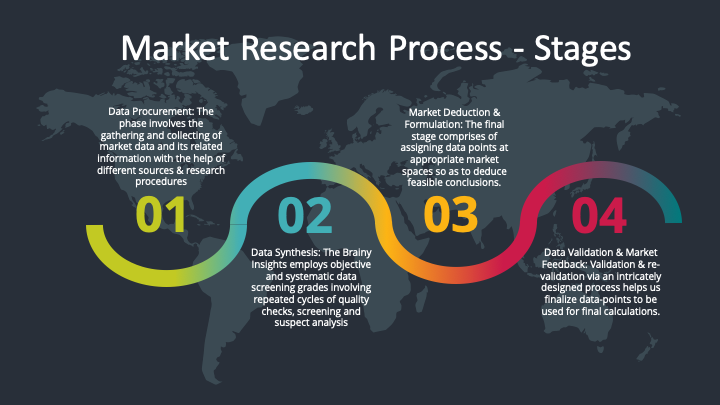
The phase involves the gathering and collecting of market data and its related information with the help of different sources & research procedures.
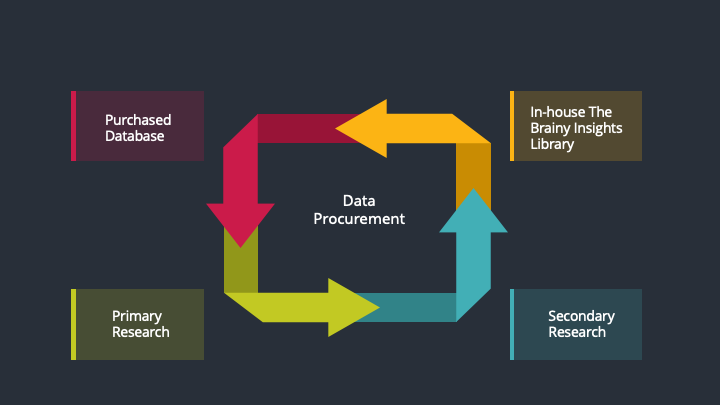
The data procurement stage involves in data gathering and collecting through various data sources.
This stage involves in extensive research. These data sources includes:
Purchased Database: Purchased databases play a crucial role in estimating the market sizes irrespective of the domain. Our purchased database includes:
Primary Research: The Brainy Insights interacts with leading companies and experts of the concerned domain to develop the analyst team’s market understanding and expertise. It improves and substantiates every single data presented in the market reports. Primary research mainly involves in telephonic interviews, E-mail interactions and face-to-face interviews with the raw material providers, manufacturers/producers, distributors, & independent consultants. The interviews that we conduct provides valuable data on market size and industry growth trends prevailing in the market. Our organization also conducts surveys with the various industry experts in order to gain overall insights of the industry/market. For instance, in healthcare industry we conduct surveys with the pharmacists, doctors, surgeons and nurses in order to gain insights and key information of a medical product/device/equipment which the customers are going to usage. Surveys are conducted in the form of questionnaire designed by our own analyst team. Surveys plays an important role in primary research because surveys helps us to identify the key target audiences of the market. Additionally, surveys helps to identify the key target audience engaged with the market. Our survey team conducts the survey by targeting the key audience, thus gaining insights from them. Based on the perspectives of the customers, this information is utilized to formulate market strategies. Moreover, market surveys helps us to understand the current competitive situation of the industry. To be precise, our survey process typically involve with the 360 analysis of the market. This analytical process begins by identifying the prospective customers for a product or service related to the market/industry to obtain data on how a product/service could fit into customers’ lives.
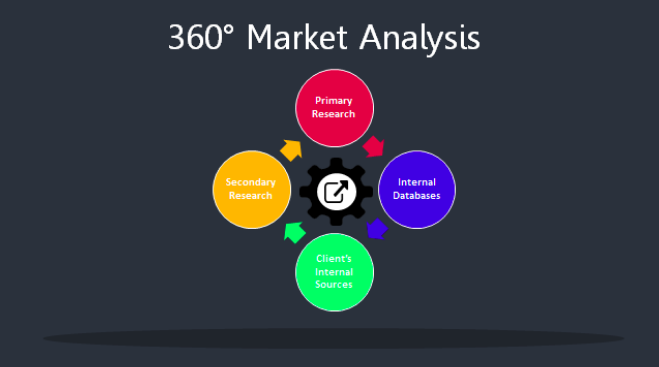
Secondary Research: The secondary data sources includes information published by the on-profit organizations such as World bank, WHO, company fillings, investor presentations, annual reports, national government documents, statistical databases, blogs, articles, white papers and others. From the annual report, we analyse a company’s revenue to understand the key segment and market share of that organization in a particular region. We analyse the company websites and adopt the product mapping technique which is important for deriving the segment revenue. In the product mapping method, we select and categorize the products offered by the companies catering to domain specific market, deduce the product revenue for each of the companies so as to get overall estimation of the market size. We also source data and analyses trends based on information received from supply side and demand side intermediaries in the value chain. The supply side denotes the data gathered from supplier, distributor, wholesaler and the demand side illustrates the data gathered from the end customers for respective market domain.
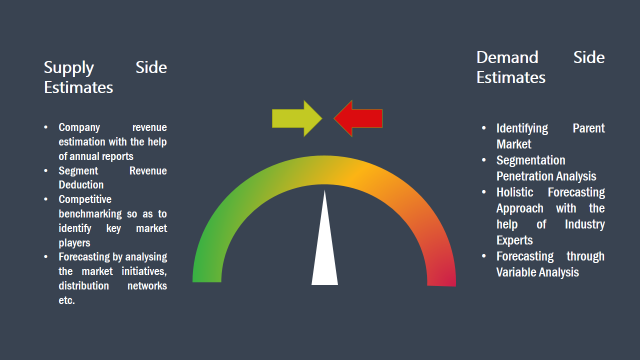
The supply side for a domain specific market is analysed by:
The demand side for the market is estimated through:
In-house Library: Apart from these third-party sources, we have our in-house library of qualitative and quantitative information. Our in-house database includes market data for various industry and domains. These data are updated on regular basis as per the changing market scenario. Our library includes, historic databases, internal audit reports and archives.
Sometimes there are instances where there is no metadata or raw data available for any domain specific market. For those cases, we use our expertise to forecast and estimate the market size in order to generate comprehensive data sets. Our analyst team adopt a robust research technique in order to produce the estimates:
Data Synthesis: This stage involves the analysis & mapping of all the information obtained from the previous step. It also involves in scrutinizing the data for any discrepancy observed while data gathering related to the market. The data is collected with consideration to the heterogeneity of sources. Robust scientific techniques are in place for synthesizing disparate data sets and provide the essential contextual information that can orient market strategies. The Brainy Insights has extensive experience in data synthesis where the data passes through various stages:
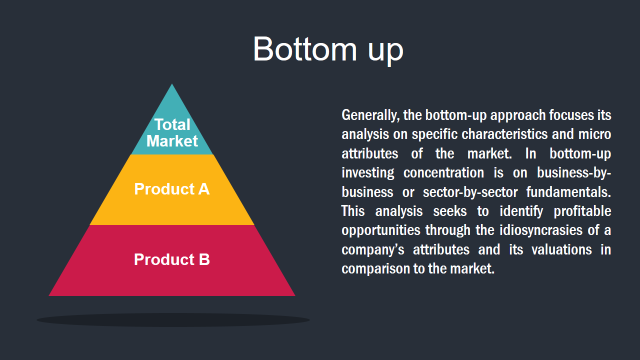
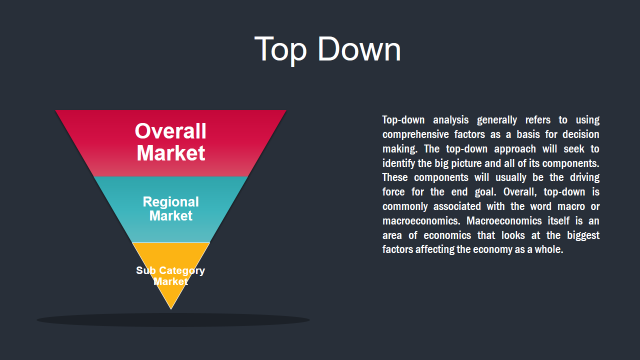
Market Deduction & Formulation: The final stage comprises of assigning data points at appropriate market spaces so as to deduce feasible conclusions. Analyst perspective & subject matter expert based holistic form of market sizing coupled with industry analysis also plays a crucial role in this stage.
This stage involves in finalization of the market size and numbers that we have collected from data integration step. With data interpolation, it is made sure that there is no gap in the market data. Successful trend analysis is done by our analysts using extrapolation techniques, which provide the best possible forecasts for the market.
Data Validation & Market Feedback: Validation is the most important step in the process. Validation & re-validation via an intricately designed process helps us finalize data-points to be used for final calculations.

The Brainy Insights interacts with leading companies and experts of the concerned domain to develop the analyst team’s market understanding and expertise. It improves and substantiates every single data presented in the market reports. The data validation interview and discussion panels are typically composed of the most experienced industry members. The participants include, however, are not limited to:
Moreover, we always validate our data and findings through primary respondents from all the major regions we are working on.
















































Free Customization
Fortune 500 Clients
Free Yearly Update On Purchase Of Multi/Corporate License
Companies Served Till Date