- +1-315-215-1633
- sales@thebrainyinsights.com

The global solar energy market was valued at USD 236 billion in 2024 and grew at a CAGR of 13% from 2025 to 2034. The market is expected to reach USD 801.11 billion by 2034. The increasing energy demands will drive the growth of the global solar energy market.
Solar energy is renewable energy that is a result of the radiations of the sun. It is among the most renewable and major sources of energy on earth. The sun itself produces such enormous quantity of energies in the shape of electromagnetic radiations and this energy can be harnessed and converted using some technologies into forms that can be utilized to generate electricity or harnessing heat. Solar energy can take any of two dominant forms, that is, photovoltaic (PV) and solar thermal. A type of photovoltaic device that directly converts sunlight to electricity is known as a photovoltaic system. Sunlight falling on these panels provides power in the form of electric current by a process known as photovoltaic effect. These systems are typically applied in housing rooftops, solar farms and transportable solar gadgets. Conversely, solar thermal systems only maintain sunlight by focusing using mirrors or lenses and extracts heat and uses it to steam generating electricity or domestic sectors by offering direct heat. The exploitation of solar energy has received considerable attention with the reason being; that solar has environmental advantages and has the capacity of reducing reliance on fossil energy. In contrast to the traditional sources of energy, solar energy does not produce neither greenhouse gases, nor pollutants as there is no production process that accompanies the use of this energy source. Also, the development of new solar panels, energy storage devices, and governmental policies contributed to the increased availability of affective solar energy and its affordability. The importance of solar infrastructure is so high that countries all over the world are investing in this field to satisfy the increasing energy needs sustainably and fight with climate change.
Get an overview of this study by requesting a free sample
Technological advancements and the increasing popularity of solar energy as a renewable source of power – The development of solar technologies with a specific reference to photovoltaic (PV) cells, which has achieved remarkable success in terms of efficiency, durability, and cost-efficiency is among the major, internal set-forces. The creation of more efficient processes of manufacture such as monocrystalline panels and bifacial panels has allowed solar energy systems to be more reliable and effective than ever. At the same time, the recent drop in the prices of the solar components, including solar panels, inverters, and mounting systems, has had the effect of a sharp fall in the total price of the whole systems, making the solar energy available to a larger market base. Moreover, the improvement of energy storing technologies like lithium-ion batteries has been possible to gather the surplus solar energy to use within the times it was not sunny and solve the problem of intermittency and make solar systems more reliable. The level of investment into the solar installation by homeowners, businesses, and industrial users to minimize the use of traditional grid supply power and hedge against the fluctuation of electricity cost is growing. This also provides energy security particularly in hard to reach or underserved areas. In addition, solar energy systems, as well as being highly scalable through varying per-capita demands, can be highly modular and therefore be deployed on all levels, including rooftop residential, to large-scale utility solar farms. Finally, the cost of operation and maintenance is low, with long life duration of the solar installation bringing in tempting returns with time.
Technical and financial limitations – Regardless of the huge disparity in prices experienced over the years, the use of substantial amounts of money up-front to buy and install the solar panels, inverters, and other devices necessary is still the key hindrance to many consumers and businesses. This upfront cost is prohibitory. The second important limitation is the intermittent nature of the solar energy production that relies greatly on weather conditions, time, and seasonal fluctuations. These fluctuations cause random production of power thus it becomes hard to depend completely on solar energy without proper storage systems. Even though battery technologies are on the rise, the existing energy storage systems are costly and have rather little storage capacities, unable to be readily used and influence the general reliability of a solar source. Also, the physical space of a solar installation needs substantial space especially the mass scale solar farms these are difficult to give in and around urban regions due to the compact urban region and scarcity of lands. Efficiency of solar panels is another constraint: although efficiency keeps rising, given current rates, many of the panels only capture a subset of sunlight, and transform it into electricity only, thus lowering its output in regions that are not as sunny.
Supportive government policies and incentives – Government policy and incentives are among the most important of drivers. Solar power has been subsidized, but to varying degrees, by many countries through feed-in tariffs, tax credits, net metering and subsidies. These friendly policies reduce the upfront financial burden, enhance the growth of solar projects being undertaken by homeowners, companies and utilities. Moreover, environmental guidelines and international climate treaties, which include the Paris Agreement, fascinate countries to decrease their carbon emissions, so the movement towards clean sources of energy, including solar energy, increases. Number one among the factors is the increasing costs of electricity that act as a critical factor in propelling consumers to solar energy. Solar power is a form of energy that is affordable as the rates of utility rise, and it has the capacity of saving long term energy bills especially in those places that have high energy rates and incidence of sunlight. Rising awareness and concern on climate change and green issues also increase the demand of solar energy. People and companies are becoming more conscious of matching their energy consumption engagements with overall sustainability priorities, which led to increased investment into renewable energy infrastructure. In addition, the trend of fast conducting urbanization and industrialization in the developing economies like India and China is generating serious intensity in evolution that the traditional fossil-based power production cannot supply in a sustainable manner. The increasing demand can be served by solar energy because it is scalable and environmentally friendly.
The regions analyzed for the market include North America, Europe, South America, Asia Pacific, the Middle East, and Africa. Asia Pacific emerged as the most significant global solar energy market, with a 39% market revenue share in 2024.
Asia Pacific has the largest market share of the global solar energy industry because the region has the right climatic environment, government assistance, high rate of industrialization, and increasing power and energy consumption. Countries such as China, India, Japan, South Korea and Australia have brought about great contribution to the leadership in the region with Chinese being the greatest producer, consumer and exporter of solar energy technology in the world. The excess of China is caused by tremendous investments in solar production, huge solar parks, subsidy policies, quotas of renewable energy, and strategic actions within the Five-Year Programs. In the same light, India has greatly expanded its solar potential with ambitious projects such as the National Solar Mission plan and solar parks construction to achieve its clean power ambitions and exit its coal reliance habit. The governments in the region also encourage the use of solar energy to ensure that energy reaches remote and rural locations, limit the spread of greenhouse gases and increase energy security. The economies of solar projects are already being improved by technological improvements and reduction of solar module costs, which have encouraged the practice in both the developed and developing countries in the region. Moreover, favourable regulatory environments, tax credits, and alliances with the private sector have facilitated quicker adoption of the solar energy.
Asia Pacific Region Solar Energy Market Share in 2024 - 39%
www.thebrainyinsights.com
Check the geographical analysis of this market by requesting a free sample
The technology segment is divided into photovoltaic (PV) solar systems and concentrated solar power (CSP) systems. The photovoltaic (PV) solar systems segment dominated the market, with a market share of around 67% in 2024. The solar energy marketplace worldwide is monopolized by the photovoltaic (PV) solar system because of their technological advancements, economic benefits and their flexibility in real life applications. PV systems harness the sunlight and turn it into electricity with the help of the semiconducting material mainly solar cells made of silicon. Substantial developments that have been undertaken in PV technology over the last few years including monocrystalline, polycrystalline, and thin-film solar cell solar cells have led to improved efficiency at lowered cost of manufacturing and installation. Such advances have lowered the cost and opened PV systems to the use of many people, including households and big industrial plants. Its application in both urban and rural areas and minimal maintenance needs as well as comparatively easy set up procedure are other factors that have led to its high adoption. Acceptability by various scales and geographies is one of the main factors that gave PV the advantage of dominance. PV systems are suitable for decentralized energy production making them suitable for rooftop installations. Moreover, the increased demand of off-grid and distributed power systems in the world, especially in the remote regions where electricity supply is not secure, has strengthened the attractiveness of PV solutions. Photovoltaic technology will still have the advantage of being the most scalable and efficient, as well as the cost-effective, technology and according to this reason, photovoltaic technology will have the leading role in the global solar energy market.
The application segment is divided into electricity generation, heating, lighting, charging and others. The electricity generation segment dominated the market, with a market share of around 44% in 2024. Very recently, solar energy has become a stable and viable source of energy that is slowly replacing conventional electricity that was generated using fossil fuels, particularly at a time when countries of the world are determined to minimize carbon emissions. The transformation of sunlight into electricity in photovoltaic (PV) systems has grown to be the most popular mode of electricity production because of its flexibility, comparably low cost of establishment and maintenance and flexibility to either residential, commercial or even utility applications. This has positioned the solar generated electricity as appealing to governments, industries and households in their quest to have a long-term cost-saving ability and environmental friendliness. The solar power industry has also given increased strength to solar energy in the production of electricity due to the rapid development in the efficiency and energy storage capabilities of solar panels. New battery storage enables surplus electricity to be stored and utilised during non-sunny times, plus it improves the reliability and constant accessibility of solar power. The increasing energy needs, the lack of importation, electrification of rural and off-grid areas as well as integration of solar electricity production are some of the reasons why emerging economies are turning towards solar electricity production in their increasing energy needs. In addition, the growing smart grid capacity and bringing in solar farms into the country electricity grids are making it possible to distribute solar produced electric power more efficiently.
The end-user segment is divided into residential, commercial & industrial and utility-scale. The commercial & industrial segment dominated the market, with a market share of around 45% in 2024. The commercial and industrial segment takes a leading position in the entire solar energy market because of its vast energy needs, financial strength, and the emerging desire to be eco-friendly. Solar energy is in the rising demand of businesses in all kinds of business including manufacturing, retail, warehousing, IT, and logistical industries so that it helps the business become more independent of power and lowers the cost of operation. Solar energy offers a good alternative in satisfying the daytime energy requirements as well as the long-term energy security due to the high and the constant electricity consumption rate that is characteristic of commercial and industrial activities. Declining prices of photovoltaic (PV) systems, government tax incentives, and friendly net metering or feed-in tariff are the additional factors that increase the economic feasibility of solar in the segment. A large number of industrial plants also come with expansive roofs or unutilized land that can conveniently be used to implement solar installations without affecting industrial processes in any way. Moreover, pressure by consumers, investors, and regulators, as well as ESG (Environmental, Social, and Governance) commitments are forcing companies to pursue renewable energy plans, and in that regard, solar is a strategic and reputational asset. This has also benefited developing countries where solar energy is used to circumvent the problem of power reliability hence operations are not disrupted.
| Attribute | Description |
|---|---|
| Market Size | Revenue (USD Billion) |
| Market size value in 2024 | USD 236 Billion |
| Market size value in 2034 | USD 801.11 Billion |
| CAGR (2025 to 2034) | 13% |
| Historical data | 2021-2023 |
| Base Year | 2024 |
| Forecast | 2025-2034 |
| Region | The regions analyzed for the market are Asia Pacific, Europe, South America, North America, and Middle East and Africa. Furthermore, the regions are further analyzed at the country level. |
| Segments | Technology, Applications and End-User |
As per The Brainy Insights, the size of the global solar energy market was valued at USD 236 billion in 2024 to USD 801.11 billion by 2034.
Global solar energy market is growing at a CAGR of 13% during the forecast period 2025-2034.
The market's growth will be influenced by technological advancements and the increasing popularity of solar energy as a renewable source of power.
Technical and financial limitations could hamper the market growth.
This study forecasts revenue at global, regional, and country levels from 2021 to 2034. The Brainy Insights has segmented the global solar energy market based on below mentioned segments:
Global Solar Energy Market by Technology:
Global Solar Energy Market by Application:
Global Solar Energy Market by End-User:
Global Solar Energy Market by Region:
Research has its special purpose to undertake marketing efficiently. In this competitive scenario, businesses need information across all industry verticals; the information about customer wants, market demand, competition, industry trends, distribution channels etc. This information needs to be updated regularly because businesses operate in a dynamic environment. Our organization, The Brainy Insights incorporates scientific and systematic research procedures in order to get proper market insights and industry analysis for overall business success. The analysis consists of studying the market from a miniscule level wherein we implement statistical tools which helps us in examining the data with accuracy and precision.
Our research reports feature both; quantitative and qualitative aspects for any market. Qualitative information for any market research process are fundamental because they reveal the customer needs and wants, usage and consumption for any product/service related to a specific industry. This in turn aids the marketers/investors in knowing certain perceptions of the customers. Qualitative research can enlighten about the different product concepts and designs along with unique service offering that in turn, helps define marketing problems and generate opportunities. On the other hand, quantitative research engages with the data collection process through interviews, e-mail interactions, surveys and pilot studies. Quantitative aspects for the market research are useful to validate the hypotheses generated during qualitative research method, explore empirical patterns in the data with the help of statistical tools, and finally make the market estimations.
The Brainy Insights offers comprehensive research and analysis, based on a wide assortment of factual insights gained through interviews with CXOs and global experts and secondary data from reliable sources. Our analysts and industry specialist assume vital roles in building up statistical tools and analysis models, which are used to analyse the data and arrive at accurate insights with exceedingly informative research discoveries. The data provided by our organization have proven precious to a diverse range of companies, facilitating them to address issues such as determining which products/services are the most appealing, whether or not customers use the product in the manner anticipated, the purchasing intentions of the market and many others.
Our research methodology encompasses an idyllic combination of primary and secondary initiatives. Key phases involved in this process are listed below:
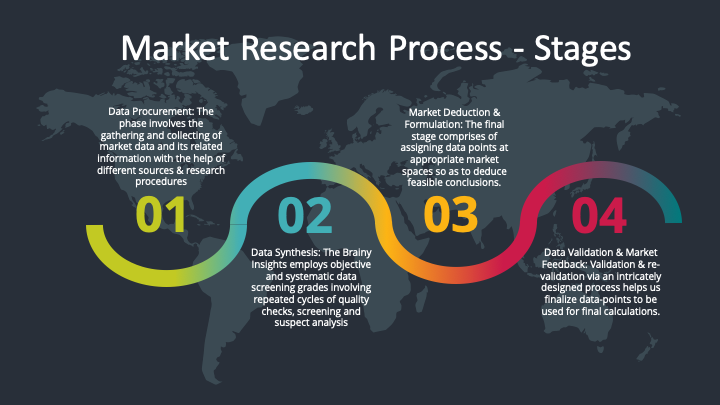
The phase involves the gathering and collecting of market data and its related information with the help of different sources & research procedures.
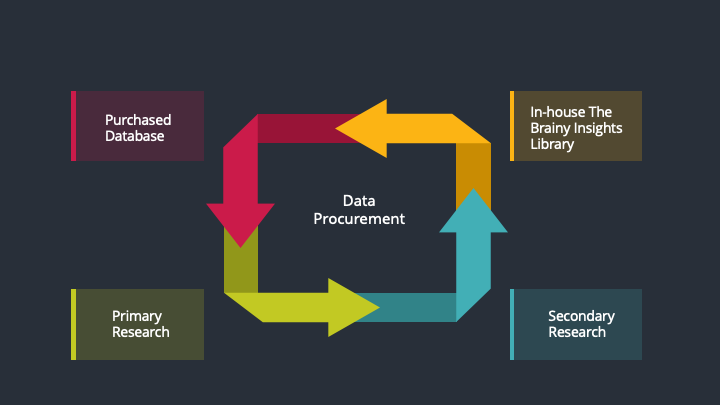
The data procurement stage involves in data gathering and collecting through various data sources.
This stage involves in extensive research. These data sources includes:
Purchased Database: Purchased databases play a crucial role in estimating the market sizes irrespective of the domain. Our purchased database includes:
Primary Research: The Brainy Insights interacts with leading companies and experts of the concerned domain to develop the analyst team’s market understanding and expertise. It improves and substantiates every single data presented in the market reports. Primary research mainly involves in telephonic interviews, E-mail interactions and face-to-face interviews with the raw material providers, manufacturers/producers, distributors, & independent consultants. The interviews that we conduct provides valuable data on market size and industry growth trends prevailing in the market. Our organization also conducts surveys with the various industry experts in order to gain overall insights of the industry/market. For instance, in healthcare industry we conduct surveys with the pharmacists, doctors, surgeons and nurses in order to gain insights and key information of a medical product/device/equipment which the customers are going to usage. Surveys are conducted in the form of questionnaire designed by our own analyst team. Surveys plays an important role in primary research because surveys helps us to identify the key target audiences of the market. Additionally, surveys helps to identify the key target audience engaged with the market. Our survey team conducts the survey by targeting the key audience, thus gaining insights from them. Based on the perspectives of the customers, this information is utilized to formulate market strategies. Moreover, market surveys helps us to understand the current competitive situation of the industry. To be precise, our survey process typically involve with the 360 analysis of the market. This analytical process begins by identifying the prospective customers for a product or service related to the market/industry to obtain data on how a product/service could fit into customers’ lives.
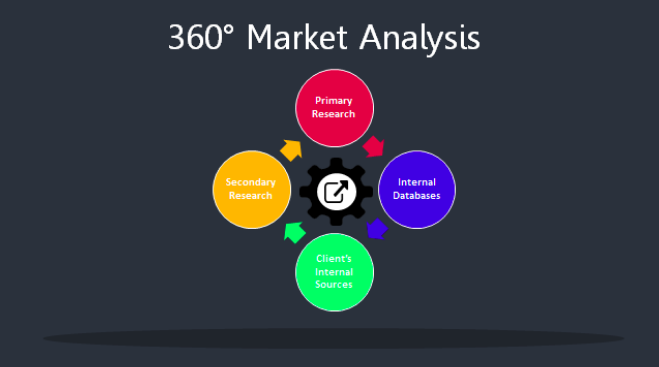
Secondary Research: The secondary data sources includes information published by the on-profit organizations such as World bank, WHO, company fillings, investor presentations, annual reports, national government documents, statistical databases, blogs, articles, white papers and others. From the annual report, we analyse a company’s revenue to understand the key segment and market share of that organization in a particular region. We analyse the company websites and adopt the product mapping technique which is important for deriving the segment revenue. In the product mapping method, we select and categorize the products offered by the companies catering to domain specific market, deduce the product revenue for each of the companies so as to get overall estimation of the market size. We also source data and analyses trends based on information received from supply side and demand side intermediaries in the value chain. The supply side denotes the data gathered from supplier, distributor, wholesaler and the demand side illustrates the data gathered from the end customers for respective market domain.
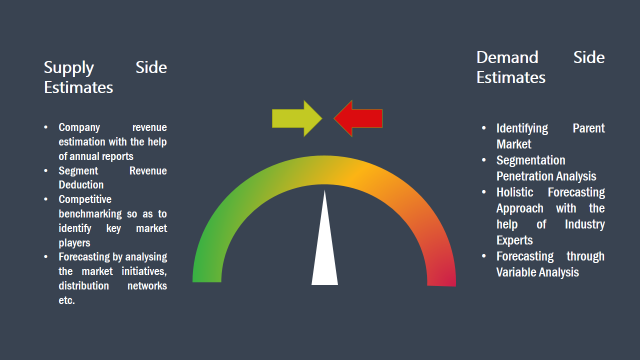
The supply side for a domain specific market is analysed by:
The demand side for the market is estimated through:
In-house Library: Apart from these third-party sources, we have our in-house library of qualitative and quantitative information. Our in-house database includes market data for various industry and domains. These data are updated on regular basis as per the changing market scenario. Our library includes, historic databases, internal audit reports and archives.
Sometimes there are instances where there is no metadata or raw data available for any domain specific market. For those cases, we use our expertise to forecast and estimate the market size in order to generate comprehensive data sets. Our analyst team adopt a robust research technique in order to produce the estimates:
Data Synthesis: This stage involves the analysis & mapping of all the information obtained from the previous step. It also involves in scrutinizing the data for any discrepancy observed while data gathering related to the market. The data is collected with consideration to the heterogeneity of sources. Robust scientific techniques are in place for synthesizing disparate data sets and provide the essential contextual information that can orient market strategies. The Brainy Insights has extensive experience in data synthesis where the data passes through various stages:
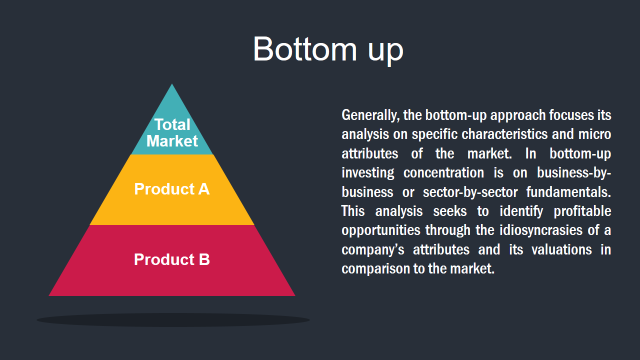
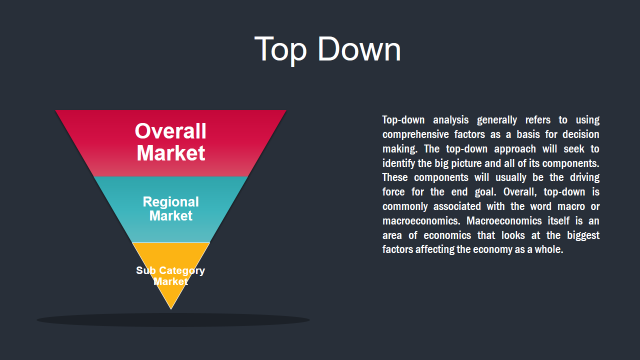
Market Deduction & Formulation: The final stage comprises of assigning data points at appropriate market spaces so as to deduce feasible conclusions. Analyst perspective & subject matter expert based holistic form of market sizing coupled with industry analysis also plays a crucial role in this stage.
This stage involves in finalization of the market size and numbers that we have collected from data integration step. With data interpolation, it is made sure that there is no gap in the market data. Successful trend analysis is done by our analysts using extrapolation techniques, which provide the best possible forecasts for the market.
Data Validation & Market Feedback: Validation is the most important step in the process. Validation & re-validation via an intricately designed process helps us finalize data-points to be used for final calculations.

The Brainy Insights interacts with leading companies and experts of the concerned domain to develop the analyst team’s market understanding and expertise. It improves and substantiates every single data presented in the market reports. The data validation interview and discussion panels are typically composed of the most experienced industry members. The participants include, however, are not limited to:
Moreover, we always validate our data and findings through primary respondents from all the major regions we are working on.













































Free Customization
Fortune 500 Clients
Free Yearly Update On Purchase Of Multi/Corporate License
Companies Served Till Date