- +1-315-215-1633
- sales@thebrainyinsights.com

The global smart agriculture market was valued at USD 22 billion in 2024 and grew at a CAGR of 13% from 2025 to 2034. The market is expected to reach USD 74.68 billion by 2034. The increasing need to achieve global food security will drive the growth of the global smart agriculture market.
Smart agriculture also known as precision agriculture or digital farming is a game-changer in the traditional farming techniques as it involves the use of advanced technology and data-driven solutions to transform agriculture practices into an efficient one. It makes use of the latest technologies like Internet of Things (IoT), artificial intelligence (AI), big data analytics, drones, remote sensing, and robotics to enable increased productivity, efficiency, and sustainability of farming operations. Smart agriculture is essentially focused on increasing the accuracy of monitoring and managing crops, soil, water, and livestock, to optimize the production and reduce the wastage of resources and effects on the environment. The fields can be equipped with sensors that continuously monitor the moisture of soils, nutrients and temperature as well as health of crops, which allows farmers to make informed decisions regarding irrigation, application of fertilizers and controlling pests and making harvests. Such data-based approach minimizes trial and error and interventions become timely and site specific as opposed to generalized methods resulting in better overall crop quality and quantity. Moreover, drones and satellite imagery would show the farmers aerial images of their fields, allowing them to locate pest-infested, sick, or nutrient-deficient areas as soon as possible. Robotics and automated machineries come in to help in a labour-intensive process such as planting, weeding and harvesting, lessening the work and the cost of operation. Smart farming also helps to attain sustainability, through better use of the resources and less use of chemicals. Also, data analytics platforms combine data to present predictive data like weather conditions, growth patterns of crops, trends in the market, etc. and provide a way to reduce risks through better planning.
Get an overview of this study by requesting a free sample
Food security and agricultural sustainability – the pressure on the agricultural stakeholders to yield more output with less means is eminent and therefore a serious drive towards optimizing the farm inputs and minimizing waste is on-going. Smart agriculture provides tools and technology through which farmers can increase the productivity of crops using less amount of resources-water, fertilizers and pesticides. It is a part of resource optimization that keeps increasing profitability and leads to sustainable farming. Also, the motivation to use smart technologies comes down to the need to minimize the overhead expenses. Use of robotics and machines in automation of labour-intensive activities such as plantation, irrigation and harvesting can reduce labour costs and improve precision. The increasing ease of availability and cost of technologies like sensors, drones, GPS, and analytics that use AI drive the use of these technologies into routine operations of farms. These devices can monitor the condition of soil, weather, crop life, and location and activity of pests in real-time, and data-driven decisions can be improved to reduce the risks and increase productivity. The other important internal factor is the rising emphasis on crop and soil health management. With the help of digital technologies, farmers will know about the problem in time and will be able to make adjustments in time and, therefore, in this case, provide higher quality and increased performance.
Economic, technical and behavioural factors – The vital obstacle is that smart agriculture technologies could have the high cost of initial investment. Instruments like IoT gadgets, sensors, drones, and precision equipment can have a considerable initial price which puts small and marginal farmers who use limited funds out of reach. The absence of the returns in the shortest term can demoralize adoption even in cases in which the benefits are clearly visible long-term. The other significant limitation is a low level of technical skills and digital comprehension among farmers, especially in developing and rural areas. A good number of farmers do not have experience using hi-tech gadgets, reading data on sensors, moving through digital catalogues. This lack of competencies and training makes smart agriculture tools less useful and attractive. Also, the conservative mentality and the adverse dependence on the established farming practices are the cause of resistances to change. The problem is that farmers can be cautious about new technologies, particularly, when it looks complicated or un-tried in the local conditions.
Environmental regulations and favourable government support – Among the major stimuli is the fact that the world population is growing exponentially hence putting pressure on food consumption. Conventional farming techniques can no longer support this increasing demand in a sustainable manner hence the need to incorporate superior agricultural technologies that guarantee high yields by requiring less resources. Moreover, the unstable climate and environment have worsened the situation with agriculture and one of its prerogatives is to develop technologies that could help to increase the resilience, track the environmental status, and lessen the dependence upon the natural phenomena. Ambitious government practices and friendlier policies are also important in fostering smart agriculture. The countries are giving out subsidies, tax exemptions, and funding programs that will motivate the farmers on spreading out the use of precision farming tools in large volumes. The other external influence is the fast-growing digital infrastructure especially in the rural regions.
The regions analyzed for the market include North America, Europe, South America, Asia Pacific, the Middle East, and Africa. North America emerged as the most significant global smart agriculture market, with a 40% market revenue share in 2024.
North America takes a leading position in the smart agriculture market globally, and this dominance is explained by the high level of the agricultural infrastructure, the active exploitation of modern technologies, and a sufficient level of government and institutional support. The farmers in this region are known as an early adopter of technology because of abundant resources, improved internet access in the countryside, and the possibility to invest money in new solutions. Among the most important factors that have led to the domination of North America is the availability of many dominant agri-tech organizations and institutions that have continued to innovate and develop the latest products that suit the large scale and mechanized agriculture that characterizes the region. Moreover, farmers in North America have a rather large area to work with, so it is possible to implement smart technologies in agriculture in a more monetarily efficient and economically feasible manner. Another factor promoting smart agriculture is government efforts, including direct subsidies, grants and funding of research organizations, including USDA. The high awareness rate, presence of superior infrastructural facilities and progressive distribution mediums have enhanced the infiltration of smart farming technologies in numerous types of farming like precision farming, livestock tracking and smart greenhouse. Consequently, North America is still the leader in the worldwide market by becoming a model in terms of innovation, adoption, and incorporation of sustainable, efficient, and technologically enhanced agricultural practices.
North America Region Smart Agriculture Market Share in 2024 - 40%
www.thebrainyinsights.com
Check the geographical analysis of this market by requesting a free sample
The offering segment is divided into hardware, software and services. The hardware segment dominated the market, with a market share of around 46% in 2024. The global smart agriculture market is dominated by hardware segment mainly because of its significant role of facilitating real time data collection, automation and precision during farming. The bottom layer of smart agricultural technologies consists of such hardware elements as sensors, GPS devices, drones, cameras, automated irrigation systems, and control units. They are necessary to detect soil humidity, weather, crop, animals, and machinery performance. The growing need of data-based decision-making in agriculture has largely contributed to an increase in the use of hardware since it is the major tool of collecting field-level data. Specifically, sensors are widely used in farms to identify temperature, humidity, soil pH, and nutrient levels, enabling an accurate treatment of the water, fertilizers, and pesticides. In the same way, drones and GPS-guided machinery make it possible to carry out aerial surveillance and mapping of crops and operate machinery automatically, which saves on human work and raises efficiency. There has been a significant increase in the use of physical machines due to lack of labour and need to adopt sustainable practices particularly in the developed economies of farming. More importantly, the falling prices of hardware components, its embedded systems, and compatibility with wireless connection technology, such as IoT and Bluetooth, have given access to such tools to medium and large farms. There is also high investment and innovation by the manufacturers on the hardware part to increase the durability, accuracy and automation facilities. Compared to software and services, hardware may be the simplest way to go digital in agriculture so that it plays the key role at early stages of adoption. This is the pivotal role it plays, and the increasing need in the field-level automation and real-time monitoring, which serves as an additional argument in favour of hardware segment leading the smart agriculture market.
The agriculture type segment is divided into precision farming, livestock monitoring, smart greenhouses and aquaculture. The precision farming segment dominated the market, with a market share of around 38% in 2024. Precision farming has a leading position in the worldwide market of smart agriculture because it is applicable everywhere, gives good returns on investments, considerably increases productivity, and sustainability. Advance technologies employed in this approach are GPS, GIS, IoT sensors, drones, and data analytics to control, track, and measure variability in fields at a micro level. Precision farming also enables site-specific crop management which uses less water, fertilizers and pesticides that waste or have little or no environmental effect and increases crop yields because farmers can apply these substances only where necessary. Flexibility in being utilized with many crops and geographies is one of the major functionalities that has made precision farming take a dominant role. Whether row crops such as wheat and maize or high-value horticultural crops, precision agriculture technologies are coming to bear to tune up every detail of the production process - seed selection and planting, irrigation, and harvesting. This has in turn been boosted by the growing availabilities of low-cost sensors, GPS enabled hardware and farm management software, especially in areas with well-developed agriculture infrastructure such as North America and Europe. Furthermore, the increasing worry of resource depletion, climatic variation and escalating input prices have rendered precision farming an appealing ploy to the big commercial farms as well as to the medium-sized enterprising firms. With the current changes taking place in the world in a shift towards more environmentally responsible and data-oriented agriculture, precision farming stands out to be at the forefront, as it is the foundation of smart agriculture. The fact that it is versatile, improves efficiency and has record of enhancing profitability cements its market dominance.
The application segment is divided into field mapping & crop scouting, irrigation management, yield monitoring, weather tracking & forecasting, inventory management, farm labour management and financial planning. The field mapping & crop scouting segment dominated the market, with a market share of around 33% in 2024. These technologies imply the usage of satellite images, drones, Global Positioning Systems, and terrestrial sensors to gather real-time information about different field conditions such as soil heterogeneity, moisture content, crop development cycle, pest presence, and disease outbreaks. The establishment of this segment is highly accredited to the fact that it is the backbone of precision agriculture. Field mapping enables site specific management since it determines the dynamics in soil fertility and other environmental rations, thereby enabling farmers to use fertilizers, water and pesticides only where there is the necessity. On the same note, crop scouting can also lead to the identification of plant stress symptoms, nutrient deficiency or pest infestation early enough before the problem increases. Besides ensuring healthy crops this also leads to increased quality and output. Mapping and scouting tools have become more precise due to technological challenges, drone imagery, and machine learning opportunity. In addition, the rising cost effectiveness of these technologies has now exposed them to a wider spectrum of farmers even to the developing economies. It also makes decision making and planning to be smoother through their integration with farm management software. Field mapping and crop scouting remain the most popular and effective smart agriculture application and they also play a vital role in growing productivity, decreasing waste, and making precision farming activities possible.
| Attribute | Description |
|---|---|
| Market Size | Revenue (USD Billion) |
| Market size value in 2024 | USD 22 Billion |
| Market size value in 2034 | USD 74.68 Billion |
| CAGR (2025 to 2034) | 13% |
| Historical data | 2021-2023 |
| Base Year | 2024 |
| Forecast | 2025-2034 |
| Region | The regions analyzed for the market are Asia Pacific, Europe, South America, North America, and Middle East and Africa. Furthermore, the regions are further analyzed at the country level. |
| Segments | Offering, Agriculture Type and Application |
As per The Brainy Insights, the size of the global smart agriculture market was valued at USD 22 billion in 2024 to USD 74.68 billion by 2034.
Global smart agriculture market is growing at a CAGR of 13% during the forecast period 2025-2034.
The market's growth will be influenced by food security and agricultural sustainability
Economic, technical and behavioural factors
This study forecasts revenue at global, regional, and country levels from 2021 to 2034. The Brainy Insights has segmented the global smart agriculture market based on below mentioned segments:
Global Smart Agriculture Market by Offering:
Global Smart Agriculture Market by Agriculture Type:
Global Smart Agriculture Market by Application:
Global Smart Agriculture Market by Region:
Research has its special purpose to undertake marketing efficiently. In this competitive scenario, businesses need information across all industry verticals; the information about customer wants, market demand, competition, industry trends, distribution channels etc. This information needs to be updated regularly because businesses operate in a dynamic environment. Our organization, The Brainy Insights incorporates scientific and systematic research procedures in order to get proper market insights and industry analysis for overall business success. The analysis consists of studying the market from a miniscule level wherein we implement statistical tools which helps us in examining the data with accuracy and precision.
Our research reports feature both; quantitative and qualitative aspects for any market. Qualitative information for any market research process are fundamental because they reveal the customer needs and wants, usage and consumption for any product/service related to a specific industry. This in turn aids the marketers/investors in knowing certain perceptions of the customers. Qualitative research can enlighten about the different product concepts and designs along with unique service offering that in turn, helps define marketing problems and generate opportunities. On the other hand, quantitative research engages with the data collection process through interviews, e-mail interactions, surveys and pilot studies. Quantitative aspects for the market research are useful to validate the hypotheses generated during qualitative research method, explore empirical patterns in the data with the help of statistical tools, and finally make the market estimations.
The Brainy Insights offers comprehensive research and analysis, based on a wide assortment of factual insights gained through interviews with CXOs and global experts and secondary data from reliable sources. Our analysts and industry specialist assume vital roles in building up statistical tools and analysis models, which are used to analyse the data and arrive at accurate insights with exceedingly informative research discoveries. The data provided by our organization have proven precious to a diverse range of companies, facilitating them to address issues such as determining which products/services are the most appealing, whether or not customers use the product in the manner anticipated, the purchasing intentions of the market and many others.
Our research methodology encompasses an idyllic combination of primary and secondary initiatives. Key phases involved in this process are listed below:
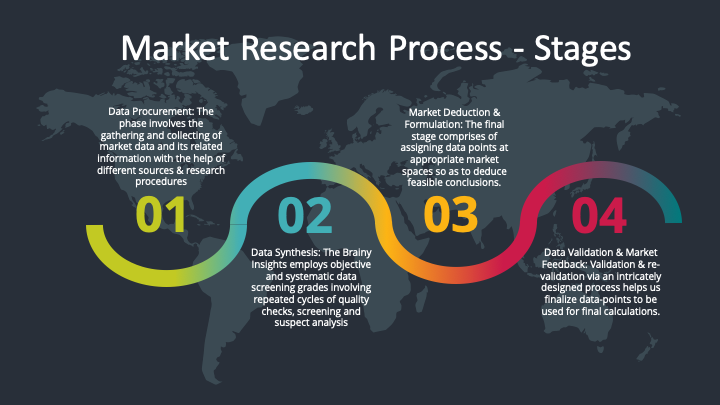
The phase involves the gathering and collecting of market data and its related information with the help of different sources & research procedures.
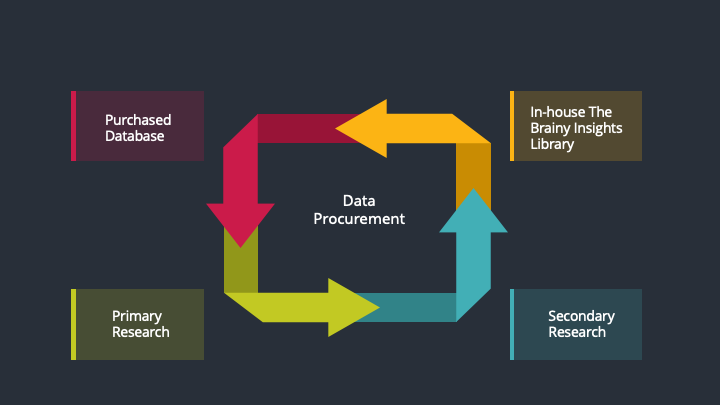
The data procurement stage involves in data gathering and collecting through various data sources.
This stage involves in extensive research. These data sources includes:
Purchased Database: Purchased databases play a crucial role in estimating the market sizes irrespective of the domain. Our purchased database includes:
Primary Research: The Brainy Insights interacts with leading companies and experts of the concerned domain to develop the analyst team’s market understanding and expertise. It improves and substantiates every single data presented in the market reports. Primary research mainly involves in telephonic interviews, E-mail interactions and face-to-face interviews with the raw material providers, manufacturers/producers, distributors, & independent consultants. The interviews that we conduct provides valuable data on market size and industry growth trends prevailing in the market. Our organization also conducts surveys with the various industry experts in order to gain overall insights of the industry/market. For instance, in healthcare industry we conduct surveys with the pharmacists, doctors, surgeons and nurses in order to gain insights and key information of a medical product/device/equipment which the customers are going to usage. Surveys are conducted in the form of questionnaire designed by our own analyst team. Surveys plays an important role in primary research because surveys helps us to identify the key target audiences of the market. Additionally, surveys helps to identify the key target audience engaged with the market. Our survey team conducts the survey by targeting the key audience, thus gaining insights from them. Based on the perspectives of the customers, this information is utilized to formulate market strategies. Moreover, market surveys helps us to understand the current competitive situation of the industry. To be precise, our survey process typically involve with the 360 analysis of the market. This analytical process begins by identifying the prospective customers for a product or service related to the market/industry to obtain data on how a product/service could fit into customers’ lives.
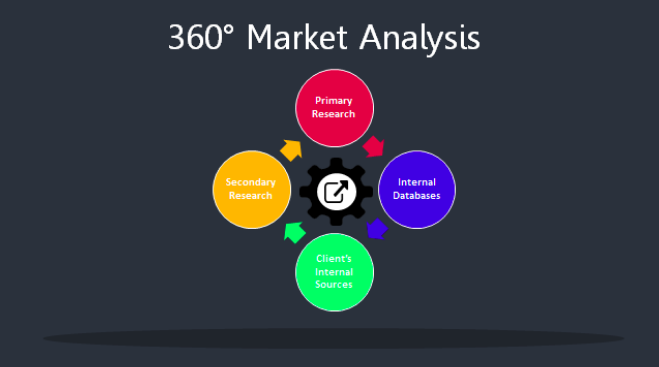
Secondary Research: The secondary data sources includes information published by the on-profit organizations such as World bank, WHO, company fillings, investor presentations, annual reports, national government documents, statistical databases, blogs, articles, white papers and others. From the annual report, we analyse a company’s revenue to understand the key segment and market share of that organization in a particular region. We analyse the company websites and adopt the product mapping technique which is important for deriving the segment revenue. In the product mapping method, we select and categorize the products offered by the companies catering to domain specific market, deduce the product revenue for each of the companies so as to get overall estimation of the market size. We also source data and analyses trends based on information received from supply side and demand side intermediaries in the value chain. The supply side denotes the data gathered from supplier, distributor, wholesaler and the demand side illustrates the data gathered from the end customers for respective market domain.
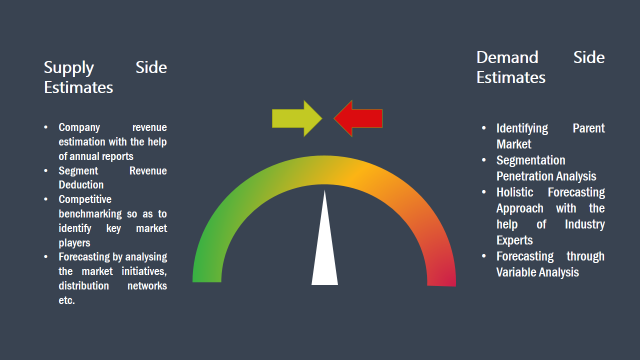
The supply side for a domain specific market is analysed by:
The demand side for the market is estimated through:
In-house Library: Apart from these third-party sources, we have our in-house library of qualitative and quantitative information. Our in-house database includes market data for various industry and domains. These data are updated on regular basis as per the changing market scenario. Our library includes, historic databases, internal audit reports and archives.
Sometimes there are instances where there is no metadata or raw data available for any domain specific market. For those cases, we use our expertise to forecast and estimate the market size in order to generate comprehensive data sets. Our analyst team adopt a robust research technique in order to produce the estimates:
Data Synthesis: This stage involves the analysis & mapping of all the information obtained from the previous step. It also involves in scrutinizing the data for any discrepancy observed while data gathering related to the market. The data is collected with consideration to the heterogeneity of sources. Robust scientific techniques are in place for synthesizing disparate data sets and provide the essential contextual information that can orient market strategies. The Brainy Insights has extensive experience in data synthesis where the data passes through various stages:
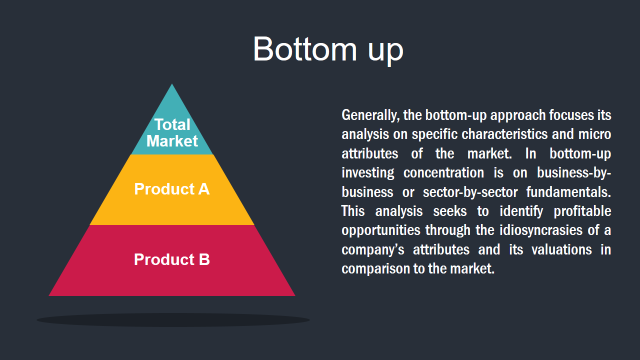
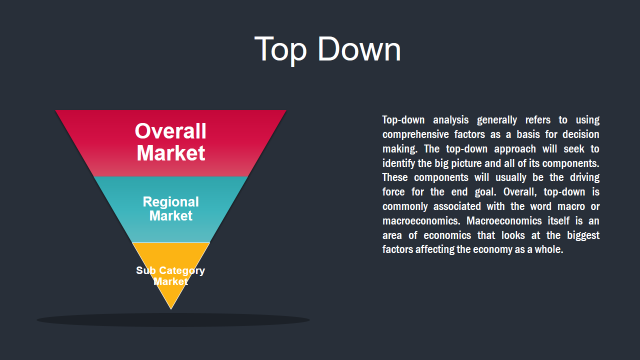
Market Deduction & Formulation: The final stage comprises of assigning data points at appropriate market spaces so as to deduce feasible conclusions. Analyst perspective & subject matter expert based holistic form of market sizing coupled with industry analysis also plays a crucial role in this stage.
This stage involves in finalization of the market size and numbers that we have collected from data integration step. With data interpolation, it is made sure that there is no gap in the market data. Successful trend analysis is done by our analysts using extrapolation techniques, which provide the best possible forecasts for the market.
Data Validation & Market Feedback: Validation is the most important step in the process. Validation & re-validation via an intricately designed process helps us finalize data-points to be used for final calculations.
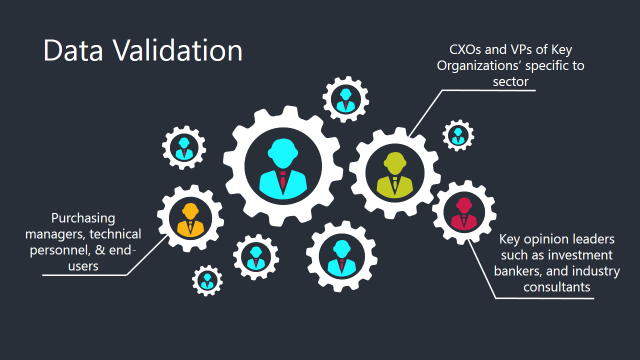
The Brainy Insights interacts with leading companies and experts of the concerned domain to develop the analyst team’s market understanding and expertise. It improves and substantiates every single data presented in the market reports. The data validation interview and discussion panels are typically composed of the most experienced industry members. The participants include, however, are not limited to:
Moreover, we always validate our data and findings through primary respondents from all the major regions we are working on.


















































Free Customization
Fortune 500 Clients
Free Yearly Update On Purchase Of Multi/Corporate License
Companies Served Till Date