- +1-315-215-1633
- sales@thebrainyinsights.com

The global shape memory alloys market was valued at USD 13.42 billion in 2024 and grew at a CAGR of 13% from 2025 to 2034. The market is expected to reach USD 45.55 billion by 2034. The increasing applications of shape memory alloys will drive the growth of the global shape memory alloys market.
The SMAs are a type of metallic materials, which have a feature of assuming a pre-determined shape, or size upon sudden application of an adequate thermal or mechanical stimulus. This is a special attribute regarded as the shape memory effect whereby, when an SMA is deformed, it can be heated and restored to the original shape. The phenomena of these alloys is explained by the reversible transition of phases which occurs between two crystalline forms martensite (low-temperature) and austenite (high-temperature). The most used shape memory alloy is nickel-titanium (commonly referred to as Nitinol) which derives great mechanical properties, corrosion resistance and high shape memory effect. Copper-based alloys (such as copper-zinc-aluminium or copper-aluminium-nickel) are also SMAs but are not normally as flexible or durable as Nitinol. SMAs exhibit two main effects viz. shape memory effect involves thermal activation, and super-elasticity whereby the material can be strain beyond the elastic-limit and return to its original shape permanently under constant temperatures. The uses of shape memory alloys are distributed in different industries. They are biocompatible and adaptable and thus are being used during stents, guidewires, dental braces, and orthopaedic implants in the medical field. SMAs to be used as: actuators in aerospace and automotive applications, couplings, vibration dampers, and morphing structures due to the characteristics of minimized complexity and weight. They are also used in robotics, consumer electronic devices and intelligent fabrics.
Get an overview of this study by requesting a free sample
The increasing applications of shape memory alloys – market forces impelling the demand of shape memory alloys (SMAs) are mainly based on the peculiar physical and functional properties that results in high value of SMAs in advanced engineering and biomedical applications. The aspect of this property is that such systems substantially lessen the necessity of complicated mechanical systems, which allow more streamlined, lighter, and streamlined designs. Their very high biocompatibility, especially nickel-titanium (Nitinol) is another most important internal aspect that makes SMAs a perfect choice in the field of medicine like stents, guide wires, dental braces, and orthopaedic implants. SMAs have good corrosion resistance in addition to biocompatibility, which makes them suitable to high chemical aggressivity environments, such as the human body or in aerospace-based systems. The large energy density also enables miniaturization which is imperative in applications such as robotics and micro-electromechanical systems (MEMS) where size and efficiency are a critical consideration of actuation. Such inherent benefits help in mitigating complexity of mechanical processes, lifetime of products and overall product performance across applications. The unusual mechanical strength in combination with fatigue properties and flexibility make shape memory alloys appealing and some industries that rely on innovation, precision and performance are eminent candidates to use such alloys.
High costs of production – high costs of productions are also one of the biggest constraints. Special metals such as Nitinol need specific control in composition, complicated thermomechanical processing and special equipment, which makes them vastly more costly than the basic metals. This is prohibitive particularly to the cost-conscious applications. Also, SMAs have short life span of fatigue. This is not good in repeated use with long-term usage. The other problematic factor is that they are complicated to cut, weld or shape because of their pseudo-elastic and thermal sensitivity that not only adds time and therefore expense in the processing phase but also makes working with SMAs more complex in general. Their high reliance on certain temperatures ranges to work is also a limitation. Moreover, the SMAs usually have small transformation windows, and they would need tight thermal control to make them actuate, or shape recover properly. This restricts them even in areas where temperatures are variable or otherwise not within their control.
Increasing research and development expenditure – The market forces determining the demand of shape memory alloys (SMAs) are strictly associated with the growing market demands, technological aspects, and market-specific development patterns. The first of these external factors is the high growth rate of medical sector caused by aging population worldwide and the increased need in such surgery that can be performed through minimal intervention and pain. SMAs, especially Nitinol are found in various places in stents, catheters, orthopaedics, etc owing to its flexibility and biocompatibility. The other important one is the increased levels of weight reduction, fuel economy, and system responsiveness in aerospace and defence industry. Increasing automation and use of robotics in both industrial and consumer markets are also catalysing the use of SMAs, particularly in soft robotics, miniature actuators and precision tools where space and response time are at a premium. Also, the worldwide sustainable initiatives and regulatory demands are also fuelling the evolution of intelligent and energy suffering mountings, and SMAs suit these agendas perfectly owing to their potential to substitute more air volume, energy-demanding mechanical systems. Moreover, smart materials and advanced manufacturing technologies are also being developed and enhanced due to governmental funding/support in research and subsequent development.
The regions analyzed for the market include North America, Europe, South America, Asia Pacific, the Middle East, and Africa. North America emerged as the most significant global shape memory alloys market, with a 37% market revenue share in 2024.
In North America, the shape memory alloys (SMA) market is highly competitive; this is because of high-value demand, developed superior technological ecosystem, strong industrial cluster as well as the prevailing market dynamics. The United States specifically is a leader in the medical device industry and the most common use of the minimally invasive surgical procedure is in the region. The elderly population and the incidences of chronic diseases in the region have greatly increased the demand of SMA-based implants such as stents, orthopaedics, and dental implants. Also, some of the important manufacturers and research centres are located in North America taking part in the development of new SMA applications as well as the optimization of the material performance. Aerospace and Defence industries too play a huge role in contributing to the dominance of the region through their use of SMAs in their actuators, thermal control systems and adaptive structures due to their feature of responding to the environmental stimulus and ensuring weight optimization of the system. In addition to that, well-established intellectual property rights, a supportive regulatory environment, and investment in research concentrating on superior materials improve the dynamics on the market. Its supply chain and workforce are well established too making the process of commercialization and deployment of SMA integrated products rapid.
North America Region Shape Memory Alloys Market Share in 2024 - 37%
www.thebrainyinsights.com
Check the geographical analysis of this market by requesting a free sample
The type segment is divided into nickel-titanium (nitinol), copper-based alloys, iron-based alloys and others). The nickel-titanium (nitinol) segment dominated the market, with a market share of around 38% in 2024. Nickel-titanium (Nitinol) is the most dominant segment in the shape memory alloys market globally, and this is because it has good functional capabilities besides its wide applicability in high-performance fields. Being a nearly equal nickel and titanium binary alloy, Nitinol possesses amazing shape memory effect and super-elastic properties that enable it to take back an initial form as the deformation process by allowing it to recover considerably large strains of elasticity without any impairment effects. This is why it is suitable in the applications involving precision, flexibility, and durability. The excellent biocompatibility of Nitinol is one of the major drivers of its dominance as this has seen its widespread applications in the medical field. Furthermore, Nitinol is corrosion and fatigue free therefore appropriate in long-term implantation and operation in the harsh environment. Its unparalleled performance in its price category makes it worth the investment even though it is more expensive. In addition, changing manufacturing technologies and increased R&D results in the fact that Nitinol is becoming more affordable, enhancing its rule of the market.
The application segment is divided into medical devices, actuators, robotics, automotive components, aerospace structures, consumer electronics and others. The medical devices segment dominated the market, with a market share of around 35% in 2024. The most important application segment of the global shape memory alloys (SMA) market is medical devices, which can be explained by the non-typical functional and biocompatible characteristics of such materials as nickel-titanium (Nitinol). Many medical devices utilize SMAs and include medical devices used in circulatory systems like stents, guidewires, orthodontic Arch wires, surgical instruments, and orthopaedic implants. The ability of SMAs to exhibit the shape memory effect and super-elasticity allows these devices to accomplish vital actions such as ability to self-expand, flexibility during strain, and ability to restore their shape to be manifested at body temperatures which is of critical importance in minimally invasive and dynamic medical settings. Its successful fatigue strength and corrosion resistance also make this ideal in use at long-term implantation, providing patient safety and reliability. The rising chronic disease prevalence rates all over the world, the increased number of less invasive and altered surgery required inputs, and the rapid progress in the medical equipment deployed in the healthcare sector remain the driving forces behind SMA implementation. Besides, the growth of aging populations and increasing medical spending in both developed and emerging markets is increasing the demand of new and high-performance medical equipment. There is also advancement made in integration of SMAs in newer forms of devices due to regulatory support advanced medical technologies and the trend of miniaturization in medical electronics.
The end-use industry segment is divided into biomedical & healthcare, aerospace & defence, automotive, consumer electronics, robotics & automation, industrial machinery and others. The biomedical and healthcare segment dominated the market, with a market share of around 37% in 2024. The biomedical and healthcare industry plays a very major role in the shape memory alloys (SMA) market globally and this comes mainly due to the outstanding properties of the materials that can be used in this field of work such as nickel titanium (Nitinol) which has very vital benefits in medical terms. These alloys have the peculiar feature not present in other materials; they can deform and is curable to its original condition through exposure to the body temperature, an action which is invaluable when conducting surgical operations considered to be being stretched, a structure that makes them helpful during minimally invasive surgical programming. They are super-elastic, bio-compatible, corrosion resistant, and fatigue resistant which are all desirable characteristics of the implants and other devices that need to be able to operate in a highly dependable environment like that of the human body. The list of potential applications of SMAs in the biomedical field is diverse. The high level of growing chronic diseases like cardiovascular diseases, an increased need of non-invasive treatment solutions and an increase in life expectancy are several factors influencing an increase in the SMA demand in this industry. Also, there is a larger market of geriatrics in the whole world that has increased the demand of orthopaedic and cardiovascular implants providing a further market strength. Advanced biomaterials and their usage by the healthcare system in both developed and developing countries are gaining momentum as they aim to better the patient outcomes and shorten the recuperation process. Further, the regulatory authorities have been found to be highly supportive of the innovative medical technologies that integrate SMAs and in the process play a major role in streamlining the incorporation of the SMAs in the next generation medical equipment. This dominance is also driven by continuous research and development of SMAs.
| Attribute | Description |
|---|---|
| Market Size | Revenue (USD Billion) |
| Market size value in 2024 | USD 13.42 Billion |
| Market size value in 2034 | USD 45.55 Billion |
| CAGR (2025 to 2034) | 13% |
| Historical data | 2021-2023 |
| Base Year | 2024 |
| Forecast | 2025-2034 |
| Region | The regions analyzed for the market are Asia Pacific, Europe, South America, North America, and Middle East and Africa. Furthermore, the regions are further analyzed at the country level. |
| Segments | Type, Application and End-Use Industry |
As per The Brainy Insights, the size of the global shape memory alloys market was valued at USD 13.42 billion in 2024 to USD 45.55 billion by 2034.
Global shape memory alloys market is growing at a CAGR of 13% during the forecast period 2025-2034.
The market's growth will be influenced by the increasing applications of shape memory alloys
High costs of production
This study forecasts revenue at global, regional, and country levels from 2021 to 2034. The Brainy Insights has segmented the global shape memory alloys market based on below mentioned segments:
Global Shape Memory Alloys Market by Type:
Global Shape Memory Alloys Market by Application:
Global Shape Memory Alloys Market by End-Use Industry:
Global Shape Memory Alloys Market by Region:
Research has its special purpose to undertake marketing efficiently. In this competitive scenario, businesses need information across all industry verticals; the information about customer wants, market demand, competition, industry trends, distribution channels etc. This information needs to be updated regularly because businesses operate in a dynamic environment. Our organization, The Brainy Insights incorporates scientific and systematic research procedures in order to get proper market insights and industry analysis for overall business success. The analysis consists of studying the market from a miniscule level wherein we implement statistical tools which helps us in examining the data with accuracy and precision.
Our research reports feature both; quantitative and qualitative aspects for any market. Qualitative information for any market research process are fundamental because they reveal the customer needs and wants, usage and consumption for any product/service related to a specific industry. This in turn aids the marketers/investors in knowing certain perceptions of the customers. Qualitative research can enlighten about the different product concepts and designs along with unique service offering that in turn, helps define marketing problems and generate opportunities. On the other hand, quantitative research engages with the data collection process through interviews, e-mail interactions, surveys and pilot studies. Quantitative aspects for the market research are useful to validate the hypotheses generated during qualitative research method, explore empirical patterns in the data with the help of statistical tools, and finally make the market estimations.
The Brainy Insights offers comprehensive research and analysis, based on a wide assortment of factual insights gained through interviews with CXOs and global experts and secondary data from reliable sources. Our analysts and industry specialist assume vital roles in building up statistical tools and analysis models, which are used to analyse the data and arrive at accurate insights with exceedingly informative research discoveries. The data provided by our organization have proven precious to a diverse range of companies, facilitating them to address issues such as determining which products/services are the most appealing, whether or not customers use the product in the manner anticipated, the purchasing intentions of the market and many others.
Our research methodology encompasses an idyllic combination of primary and secondary initiatives. Key phases involved in this process are listed below:
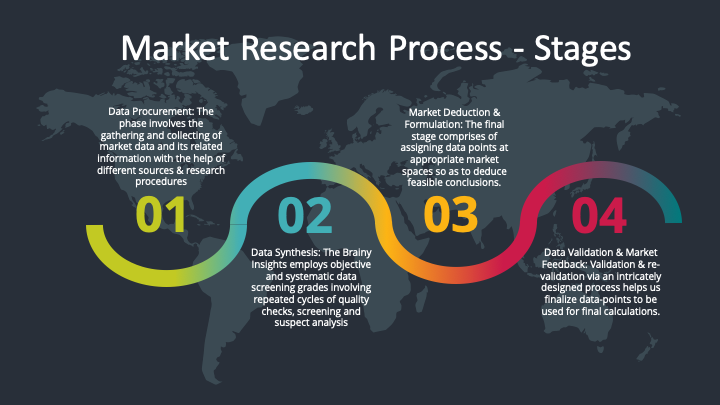
The phase involves the gathering and collecting of market data and its related information with the help of different sources & research procedures.
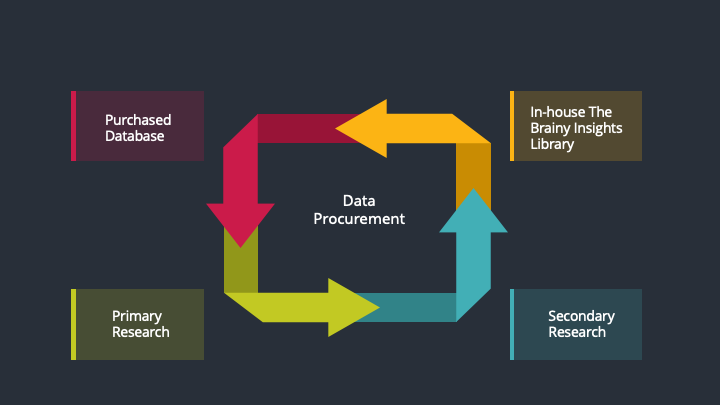
The data procurement stage involves in data gathering and collecting through various data sources.
This stage involves in extensive research. These data sources includes:
Purchased Database: Purchased databases play a crucial role in estimating the market sizes irrespective of the domain. Our purchased database includes:
Primary Research: The Brainy Insights interacts with leading companies and experts of the concerned domain to develop the analyst team’s market understanding and expertise. It improves and substantiates every single data presented in the market reports. Primary research mainly involves in telephonic interviews, E-mail interactions and face-to-face interviews with the raw material providers, manufacturers/producers, distributors, & independent consultants. The interviews that we conduct provides valuable data on market size and industry growth trends prevailing in the market. Our organization also conducts surveys with the various industry experts in order to gain overall insights of the industry/market. For instance, in healthcare industry we conduct surveys with the pharmacists, doctors, surgeons and nurses in order to gain insights and key information of a medical product/device/equipment which the customers are going to usage. Surveys are conducted in the form of questionnaire designed by our own analyst team. Surveys plays an important role in primary research because surveys helps us to identify the key target audiences of the market. Additionally, surveys helps to identify the key target audience engaged with the market. Our survey team conducts the survey by targeting the key audience, thus gaining insights from them. Based on the perspectives of the customers, this information is utilized to formulate market strategies. Moreover, market surveys helps us to understand the current competitive situation of the industry. To be precise, our survey process typically involve with the 360 analysis of the market. This analytical process begins by identifying the prospective customers for a product or service related to the market/industry to obtain data on how a product/service could fit into customers’ lives.
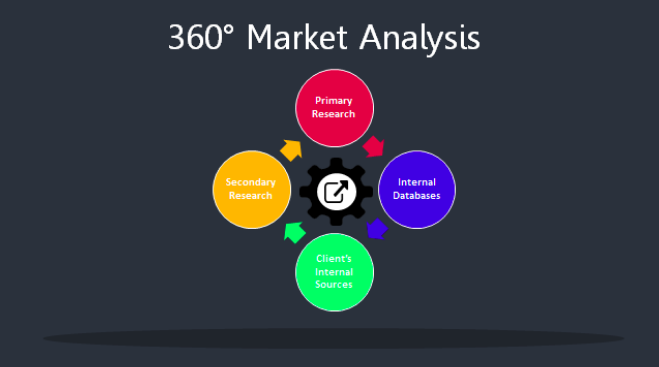
Secondary Research: The secondary data sources includes information published by the on-profit organizations such as World bank, WHO, company fillings, investor presentations, annual reports, national government documents, statistical databases, blogs, articles, white papers and others. From the annual report, we analyse a company’s revenue to understand the key segment and market share of that organization in a particular region. We analyse the company websites and adopt the product mapping technique which is important for deriving the segment revenue. In the product mapping method, we select and categorize the products offered by the companies catering to domain specific market, deduce the product revenue for each of the companies so as to get overall estimation of the market size. We also source data and analyses trends based on information received from supply side and demand side intermediaries in the value chain. The supply side denotes the data gathered from supplier, distributor, wholesaler and the demand side illustrates the data gathered from the end customers for respective market domain.
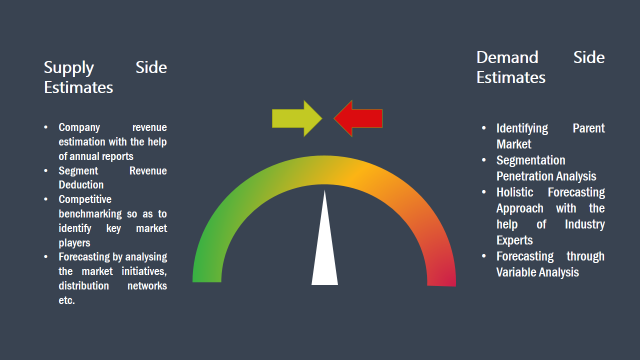
The supply side for a domain specific market is analysed by:
The demand side for the market is estimated through:
In-house Library: Apart from these third-party sources, we have our in-house library of qualitative and quantitative information. Our in-house database includes market data for various industry and domains. These data are updated on regular basis as per the changing market scenario. Our library includes, historic databases, internal audit reports and archives.
Sometimes there are instances where there is no metadata or raw data available for any domain specific market. For those cases, we use our expertise to forecast and estimate the market size in order to generate comprehensive data sets. Our analyst team adopt a robust research technique in order to produce the estimates:
Data Synthesis: This stage involves the analysis & mapping of all the information obtained from the previous step. It also involves in scrutinizing the data for any discrepancy observed while data gathering related to the market. The data is collected with consideration to the heterogeneity of sources. Robust scientific techniques are in place for synthesizing disparate data sets and provide the essential contextual information that can orient market strategies. The Brainy Insights has extensive experience in data synthesis where the data passes through various stages:
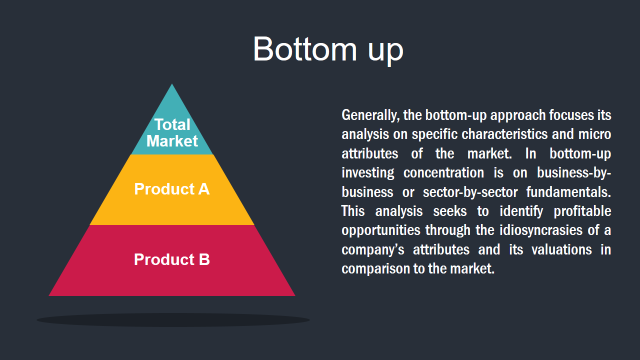
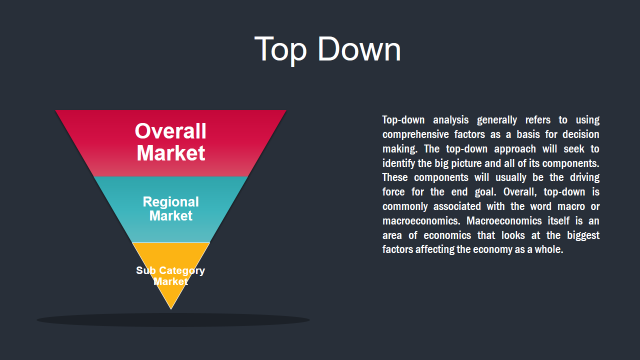
Market Deduction & Formulation: The final stage comprises of assigning data points at appropriate market spaces so as to deduce feasible conclusions. Analyst perspective & subject matter expert based holistic form of market sizing coupled with industry analysis also plays a crucial role in this stage.
This stage involves in finalization of the market size and numbers that we have collected from data integration step. With data interpolation, it is made sure that there is no gap in the market data. Successful trend analysis is done by our analysts using extrapolation techniques, which provide the best possible forecasts for the market.
Data Validation & Market Feedback: Validation is the most important step in the process. Validation & re-validation via an intricately designed process helps us finalize data-points to be used for final calculations.

The Brainy Insights interacts with leading companies and experts of the concerned domain to develop the analyst team’s market understanding and expertise. It improves and substantiates every single data presented in the market reports. The data validation interview and discussion panels are typically composed of the most experienced industry members. The participants include, however, are not limited to:
Moreover, we always validate our data and findings through primary respondents from all the major regions we are working on.



















































Free Customization
Fortune 500 Clients
Free Yearly Update On Purchase Of Multi/Corporate License
Companies Served Till Date