- +1-315-215-1633
- sales@thebrainyinsights.com

The global reusable launch vehicle market was valued at USD 5.37 billion in 2024 and grew at a CAGR of 14% from 2025 to 2034. The market is expected to reach USD 19.90 billion by 2034. The growing privatisation of the space industry will drive the growth of the global reusable launch vehicle market.
A Reusable Launch Vehicle (RLV) is a form of space launch system planned to carry payloads into space and land on the ground, capable of being launched in a single launch on repeated occasions at significantly reduced cost of single launch. In contrast to the disposable launch vehicles (ELVs) which are simply discarded after a use, RLVs have design features enabling recovery and refurbishment, so that significant parts, including boosters, engines and even complete stages, can be flown more than once. Reusability concept is expected to change the paradigm of space transportation in a revolutionized way as it is in the context of cost-efficiency, sustainability, and the time lag between launchings. Among the brightest representatives of RLV is SpaceX Falcon 9, where the first stage of the booster is created in such a way as to fly back to the Earth after the separation, landing vertically on a drone-ship or a landing pad to be reused after post-renovation. Like-wise, the New Shepard developed by Blue Origin and the Starship of SpaceX are also some exemplary endeavours in RLV with the latter being targeted on making the rockets in their entirety reusable in orbital and interplanetary flight. The economics of RLVs will not be limited to economic benefits. They benefit in creating sustainable environments by minimizing the waste that is being left in space and minimizing the manufacturing foot-print. Besides, the increase in launch frequency is achieved by reusability. With further innovations in materials science, propulsion systems, and automation, reusable launch vehicles seem likely to become the foundation of space transport in the future, opening future space transportation to commercial use and democratizing access to space and commercialization of it.
Get an overview of this study by requesting a free sample
Innovative technologies and sustainability – The drivers of the demand of reusable launch vehicles (RLVs) are mainly involved in cost effectiveness, innovative technology and streamlining operations. Most important elements like first-stage boosters and its engines can be reused after being recovered and restored to work, which means that each launch does not require actually building new systems. This significantly reduces the long-term operational cost of a commercial and government space missions. In close connection to this is the fact that there has been a corresponding growth of technological developments especially in propulsion systems, heat shields, autonomous navigation, and vertical landing technologies, which have made having vehicle parts being reused in subsequent flights to be more accountable and less hazardous. RLVs allow quicker turnaround of launch periods. The reusable systems can be swiftly made ready and ready to go back to the mission, while expendable systems demand new assemblies, raising the launch rate and sustaining a quick asset remedial plan crucial to satellite constellations and commercial space services. The second important element is manufacturing resource optimization, since with the reuse of parts, raw materials and production steps will be consumed proportionately less and therefore the production loop becomes more sustainable. Also, by re-engaging identical hardware it is possible to amass a body of data and refine it over time, ensuring greater reliability and security of launch systems based on the experience of making the adjustments and monitoring performance.
Complexity and operational restrictions – The high upfront development is one of the major barriers. Building reusable systems demands an extensive research, engineering, advanced materials, and precision machining hefty expenditure that would make entry to competition a crippling exercise to even the most settled in the industry. Also, high technical complexity and unreliability are posing significant problems. Engineering solutions to allow systems to withstand the harsh environments of launch and re-entry on a successive basis requires both advanced application and continued change. Performance compromise on the payload capacity is another huge shortcoming. Typical RLVs have a reduced payload capacity compared to their expendable counterparts, to accommodate reusability, e.g. installation of thermal protection systems, and extra fuel to support controlled landings, and additional supporting structure. RLVs thus lack the attractiveness to some mission profiles. Besides, despite the reusability, which implies lower costs in the long-term perspective, the refurbishment and maintenance costs may be huge. Components also have to be thoroughly inspected, repaired or even replaced after every flight which lengthens the turnaround times which can increase costs as well. Quality assurance procedures to achieve consistency of performance in multiple flights are complex and hence increase the resource demand in operations.
Industry trends and favourable policies – The significant external growth factor is the increasing demand of satellite launches, e.g. low earth orbit (LEO) constellations in support of internet connectivity across the world, earth observation, and military surveillance. The launch requirements of hundreds to thousands of satellites are being put in place by companies such as SpaceX, Amazon, and OneWeb, because such companies seeking frequent and cost-effective launch services are among those that RLVs can be easily, and efficiently, deployed to assist in meeting. Also, the rise of the commercial space industry and of investment of the private sectors are driving innovation and competition spurring the innovation of reusable technologies to increase profitability and competitiveness in the market. The other important environmental influence is positive government policies, funding, and contracts. Organisations like NASA, ESA, and ISRO are encouraging teaming with the private sector and are putting in reusability conditions in their launch acquisition policies. This institutional support is lowered financial risk of the companies investing in RLVs and faster speed of the spread of technology. Moreover, newer spaces such as space tourism and interplanetary missions are also generating a sustainable demand in the long-term to enable reusable systems to achieve those projects both economically and logistically. The environmental considerations are also influencing this since RLVs reduce space debris and also the carbon footprint that is caused because of continuous production and disposal of rockets.
The regions analyzed for the market include North America, Europe, South America, Asia Pacific, the Middle East, and Africa. North America emerged as the most significant global reusable launch vehicle market, with a 40% market revenue share in 2024.
This dominance is headed by the United States itself where SpaceX, Blue Origin and Rocket Lab USA are the major companies researching on reusable launch technology. SpaceX has changed the industry with its reusable Falcon 9 and Falcon heavy, which both use reusable first stages, and is further expanding reusability to all stages with its planned Starship program. All these advancements have created standards in terms of cost, reliability, and frequent launches and this has seen the United States take a lead in the world. The funding by the government has been included when agencies such as the NASA and the U.S. Department of Defence were involved. The Commercial Resupply and Commercial Crew programs practiced by NASA have brought in collaboration with the private actors, with which the idea of reusable systems is being enhanced. Moreover, the presence of a robust network of aerospace contractors, research centres in addition to supportive regulatory landscape has ensured that RLV commercialization and development has quickened its pace across the region. A well-developed launch infrastructure, such as the launch sites, including Cape Canaveral, Kennedy Space Center, and Vandenberg Space Force Base, etc., underlying multiple and complicated launch activities, favours North America too.
North America Region Reusable Launch Vehicle Market Share in 2024 - 40%
www.thebrainyinsights.com
Check the geographical analysis of this market by requesting a free sample
The vehicle type segment is divided into orbital RLVs and suborbital RLVs. The orbital RLVs segment dominated the market, with a market share of around 60% in 2024. The world RLV business is dominated by the orbital RLVs owing to the fact that it is extremely important in aiding the deployment of satellites, supplying space stations, and exploring the deep space. Such vehicles are modelled with the purpose of achieving an orbit velocity and the ability to deliver payloads into Earth orbit or further, a capability necessary in most applications of the commercial and scientific space, as well as the defence space. The necessity of satellite constellations in low Earth orbit (LEO) including SpaceX Starlink, OneWeb, and Amazon Kuiper are becoming more commonplace; this aspect is the major reason why orbital RLVs are preferred. These reusable missions need frequent launches and reliable launches and would be more cost efficient on long-term basis than expendable systems in terms of orbital RLVs. The Falcon 9 success of SpaceX has played a key role in the industry in the establishment of orbital RLVs. Its reusable first stage has demonstrated both the cost- and flight rate advantages of partially reusable launch vehicles in retaining high launch cadence. SpaceX Starship and blue origin new Glenn are also other vehicles that will be used for orbital missions that offer re-usability, and this is an indication of a trend in the industry. They have a significant niche position, although the range and influence are not very extensive. All in all, orbital RLVs are becoming the market leader in the world reusable launch vehicle industry due to their versatility, mission-critical usages and the high returns on investments.
The configuration segment is divided single-stage RLVs and multi-stage RLVs. The multi-stage RLVs segment dominated the market, with a market share of around 55% in 2024. The multi-stage reusable launches vehicles (RLVs) dominate the global market on RLVs because of the high performance, versatility and ability to suit various kinds of missions taking place on the orbit. Such vehicles are two or more stages with each having certain propulsion and structural systems to be used at various stages of flight. In a multi-staged configuration, the lower stages will do the initial propellant to deliver the payload into its required orbit while the upper stages lift the payload into the required orbit. This division of responsibilities provides high efficiency whereby the vehicle will produce high velocities and altitude necessary to deliver payload into the orbit. The most well-known one is Falcon 9 produced by SpaceX, a reusable, partially reusable two-stage rocket in which the first stage is retrieved and reused by being lands vertically. The design has been effective in striking the balance between cost saving and mission capability as it is evidenced that it has reliably re-used without any encounter into the capability to deliver specific payload. The increasing popularity of multi-stage architecture in the industry is further demonstrated by Blue Origin New Glenn and future systems such as the SpaceX Starship (a two-stage fully reusable system). The multi-stage RLVs are superior to the single stage to orbit (SSTO) concept that undergoes critical technical problems such as the high amount of fuel needed, payload limits and placement of thermal protection. Although the SSTO vehicles are theoretically relatively simple, they are not feasible in practical application, with current technologies, with most payloads and mission profiles by virtue of the engineering and energy requirements. Multi-stage RLVs have an edge in commercial launches of satellites, government-sponsored missions and the exploration missions in space in the future by allowing greater payload masses, greater mission durations and range of orbits. Their demonstrated ability, succession of innovation, and the flexibility of adaptation further entrench them in their superior structure in the reusable launch vehicle playing field.
The payload type segment is divided into satellite payloads, cargo and human crew. The satellite payloads segment dominated the market, with a market share of around 46% in 2024. Satellite payloads dominate the global reusable launch vehicle (RLV) market because of the essential requirement of modern communication systems, navigation systems, earth observing, as well as defence systems. The drive to launch more and more of these satellites has resulted in a higher launch rate, and cost-effective, reusable launch systems are therefore extremely desirable. Reusable launch vehicles are especially befitting such missions because they save a lot on costs per launch and can be reused in a short period of time. Satellite payloads form the most prolific application sector because the economic and logistical structure within a reusable launch vehicle offering is the means with which this magnitude can be achieved. Moreover, the sustained demand is also presented by the fact that the government and defence services use satellites to provide intelligence, weather services, and secure communication means, not to mention the military.
The orbit segment is divided into low earth orbit (LEO), medium earth orbit (MEO) and geostationary orbit (GEO). The low earth orbit (LEO) segment dominated the market, with a share of around 57% in 2024. Low Earth Orbit (LEO) is dominating the global reusable launch vehicle (RLV) market, because of its strategic strength, commercial value and the fact that it can support reusable systems. Lying at altitudes between about 160 km and 2000 km above the surface of earth, LEO is most suitable to meet satellite constellations providing low-latency communications at high speeds, earth observation, scientific studies, and surveillance of military defence. The growing presence of large satellite constellations of corporations like SpaceX (Starlink), OneWeb, and Amazon (Project Kuiper) caused the number of launches to LEO to increase dramatically and LEO is easily the most used orbit currently. The lower system energy needs to reach LEO in particular make launch vehicles amenable to reuse, because vehicle stages are recovered more pragmatic and economical. These missions will also be economically viable since their cost-effectiveness is consistent with the high rate of LEO deployments. Furthermore, the LEO can be used to facilitate various applications, such as broadband internet and remote sensing; climate monitoring and military surveillance, which create consistent demand both in the commercial and governmental field. Conversely, other orbits such as Medium Earth Orbit (MEO) and Geostationary Orbit (GEO) have more specific applications and have a greater launch energy requirement, which does not match with the planned abilities of current RLVs. This renders LEO the single most commercially viable and technically compatible orbit it takes the lead in the environment of the reusable launch vehicles.
The end-user segment is divided into commercial sector and government & defence. The commercial sector segment dominated the market, with a share of around 56% in 2024. Space industry has changed with the advent of private space companies, whose focus lies in two attributes cost-effectiveness and scalability, which match perfectly the benefits of reusable systems. In contrast to conventional government-sponsored missions, commercial missions are accompanied by market competition and a need to recover expenses, whereas the businesses stimulate the consideration of reusability and its enhancement because it enables to reduce the launch prices and maximize the delivery of payloads, therefore, ensuring the improvement of earnings. Firms such as SpaceX, Blue Origin and Rocket Lab have led this change. The need of commercial customers, such as satellite broadband delivery services, Earth observation companies, and remote sensing companies, has increased significantly and needs to have more frequent and less expensive access of space. In addition, new markets like space tourism, in-orbit servicing, and internet through satellite are also opening up the currently available satellite commercial use of RLVs. Having players in the private market that diligently explore limits of innovation and expand their activities, the commercial sector is destined to retain the status of the biggest driver of development and change in the reusable launch vehicle market.
| Attribute | Description |
|---|---|
| Market Size | Revenue (USD Billion) |
| Market size value in 2024 | USD 5.37 Billion |
| Market size value in 2034 | USD 19.90 Billion |
| CAGR (2025 to 2034) | 14% |
| Historical data | 2021-2023 |
| Base Year | 2024 |
| Forecast | 2025-2034 |
| Region | The regions analyzed for the market are Asia Pacific, Europe, South America, North America, and Middle East and Africa. Furthermore, the regions are further analyzed at the country level. |
| Segments | Vehicle Type, Configuration, Payload Type, Orbit and End-User |
As per The Brainy Insights, the size of the global reusable launch vehicle market was valued at USD 5.37 billion in 2024 to USD 19.90 billion by 2034.
Global reusable launch vehicle market is growing at a CAGR of 14% during the forecast period 2025-2034.
The market's growth will be influenced by innovative technologies and sustainability.
Complexity and operational restrictions could hamper the market growth.
This study forecasts revenue at global, regional, and country levels from 2021 to 2034. The Brainy Insights has segmented the global reusable launch vehicle market based on below mentioned segments:
Global Reusable Launch Vehicle Market by Vehicle Type:
Global Reusable Launch Vehicle Market by Configuration:
Global Reusable Launch Vehicle Market by Payload Type:
Global Reusable Launch Vehicle Market by Orbit:
Global Reusable Launch Vehicle Market by End-User:
Global Reusable Launch Vehicle Market by Region:
Research has its special purpose to undertake marketing efficiently. In this competitive scenario, businesses need information across all industry verticals; the information about customer wants, market demand, competition, industry trends, distribution channels etc. This information needs to be updated regularly because businesses operate in a dynamic environment. Our organization, The Brainy Insights incorporates scientific and systematic research procedures in order to get proper market insights and industry analysis for overall business success. The analysis consists of studying the market from a miniscule level wherein we implement statistical tools which helps us in examining the data with accuracy and precision.
Our research reports feature both; quantitative and qualitative aspects for any market. Qualitative information for any market research process are fundamental because they reveal the customer needs and wants, usage and consumption for any product/service related to a specific industry. This in turn aids the marketers/investors in knowing certain perceptions of the customers. Qualitative research can enlighten about the different product concepts and designs along with unique service offering that in turn, helps define marketing problems and generate opportunities. On the other hand, quantitative research engages with the data collection process through interviews, e-mail interactions, surveys and pilot studies. Quantitative aspects for the market research are useful to validate the hypotheses generated during qualitative research method, explore empirical patterns in the data with the help of statistical tools, and finally make the market estimations.
The Brainy Insights offers comprehensive research and analysis, based on a wide assortment of factual insights gained through interviews with CXOs and global experts and secondary data from reliable sources. Our analysts and industry specialist assume vital roles in building up statistical tools and analysis models, which are used to analyse the data and arrive at accurate insights with exceedingly informative research discoveries. The data provided by our organization have proven precious to a diverse range of companies, facilitating them to address issues such as determining which products/services are the most appealing, whether or not customers use the product in the manner anticipated, the purchasing intentions of the market and many others.
Our research methodology encompasses an idyllic combination of primary and secondary initiatives. Key phases involved in this process are listed below:
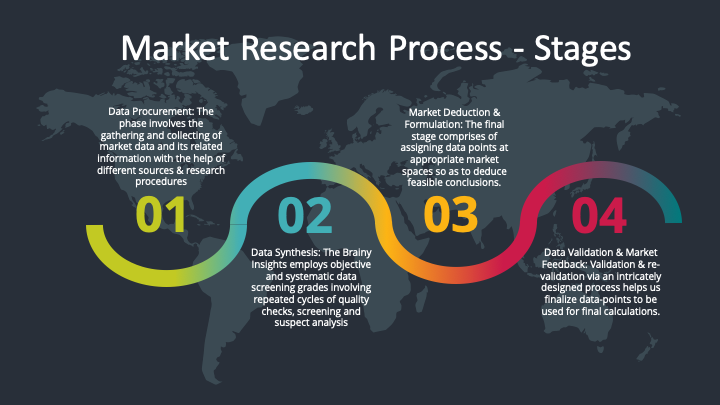
The phase involves the gathering and collecting of market data and its related information with the help of different sources & research procedures.
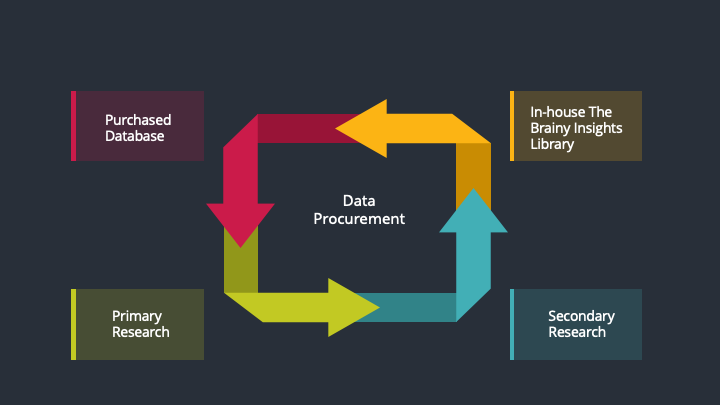
The data procurement stage involves in data gathering and collecting through various data sources.
This stage involves in extensive research. These data sources includes:
Purchased Database: Purchased databases play a crucial role in estimating the market sizes irrespective of the domain. Our purchased database includes:
Primary Research: The Brainy Insights interacts with leading companies and experts of the concerned domain to develop the analyst team’s market understanding and expertise. It improves and substantiates every single data presented in the market reports. Primary research mainly involves in telephonic interviews, E-mail interactions and face-to-face interviews with the raw material providers, manufacturers/producers, distributors, & independent consultants. The interviews that we conduct provides valuable data on market size and industry growth trends prevailing in the market. Our organization also conducts surveys with the various industry experts in order to gain overall insights of the industry/market. For instance, in healthcare industry we conduct surveys with the pharmacists, doctors, surgeons and nurses in order to gain insights and key information of a medical product/device/equipment which the customers are going to usage. Surveys are conducted in the form of questionnaire designed by our own analyst team. Surveys plays an important role in primary research because surveys helps us to identify the key target audiences of the market. Additionally, surveys helps to identify the key target audience engaged with the market. Our survey team conducts the survey by targeting the key audience, thus gaining insights from them. Based on the perspectives of the customers, this information is utilized to formulate market strategies. Moreover, market surveys helps us to understand the current competitive situation of the industry. To be precise, our survey process typically involve with the 360 analysis of the market. This analytical process begins by identifying the prospective customers for a product or service related to the market/industry to obtain data on how a product/service could fit into customers’ lives.
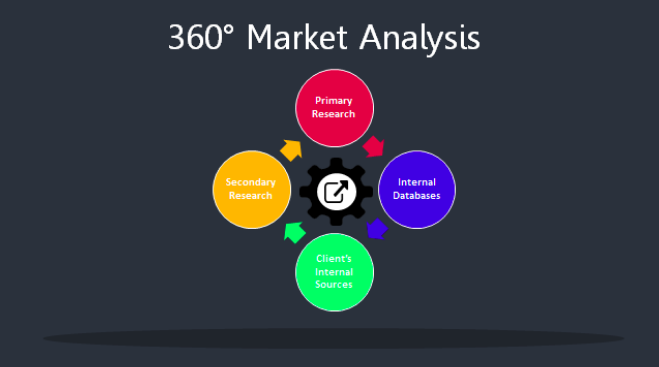
Secondary Research: The secondary data sources includes information published by the on-profit organizations such as World bank, WHO, company fillings, investor presentations, annual reports, national government documents, statistical databases, blogs, articles, white papers and others. From the annual report, we analyse a company’s revenue to understand the key segment and market share of that organization in a particular region. We analyse the company websites and adopt the product mapping technique which is important for deriving the segment revenue. In the product mapping method, we select and categorize the products offered by the companies catering to domain specific market, deduce the product revenue for each of the companies so as to get overall estimation of the market size. We also source data and analyses trends based on information received from supply side and demand side intermediaries in the value chain. The supply side denotes the data gathered from supplier, distributor, wholesaler and the demand side illustrates the data gathered from the end customers for respective market domain.
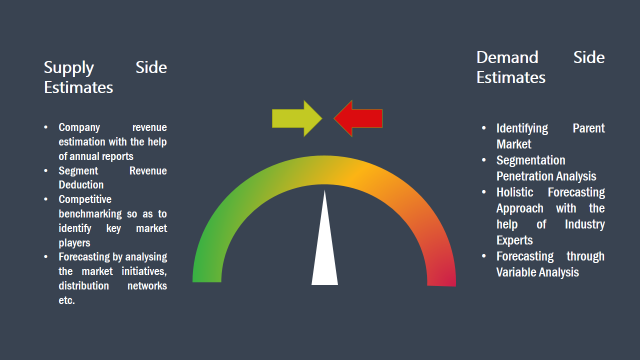
The supply side for a domain specific market is analysed by:
The demand side for the market is estimated through:
In-house Library: Apart from these third-party sources, we have our in-house library of qualitative and quantitative information. Our in-house database includes market data for various industry and domains. These data are updated on regular basis as per the changing market scenario. Our library includes, historic databases, internal audit reports and archives.
Sometimes there are instances where there is no metadata or raw data available for any domain specific market. For those cases, we use our expertise to forecast and estimate the market size in order to generate comprehensive data sets. Our analyst team adopt a robust research technique in order to produce the estimates:
Data Synthesis: This stage involves the analysis & mapping of all the information obtained from the previous step. It also involves in scrutinizing the data for any discrepancy observed while data gathering related to the market. The data is collected with consideration to the heterogeneity of sources. Robust scientific techniques are in place for synthesizing disparate data sets and provide the essential contextual information that can orient market strategies. The Brainy Insights has extensive experience in data synthesis where the data passes through various stages:
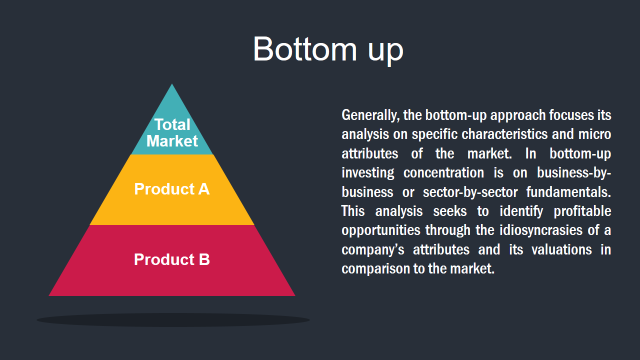
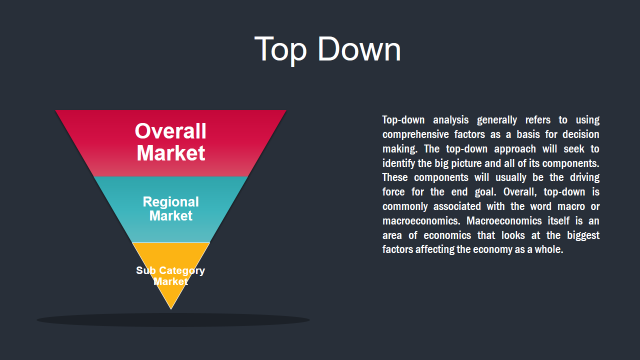
Market Deduction & Formulation: The final stage comprises of assigning data points at appropriate market spaces so as to deduce feasible conclusions. Analyst perspective & subject matter expert based holistic form of market sizing coupled with industry analysis also plays a crucial role in this stage.
This stage involves in finalization of the market size and numbers that we have collected from data integration step. With data interpolation, it is made sure that there is no gap in the market data. Successful trend analysis is done by our analysts using extrapolation techniques, which provide the best possible forecasts for the market.
Data Validation & Market Feedback: Validation is the most important step in the process. Validation & re-validation via an intricately designed process helps us finalize data-points to be used for final calculations.
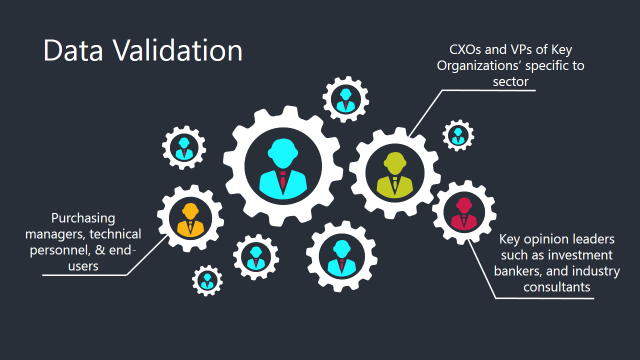
The Brainy Insights interacts with leading companies and experts of the concerned domain to develop the analyst team’s market understanding and expertise. It improves and substantiates every single data presented in the market reports. The data validation interview and discussion panels are typically composed of the most experienced industry members. The participants include, however, are not limited to:
Moreover, we always validate our data and findings through primary respondents from all the major regions we are working on.



















































Free Customization
Fortune 500 Clients
Free Yearly Update On Purchase Of Multi/Corporate License
Companies Served Till Date