- +1-315-215-1633
- sales@thebrainyinsights.com

The global personalized immunotherapy for autoimmune diseases market was valued at USD 60.23 Million in 2024 and grew at a CAGR of 9.3% from 2025 to 2034. The market is expected to reach USD 146.56 Million by 2034. Personalized immunotherapy for autoimmune diseases is fundamentally based on its ability to precisely regulate the immune system at both molecular and cellular levels, targeting the underlying causes of autoimmune dysfunction. Diseases like rheumatoid arthritis, multiple sclerosis, type 1 diabetes, Crohn's disease and others arise when the immune system erroneously targets healthy cells as if they were foreign invaders and launches inappropriate inflammatory responses against them. Existing treatments frequently involve corticosteroids, disease-modifying antirheumatic drugs (DMARDs), biologics, and targeted small molecules that often alleviate symptoms but come with significant limitations, such as partial effectiveness, side effects, systemic toxicity, and a risk of long-term suppression of the immune response. The demand for innovative solutions has paved the way for personalized immunotherapy methods that leverage advanced technologies, including adoptive T-cell transfer, regulatory T-cell modulation, tolerogenic dendritic cells, monoclonal antibodies, engineered peptides, customized vaccines and gene-editing tools like CRISPR-Cas9. These approaches not only enhance therapeutic results but also strive to achieve long-lasting remission while reducing relapse rates and minimizing side effects.
Get an overview of this study by requesting a free sample
Rising Global Prevalence of Autoimmune Diseases – A key factor propelling the Global Personalised Immunotherapy for Autoimmune Diseases Market is the escalating global incidence of autoimmune diseases. These disorders have become a major cause of chronic illness across various regions, with over 350 million individuals worldwide affected by conditions like rheumatoid arthritis, multiple sclerosis, psoriasis, type 1 diabetes, inflammatory bowel disease, and other types of autoimmune diseases. This rise can be attributed to numerous factors such as genetic predisposition, environmental exposures due to urbanisation and lifestyle changes, including stress levels, along with advancements in diagnostic technologies. In developed countries, specifically among women under age 65, these illnesses rank amongst leading causes contributing towards mortality, while their prevalence within emerging economies continues on an upward trajectory too; hence, demanding innovative solutions that transcend beyond traditional symptom-centric treatments, thereby augmenting investments exploring personalised targeted immunotherapeutic options. This factor contributes to the growth and development of the global personalized immunotherapy for autoimmune diseases market.
High Costs Associated – A key restraining factor in the global market is the exceptionally high cost of developing personalised immunotherapies. Unlike conventional small-molecule drugs that can be easily mass-produced, these therapies often require complex biological products like engineered cells, gene-edited constructs, or tailored peptide vaccines. Their production needs specialised facilities, premium materials, skilled experts, and stringent quality control measures—all significantly driving up costs. Additionally, their research and development process is long and resource-intensive. It includes preclinical validation phases through to clinical trials at multiple stages—along with securing regulatory approvals and conducting extensive post-marketing surveillance—which further adds to expenses as many candidates fail during trials, resulting in sunk costs for companies involved. Such financial risks deter smaller biotechnology firms from pursuing advanced projects unless they have significant backing. This factor is hampering the market growth and development.
Growing Patient and Physician Demand for Targeted Therapies – Patients with autoimmune diseases are actively pushing for treatments that prioritise effectiveness, safety, tolerability, and personalisation. Many of them feel frustrated by current therapies due to inconsistent outcomes, frequent relapses, and lifestyle constraints. Physicians also acknowledge the shortcomings of one-size-fits-all approaches and are in pursuit of more tailored solutions. The rise in awareness campaigns, patient advocacy groups, and patient-centred care models has fuelled the call for therapies attuned to individual differences. This increasing demand significantly influences treatment adoption as it aligns with broader healthcare trends toward personalised care and collaborative decision-making practices. This factor is anticipated to provide lucrative growth opportunities in the upcoming years.
The regions analyzed for the market include North America, Europe, South America, Asia Pacific, the Middle East, and Africa. North America emerged as the most significant global personalized immunotherapy for autoimmune diseases market, with a 40% market revenue share in 2024.
North America, spearheaded by the United States and closely followed by Canada, holds the largest portion of the Global Personalised Immunotherapy for Autoimmune Diseases Market. This dominance can be attributed to several interrelated factors, starting with the region's growing investment in biotechnology and pharmaceutical innovation. The U.S., on its own, represents a significantly high percentage of global clinical trials targeting autoimmune diseases—many concentrating on cell-based therapies, monoclonal antibodies, and gene-editing techniques. Furthermore, North America's position as an innovation hub is bolstered by world-class academic institutions and research hospitals alongside prominent biotechnology clusters located in cities such as Boston, San Francisco, and San Diego.
The region's increasing rate of autoimmune diseases significantly boosts demand. Epidemiological studies suggest that about 7-8% of the U.S. population is affected by these disorders, amounting to over 24 million individuals. Disorders like rheumatoid arthritis, type 1 diabetes, systemic lupus erythematosus, and multiple sclerosis make up substantial therapeutic markets as patient support groups and non-profit organisations strive for improved treatments and increased awareness. This scenario fosters a conducive environment for personalised approaches that offer higher efficacy and reduced side effects compared to traditional immunosuppressive therapies.
North America Region Personalized Immunotherapy for Autoimmune Diseases Market Share in 2024 - 40%
www.thebrainyinsights.com
Check the geographical analysis of this market by requesting a free sample
The type segment is divided into mRNA / Gene-Modified Cell Therapies, Cellular Cytoreductive Therapies, Engineered Regulatory T-cell (Treg) Therapies and Other Therapy Types. The mRNA / Gene-Modified Cell Therapies segment dominated the market, with a market share of around 53% in 2024. mRNA and gene-modified cell therapies dominate the Global Personalised Immunotherapy for Autoimmune Diseases Market, primarily because of their revolutionary ability to reprogram the immune system at both molecular and cellular levels. Representing a fusion of genomics, transcriptomics, and advanced delivery systems, these therapies allow clinicians to target pathogenic immune mechanisms directly instead of depending on generalised immunosuppression methods. This category's prominence is clear from the significant volume of clinical trials and a robust investment pipeline. Leading pharmaceutical companies, biotech firms, and academic institutions are deeply involved in developing mRNA vaccine-like strategies, employing CRISPR/Cas9 for gene editing, and advancing genetically engineered T-cell therapies originally used in oncology to address autoimmune diseases. These innovative treatments aim at conditions like type 1 diabetes, multiple sclerosis, rheumatoid arthritis, and other autoimmune diseases.
The indication segment is divided into Multiple sclerosis, Type 1 diabetes, Rheumatoid arthritis and Others. The multiple sclerosis segment dominated the market, with a market share of around 48% in 2024. Multiple Sclerosis (MS) accounts for a significant portion of the Global Personalised Immunotherapy for Autoimmune Diseases Market due to its complex pathogenesis, diverse clinical presentations, and the pressing demand for treatments that can alter disease progression rather than alleviate symptoms. This disease type involves immune-driven demyelination and neurodegeneration in the central nervous system, mainly caused by autoreactive T cells, B cells, and inflammatory processes. The shift towards personalised immunotherapy in multiple sclerosis (MS) arises from the understanding that treatment responses vary significantly among patients, influenced by genetic, epigenetic, and environmental factors impacting disease progression. Consequently, tailored strategies—such as antigen-specific tolerogenic vaccines, gene-edited cell therapies, and engineered regulatory T cells—are gaining attention. For example, CAR-T therapies designed to target autoreactive B cells have shown remarkable success in cancer treatments. They are now being adapted for MS to eliminate harmful clones while preserving beneficial immunity precisely.
| Attribute | Description |
|---|---|
| Market Size | Revenue (USD Million) |
| Market size value in 2024 | USD 60.23 Million |
| Market size value in 2034 | USD 146.56 Million |
| CAGR (2025 to 2034) | 9.3% |
| Historical data | 2021-2023 |
| Base Year | 2024 |
| Forecast | 2025-2034 |
| Region | The regions analyzed for the market are Asia Pacific, Europe, South America, North America, and Middle East and Africa. Furthermore, the regions are further analyzed at the country level. |
| Segments | Therapy Type and Indication |
As per The Brainy Insights, the size of the global Personalized Immunotherapy for Autoimmune Diseases market was valued at USD 60.23 million in 2024 to USD 146.56 million by 2034.
Global Personalized Immunotherapy for Autoimmune Diseases market is growing at a CAGR of 9.3% during the forecast period 2025-2034.
The market's growth will be influenced by rising prevalence of autoimmune diseases across developed and developing countries.
High development costs could hamper the market growth.
This study forecasts revenue at global, regional, and country levels from 2021 to 2034. The Brainy Insights has segmented the global Personalized Immunotherapy for Autoimmune Diseases market based on below mentioned segments:
Global Personalized Immunotherapy for Autoimmune Diseases Market by Therapy Type:
Global Personalized Immunotherapy for Autoimmune Diseases Market by Indication:
Global Personalized Immunotherapy for Autoimmune Diseases Market by Region:
Research has its special purpose to undertake marketing efficiently. In this competitive scenario, businesses need information across all industry verticals; the information about customer wants, market demand, competition, industry trends, distribution channels etc. This information needs to be updated regularly because businesses operate in a dynamic environment. Our organization, The Brainy Insights incorporates scientific and systematic research procedures in order to get proper market insights and industry analysis for overall business success. The analysis consists of studying the market from a miniscule level wherein we implement statistical tools which helps us in examining the data with accuracy and precision.
Our research reports feature both; quantitative and qualitative aspects for any market. Qualitative information for any market research process are fundamental because they reveal the customer needs and wants, usage and consumption for any product/service related to a specific industry. This in turn aids the marketers/investors in knowing certain perceptions of the customers. Qualitative research can enlighten about the different product concepts and designs along with unique service offering that in turn, helps define marketing problems and generate opportunities. On the other hand, quantitative research engages with the data collection process through interviews, e-mail interactions, surveys and pilot studies. Quantitative aspects for the market research are useful to validate the hypotheses generated during qualitative research method, explore empirical patterns in the data with the help of statistical tools, and finally make the market estimations.
The Brainy Insights offers comprehensive research and analysis, based on a wide assortment of factual insights gained through interviews with CXOs and global experts and secondary data from reliable sources. Our analysts and industry specialist assume vital roles in building up statistical tools and analysis models, which are used to analyse the data and arrive at accurate insights with exceedingly informative research discoveries. The data provided by our organization have proven precious to a diverse range of companies, facilitating them to address issues such as determining which products/services are the most appealing, whether or not customers use the product in the manner anticipated, the purchasing intentions of the market and many others.
Our research methodology encompasses an idyllic combination of primary and secondary initiatives. Key phases involved in this process are listed below:
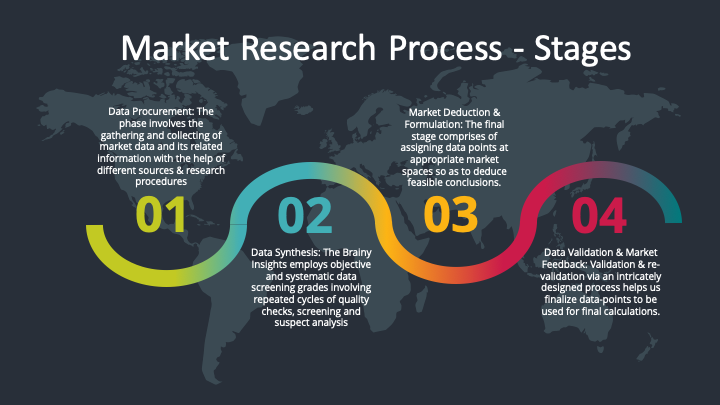
The phase involves the gathering and collecting of market data and its related information with the help of different sources & research procedures.
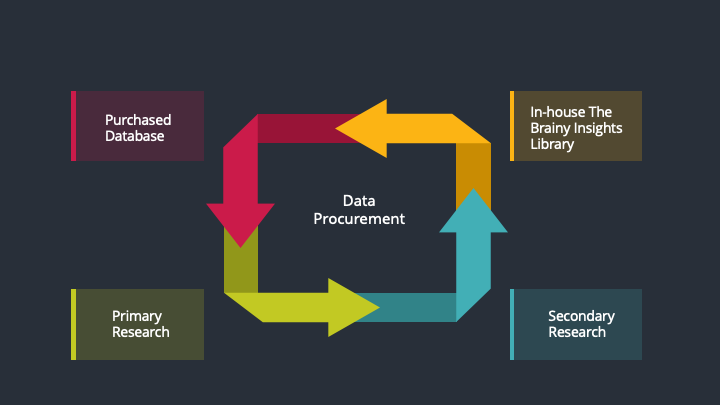
The data procurement stage involves in data gathering and collecting through various data sources.
This stage involves in extensive research. These data sources includes:
Purchased Database: Purchased databases play a crucial role in estimating the market sizes irrespective of the domain. Our purchased database includes:
Primary Research: The Brainy Insights interacts with leading companies and experts of the concerned domain to develop the analyst team’s market understanding and expertise. It improves and substantiates every single data presented in the market reports. Primary research mainly involves in telephonic interviews, E-mail interactions and face-to-face interviews with the raw material providers, manufacturers/producers, distributors, & independent consultants. The interviews that we conduct provides valuable data on market size and industry growth trends prevailing in the market. Our organization also conducts surveys with the various industry experts in order to gain overall insights of the industry/market. For instance, in healthcare industry we conduct surveys with the pharmacists, doctors, surgeons and nurses in order to gain insights and key information of a medical product/device/equipment which the customers are going to usage. Surveys are conducted in the form of questionnaire designed by our own analyst team. Surveys plays an important role in primary research because surveys helps us to identify the key target audiences of the market. Additionally, surveys helps to identify the key target audience engaged with the market. Our survey team conducts the survey by targeting the key audience, thus gaining insights from them. Based on the perspectives of the customers, this information is utilized to formulate market strategies. Moreover, market surveys helps us to understand the current competitive situation of the industry. To be precise, our survey process typically involve with the 360 analysis of the market. This analytical process begins by identifying the prospective customers for a product or service related to the market/industry to obtain data on how a product/service could fit into customers’ lives.
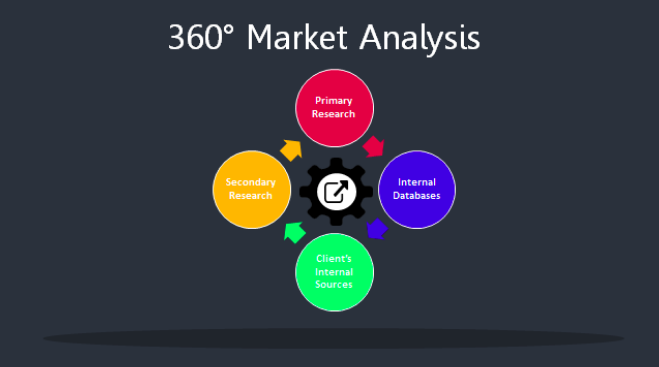
Secondary Research: The secondary data sources includes information published by the on-profit organizations such as World bank, WHO, company fillings, investor presentations, annual reports, national government documents, statistical databases, blogs, articles, white papers and others. From the annual report, we analyse a company’s revenue to understand the key segment and market share of that organization in a particular region. We analyse the company websites and adopt the product mapping technique which is important for deriving the segment revenue. In the product mapping method, we select and categorize the products offered by the companies catering to domain specific market, deduce the product revenue for each of the companies so as to get overall estimation of the market size. We also source data and analyses trends based on information received from supply side and demand side intermediaries in the value chain. The supply side denotes the data gathered from supplier, distributor, wholesaler and the demand side illustrates the data gathered from the end customers for respective market domain.
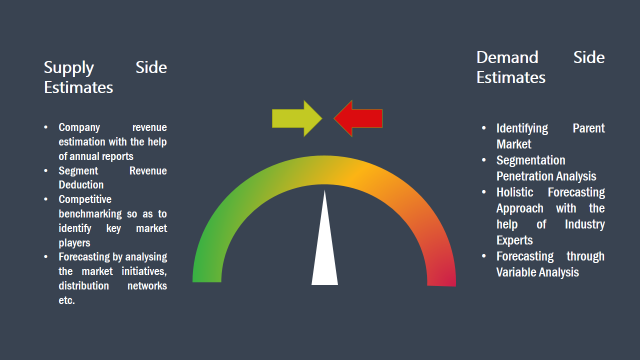
The supply side for a domain specific market is analysed by:
The demand side for the market is estimated through:
In-house Library: Apart from these third-party sources, we have our in-house library of qualitative and quantitative information. Our in-house database includes market data for various industry and domains. These data are updated on regular basis as per the changing market scenario. Our library includes, historic databases, internal audit reports and archives.
Sometimes there are instances where there is no metadata or raw data available for any domain specific market. For those cases, we use our expertise to forecast and estimate the market size in order to generate comprehensive data sets. Our analyst team adopt a robust research technique in order to produce the estimates:
Data Synthesis: This stage involves the analysis & mapping of all the information obtained from the previous step. It also involves in scrutinizing the data for any discrepancy observed while data gathering related to the market. The data is collected with consideration to the heterogeneity of sources. Robust scientific techniques are in place for synthesizing disparate data sets and provide the essential contextual information that can orient market strategies. The Brainy Insights has extensive experience in data synthesis where the data passes through various stages:
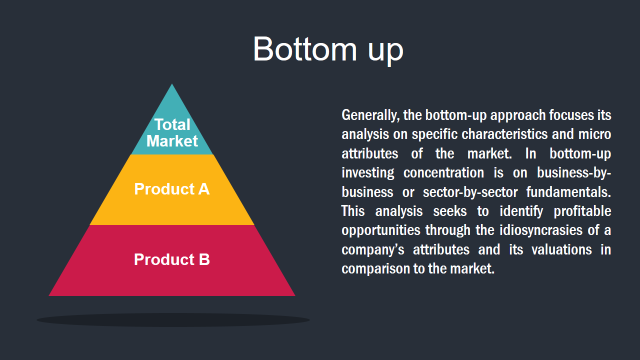
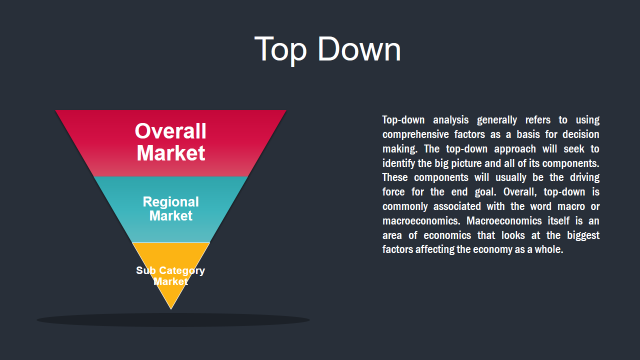
Market Deduction & Formulation: The final stage comprises of assigning data points at appropriate market spaces so as to deduce feasible conclusions. Analyst perspective & subject matter expert based holistic form of market sizing coupled with industry analysis also plays a crucial role in this stage.
This stage involves in finalization of the market size and numbers that we have collected from data integration step. With data interpolation, it is made sure that there is no gap in the market data. Successful trend analysis is done by our analysts using extrapolation techniques, which provide the best possible forecasts for the market.
Data Validation & Market Feedback: Validation is the most important step in the process. Validation & re-validation via an intricately designed process helps us finalize data-points to be used for final calculations.

The Brainy Insights interacts with leading companies and experts of the concerned domain to develop the analyst team’s market understanding and expertise. It improves and substantiates every single data presented in the market reports. The data validation interview and discussion panels are typically composed of the most experienced industry members. The participants include, however, are not limited to:
Moreover, we always validate our data and findings through primary respondents from all the major regions we are working on.



















































Free Customization
Fortune 500 Clients
Free Yearly Update On Purchase Of Multi/Corporate License
Companies Served Till Date