- +1-315-215-1633
- sales@thebrainyinsights.com

The global organic farming market was valued at USD 11 billion in 2024 and grew at a CAGR of 8% from 2025 to 2034. The market is expected to reach USD 23.74 billion by 2034. The increasing need for sustainability in agriculture will drive the growth of the global organic farming market.
Organic farming is a branch of agriculture that focuses on using natural phenomena, biodiversity and the ecological balance to farm sustainably and in an environmentally safe manner. Organic farming does not use or at best restricts the use of synthetic chemicals, fertilizers, genetically modified organisms (GMOs), and intensive farming practices as in the case or ordinary farming. Rather, it encourages the application of organic soil fertilisers such as compost, green manure and bone meal, and the application of crop-rotation, intercropping, biological pest-control and cover-cropping in order to keep soil nutritious and prevent pests and diseases. The main objective of organic farmers is to achieve a sustainable agriculture system, through the development of an integrated agriculture, which would increase the soil fertility, conserve the water, reduce the pollution, and biodiversity. In organic farming, soil is deemed as a living system and, to absorb its fertility, it should be nourished with natural amendments and diminished with erosion and degradation processes. Interest in organic food among consumers has risen dramatically over the past years as more and more people become conscious of health, environmental and ethical concerns. Also, organic farming serves to moderate climate change because it lowers production of greenhouse gases and enhances sequestration of carbon in soils.
Get an overview of this study by requesting a free sample
The growing emphasis on agricultural sustainability – The aspect of sustainability of soil and crop management lies among the most important drivers of the market. Organic farming practices, which include crop rotation, green manure and composting, increase soil fertility, structure and diversity, all of which lead to more resilience of agricultural systems in the long run. The sustainable practice would also reduce the input of synthetic inputs, favouring natural cycles of nutrition and cycling of pests. It is further noted that though the cost of conversion of early organic farming may be high, the long-term input costs which can be minimal can offset overall cost effectiveness. Organic farming has also developed due to technological changes. Organic methods have been improved by innovations in organic pest management, biofertilizer, and methods of composting and precision agriculture to be more efficient and reliable. In addition, a more advanced supply chain infrastructure enables producers to gain easier access to organic markets, and to stay in line with the organic standards. These internal factors have sustained the feasibility of organic farming on their own, but more effectively demonstrated the strength of organic farming as a profitable and sustainable option in the contemporary agricultural set up.
High costs of production and premium retail prices – Organic farming is less productive per-acre because it does not have the use of synthetic fertilizers and chemical pesticides and thus production on a large scale is unfit for organic farming. This yield gap emerges to be a large limit, more so in the event that food demand across the globe is on the rise. Furthermore, organic farmers experience an increased cost of production. Use of organic seeds, organic manure, organic pesticides and the above practices lead to high operation costs and these costs may make it difficult to encourage small and medium-scale farmers to shift to organic farming. The other constraining internal factor is the complexity of the process of getting organic certification. The documentation, periodic inspections and designated transition period of several years of conventional to organic practices is mandatory in obtaining and retaining certification. These burdens ensure that it is time consuming and demands a lot of resources, especially where the farmers are left unsponsored either financially or institutionally. In addition, lack of technical knowledge and expertise in organic techniques is also an impediment to proper application of the same. Several farmers have no experience in organic pest control, crop rotation or even soil health control meaning that they are not efficient and do not have consistent crop performance. Finally, the post-harvest management problems which include the absence of the specialized processing facilities, transport system, and organic processing plants may undermine the quality of goods and tend to make them less marketable.
Changing consumer behaviour and greater market support – Consumer behaviour, environmental concern issues, policy support, and accessibility in the market are the major forces that influence the growth of global organic farming market. The increasing health-consciousness of consumers being one of the greatest drivers as the consumers are more inclined towards food which is perceived to be devoid of any synthetic chemicals, GMOs, and harmful additives. This change in consumer tendency has evoked a high demand of organically cultivated fruits, milk, as well as meat. Concern for health and increased interest in environmental sustainability has also emerged as driving forces behind consumer goods as consumers and other stakeholders have come to understand the benefits of organic agriculture in providing soil protection, cleaning up water, and limiting damaging greenhouse gases. Being environmentally friendly complements this value further to making organic agriculture attractive. The other great external factor is the favourable regulatory climate. In most of the areas, especially the ones in Europe and Asia, governments are adopting favourable measures by subsidies, technical support, and easy certification procedures to promote organic farming practices. The initiatives reduce the barriers of entry of farmers but make organic products in the market more credible and traceable. It is also being caused by the proliferation of organized retailing and e-commerce. Organic products are becoming more widely available and seen by people as more supermarkets, health stores and online suppliers introduce them.
The regions analyzed for the market include North America, Europe, South America, Asia Pacific, the Middle East, and Africa. Europe emerged as the most significant global organic farming market, with a 37% market revenue share in 2024.
Europe can be considered a leader of the global organic farming market owing to the conglomeration of high consumer activities, favourable government regulations, and well-developed certification apparatus. The area ranks first in the volumes of land that is under organic cultivation, presence of organic producers and volume of consumption of organic products. European consumers are the most conscious and environmentally aware in the world and this makes a long-term popularity of organic food and beverages. Such a realization is evident in the fact that Europe has spent a lot of their per capita money on organic foods and as such is considered the biggest organic market in the world. Extensive policies and regulatory frameworks have been established by the European Union (EU) to encourage organic agriculture noted to include subsidies under Common Agricultural Policy (CAP), funds to research and product-labelling standards being strict on the organic labels. Moreover, much of the sophisticated supply chain and retail distribution networks that exist in Europe give way to high levels of accessibility of organic products through most supermarkets, specialty outlets, and farmer markets, which are convenient and accessible to consumers. Countries such as Germany, France, Italy, and Spain are major contributors, and together, they make a significant portion of European organic production and consumption.
Europe Region Organic Farming Market Share in 2024 - 37%
www.thebrainyinsights.com
Check the geographical analysis of this market by requesting a free sample
The crop type segment is divided into fruits & vegetables, cereals & grains, oilseeds & pulses and others. The fruits and vegetables segment dominated the market, with a market share of around 40% in 2024. The most common type of crop in the global organic farming market is fruits and vegetables due to the high demand by consumers of fruit and vegetable crops as well as their market value and increased health awareness and nutrition. This segment has emerged as the leader mostly because it is consumed directly and frequently by the health-conscious consumers, who tend to pay more attention to organic produce as they consider them more safe, fresh, and free of any chemical residues. All the other varieties of organic foods when compared have the highest turnover in both the retail stores such as supermarket and farmers markets, therefore, fruits and vegetables are the most visible and accessible point of entry to consumers who wish to change their lives towards organic lives. The superiority of such a segment can also be demonstrated by faster cycles of many fruits and vegetables, which enable the organic farmers to have more than one harvest per year. This attracts faster returns than investment in other long-cycle crops such as grains. Moreover, the numerous governments and certification organizations have been focusing on fruit and vegetables in their policies and marketing of organic farming as they are the key to healthy people and diets. Trends among consumers like eating plant-based foods, clean-label, and fresh food home delivery services have also contributed to the increase in demand of organically grown fruits and vegetables. The high perishability and freshness necessities of this segment also make it suitable to a local organic farming, bolstering local supply chains.
The method segment is divided into organic cultivation, organic aquaculture, organic apiculture, organic livestock farming and others. The organic cultivation segment dominated the market, with a market share of around 45% in 2024. Organic farming plays a central role in developing crops that are free of any chemicals, and which are environmentally friendly. This sector mainly includes cultivation which is free of synthetic fertilizers, pesticides and genetically engineered seeds and crops, and which uses natural inputs like compost, green manure, and biological control of the pest. Organic farming is the pillar of the organic market since it responds directly to the rising issues of food safety, environmental destruction and soil quality and therefore the producers and consumers prefer organic farming. The versatile application of organic growing to a variety of crops, fruits and vegetables as well as cereals and pulses also augments the segment’s growth. Moreover, it has positive effects on biodiversity and tends to maintain an adequate balance in the ecosystem as it encourages crop rotation, and intercropping. Regulatory frameworks and certification systems that present credibility and assurance of organic labels also contribute to the growing adoption of organic cultivation practices. In general, organic farming has become the leader of the organic farming sector due to its capacity to provide scale-able and green food production to meet the trends of healthy food consumption and environmental sustainability, which is accepted worldwide.
The input type segment is divided into organic seeds, organic fertilizers, organic pesticides and others. The organic fertilizers segment dominated the market, with a market share of around 43% in 2024. Organic fertilizers commands a large share of the global market given their vital need in ensuring the fertility of a the soil and healthy growth of crops. Also, unlike the typical fertilisers, the organic ones are of natural origins in the form of compost, manure, bone meal, green manure, and other materials of animal or vegetable origin. Not only do they supply such important nutrients as nitrogen, phosphorus and potassium, but also enhance the soil structures, moisture sedimentation and microbial life which are highly crucial in long term soil health and their productivity. The current leader in the case of organic fertilizers is due to the rising awareness by both farmers and consumers about the need to sustain or rather create ecological balance and avoid environment pollution caused by synthetic additions. Organic fertilizers will allow more chemical pollution to be taken off water bodies, allow greenhouse gases emissions to be reduced, and bring more kinds of organisms into agriculture ecosystems. Much diversity and availability of organic sources of nutrients is another reason that will contribute to the domination of the organic fertilizers. The sources can be adapted to the different soils and different crops. Development of better biofertilizers through new technology and use of organic fertilizers have made up the loss in fertility and value of organic fertilizers to some extent and made it more viable in the eyes of farmers. In a nutshell, organic fertilizers form the pinnacle of organic input systems, which are nutritious as well as ecologically sound.
| Attribute | Description |
|---|---|
| Market Size | Revenue (USD Billion) |
| Market size value in 2024 | USD 11 Billion |
| Market size value in 2034 | USD 23.74 Billion |
| CAGR (2025 to 2034) | 8% |
| Historical data | 2021-2023 |
| Base Year | 2024 |
| Forecast | 2025-2034 |
| Region | The regions analyzed for the market are Asia Pacific, Europe, South America, North America, and Middle East and Africa. Furthermore, the regions are further analyzed at the country level. |
| Segments | Crop Type, Method and Input Type |
As per The Brainy Insights, the size of the global organic farming market was valued at USD 11 billion in 2024 to USD 23.74 billion by 2034.
Global organic farming market is growing at a CAGR of 8% during the forecast period 2025-2034.
The market's growth will be influenced by the growing emphasis on agricultural sustainability.
High costs of production and premium retail prices could hamper the market growth.
This study forecasts revenue at global, regional, and country levels from 2021 to 2034. The Brainy Insights has segmented the global organic farming market based on below mentioned segments:
Global Organic Farming Market by Crop Type:
Global Organic Farming Market by Method:
Global Organic Farming Market by Input Type:
Global Organic Farming Market by Region:
Research has its special purpose to undertake marketing efficiently. In this competitive scenario, businesses need information across all industry verticals; the information about customer wants, market demand, competition, industry trends, distribution channels etc. This information needs to be updated regularly because businesses operate in a dynamic environment. Our organization, The Brainy Insights incorporates scientific and systematic research procedures in order to get proper market insights and industry analysis for overall business success. The analysis consists of studying the market from a miniscule level wherein we implement statistical tools which helps us in examining the data with accuracy and precision.
Our research reports feature both; quantitative and qualitative aspects for any market. Qualitative information for any market research process are fundamental because they reveal the customer needs and wants, usage and consumption for any product/service related to a specific industry. This in turn aids the marketers/investors in knowing certain perceptions of the customers. Qualitative research can enlighten about the different product concepts and designs along with unique service offering that in turn, helps define marketing problems and generate opportunities. On the other hand, quantitative research engages with the data collection process through interviews, e-mail interactions, surveys and pilot studies. Quantitative aspects for the market research are useful to validate the hypotheses generated during qualitative research method, explore empirical patterns in the data with the help of statistical tools, and finally make the market estimations.
The Brainy Insights offers comprehensive research and analysis, based on a wide assortment of factual insights gained through interviews with CXOs and global experts and secondary data from reliable sources. Our analysts and industry specialist assume vital roles in building up statistical tools and analysis models, which are used to analyse the data and arrive at accurate insights with exceedingly informative research discoveries. The data provided by our organization have proven precious to a diverse range of companies, facilitating them to address issues such as determining which products/services are the most appealing, whether or not customers use the product in the manner anticipated, the purchasing intentions of the market and many others.
Our research methodology encompasses an idyllic combination of primary and secondary initiatives. Key phases involved in this process are listed below:
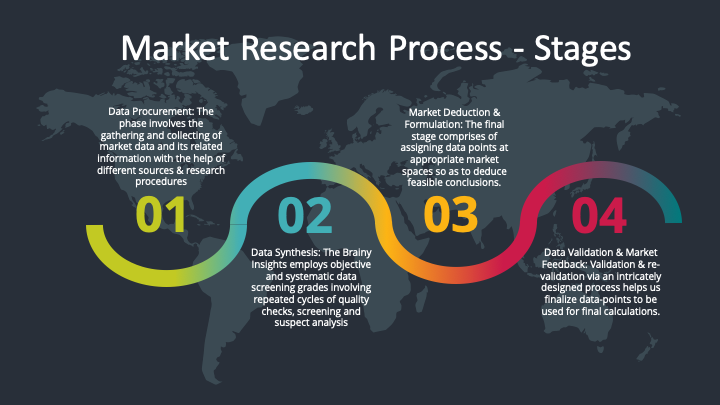
The phase involves the gathering and collecting of market data and its related information with the help of different sources & research procedures.
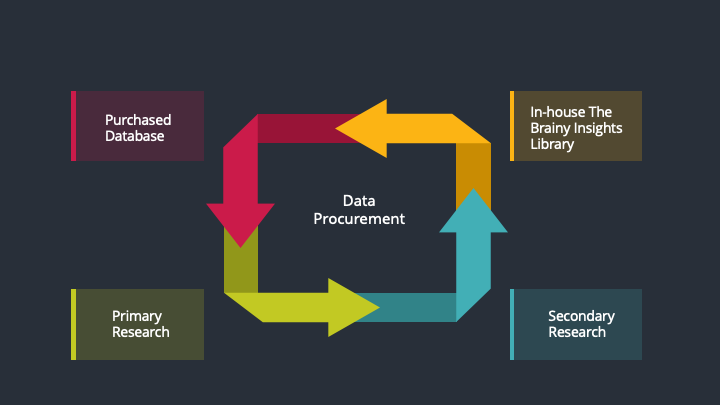
The data procurement stage involves in data gathering and collecting through various data sources.
This stage involves in extensive research. These data sources includes:
Purchased Database: Purchased databases play a crucial role in estimating the market sizes irrespective of the domain. Our purchased database includes:
Primary Research: The Brainy Insights interacts with leading companies and experts of the concerned domain to develop the analyst team’s market understanding and expertise. It improves and substantiates every single data presented in the market reports. Primary research mainly involves in telephonic interviews, E-mail interactions and face-to-face interviews with the raw material providers, manufacturers/producers, distributors, & independent consultants. The interviews that we conduct provides valuable data on market size and industry growth trends prevailing in the market. Our organization also conducts surveys with the various industry experts in order to gain overall insights of the industry/market. For instance, in healthcare industry we conduct surveys with the pharmacists, doctors, surgeons and nurses in order to gain insights and key information of a medical product/device/equipment which the customers are going to usage. Surveys are conducted in the form of questionnaire designed by our own analyst team. Surveys plays an important role in primary research because surveys helps us to identify the key target audiences of the market. Additionally, surveys helps to identify the key target audience engaged with the market. Our survey team conducts the survey by targeting the key audience, thus gaining insights from them. Based on the perspectives of the customers, this information is utilized to formulate market strategies. Moreover, market surveys helps us to understand the current competitive situation of the industry. To be precise, our survey process typically involve with the 360 analysis of the market. This analytical process begins by identifying the prospective customers for a product or service related to the market/industry to obtain data on how a product/service could fit into customers’ lives.
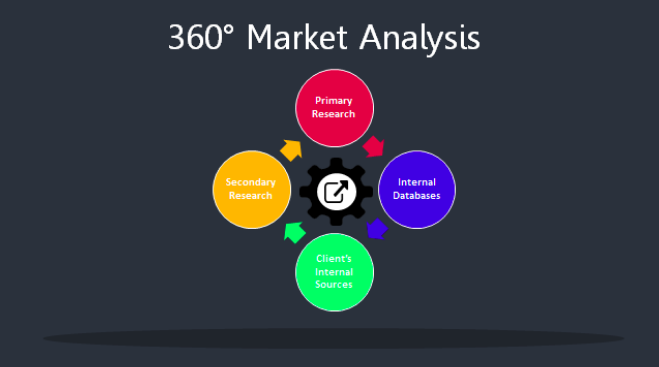
Secondary Research: The secondary data sources includes information published by the on-profit organizations such as World bank, WHO, company fillings, investor presentations, annual reports, national government documents, statistical databases, blogs, articles, white papers and others. From the annual report, we analyse a company’s revenue to understand the key segment and market share of that organization in a particular region. We analyse the company websites and adopt the product mapping technique which is important for deriving the segment revenue. In the product mapping method, we select and categorize the products offered by the companies catering to domain specific market, deduce the product revenue for each of the companies so as to get overall estimation of the market size. We also source data and analyses trends based on information received from supply side and demand side intermediaries in the value chain. The supply side denotes the data gathered from supplier, distributor, wholesaler and the demand side illustrates the data gathered from the end customers for respective market domain.
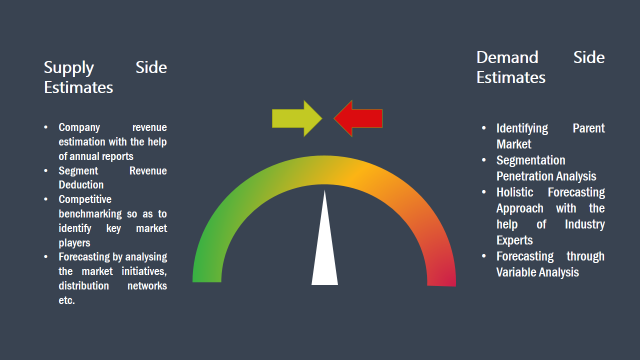
The supply side for a domain specific market is analysed by:
The demand side for the market is estimated through:
In-house Library: Apart from these third-party sources, we have our in-house library of qualitative and quantitative information. Our in-house database includes market data for various industry and domains. These data are updated on regular basis as per the changing market scenario. Our library includes, historic databases, internal audit reports and archives.
Sometimes there are instances where there is no metadata or raw data available for any domain specific market. For those cases, we use our expertise to forecast and estimate the market size in order to generate comprehensive data sets. Our analyst team adopt a robust research technique in order to produce the estimates:
Data Synthesis: This stage involves the analysis & mapping of all the information obtained from the previous step. It also involves in scrutinizing the data for any discrepancy observed while data gathering related to the market. The data is collected with consideration to the heterogeneity of sources. Robust scientific techniques are in place for synthesizing disparate data sets and provide the essential contextual information that can orient market strategies. The Brainy Insights has extensive experience in data synthesis where the data passes through various stages:
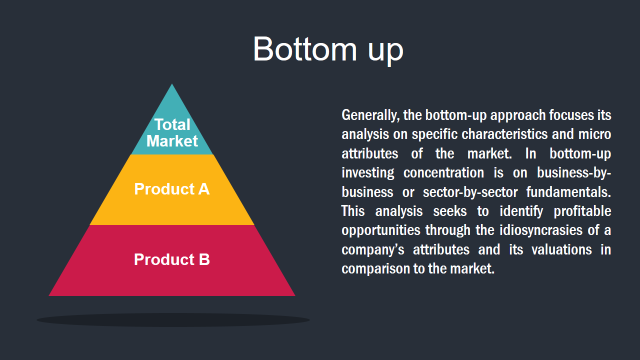
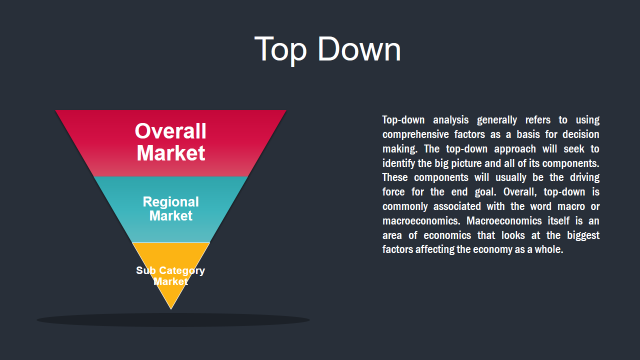
Market Deduction & Formulation: The final stage comprises of assigning data points at appropriate market spaces so as to deduce feasible conclusions. Analyst perspective & subject matter expert based holistic form of market sizing coupled with industry analysis also plays a crucial role in this stage.
This stage involves in finalization of the market size and numbers that we have collected from data integration step. With data interpolation, it is made sure that there is no gap in the market data. Successful trend analysis is done by our analysts using extrapolation techniques, which provide the best possible forecasts for the market.
Data Validation & Market Feedback: Validation is the most important step in the process. Validation & re-validation via an intricately designed process helps us finalize data-points to be used for final calculations.
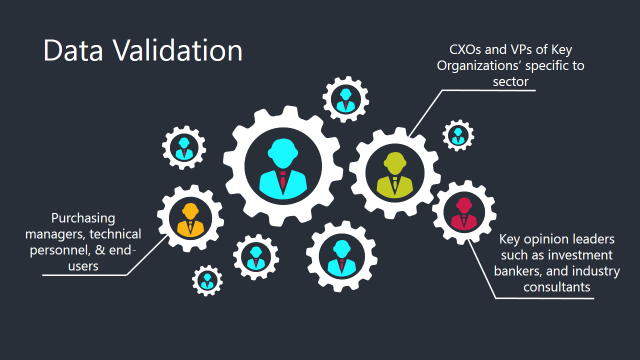
The Brainy Insights interacts with leading companies and experts of the concerned domain to develop the analyst team’s market understanding and expertise. It improves and substantiates every single data presented in the market reports. The data validation interview and discussion panels are typically composed of the most experienced industry members. The participants include, however, are not limited to:
Moreover, we always validate our data and findings through primary respondents from all the major regions we are working on.
















































Free Customization
Fortune 500 Clients
Free Yearly Update On Purchase Of Multi/Corporate License
Companies Served Till Date