- +1-315-215-1633
- sales@thebrainyinsights.com

The global non-alcoholic spirits market was valued at USD 535 million in 2024 and grew at a CAGR of 8.44% from 2025 to 2034. The market is expected to reach USD 1202.95 million by 2034. The increasing awareness will drive the growth of the global non-alcoholic spirits market.
Non-alcoholic spirits are products in the beverage category that mimic the flavour, sensation and intricacy of classic spirits that are alcoholic in nature, i.e., gin, rum, whiskey, and tequila, and aspire to resemble those products both in taste and experience but without the alcohol. These beverages are typically less than 0.5 percent alcohol by volume (ABV), and are produced to cater to consumers, who are non-alcohol drinkers, based on health, religious, personal or lifestyles choices. Non-alcoholic spirits carry subtleties of taste with the help of botanical infusions, spices, herbs, fruits, barks and other aromatic substances. It aims at providing an adult-like, high-quality drinking experience that can be used either in mocktails or as a straight drink. The manufacturing technique for non-alcoholic spirits is diverse. It may employ methods advanceable of distillation, maceration and filtration as spirit production, and then the elimination or evasion of the creation and formation of alcohol. There are brands that follow the same flavour of the original spirit and there are brands that strive to produce new flavours. The emergence of non-alcoholic spirits is in line with the mindful drinking and wellness trends being led by younger consumers. They are also becoming a trend in bars, restaurants and social events as they are being balanced in alcohol-free innovative cocktails by the mixologists. The major brands in this category are Seedlip, Lyre, Ritual Zero Proof, and Monday among others. Price parity, taste authenticity, and consumer education still pose a problem at hand, but innovation and awareness initiatives drive the market’s growth.
Get an overview of this study by requesting a free sample
Industry innovations and brand marketing – enhancement in methods of production including cold distillation, vacuum distillation and expert extraction of flavours is a major driving force. They have greatly contributed to improved flavour, palate, and texture of non-alcoholic spirits with the possibility of bringing them to an extremely close resemblance to the alcoholic version of the same. This has increased the level of consumer satisfaction and consumer trust in the category. Furthermore, the fact that non-alcoholic spirits are marketed as high-end lifestyle products has been important. Superior branding, smooth packs and rhetoric focused on health and elegance have made these drinks an object of covetousness and social acceptability beyond the youthful loud venues such as parties, bars and eateries. The expansion of products to an extensive range of flavour profiles has also increased the attraction of the product, with different flavour options across the spectrum of consumer occasions. Further, increased presence of non-alcoholic spirits in traditional liquor stores as well as supermarkets and most importantly in the HoReCa (Hotel, Restaurant, Cafe) has increased its accessibility for consumers, thereby driving the market's growth. Promotional indulgence such as sampling and mixology activities has aided in establishing their acceptance into society.
Pricing and quality issues – the most remarkable deterrent lies in the fact that these drinks are very expensive. Although some of these non-alcoholic spirits do not contain alcohol, they are usually at the same point in price or higher than the alcoholic spirits. This forms a perception gap in value particularly in the perception of consumers who expect lower prices on alcohol-free products. The other significant issue is taste. Although the process of production has been enhanced, the current non-alcoholic spirits have largely failed to match the depth, warmth and complexity of traditional spirits. This usually results in frustration to the consumers who want to find a near sensory alternative. Moreover, people do not know and understand much about non-alcoholic spirits. A lot of consumers do not understand these products, how to use or consume them, how to differentiate them, mixers, mocktails and soft drinks, and thus hesitate which limits the market’s growth. The other shortcoming with them is that they sometimes have a very low shelf life especially when compared to alcoholic beverages. Certain products have to be refrigerated once opened and this would prove to be a nuisance with some consumers. Moreover, non-alcoholic spirits and variety in availability are still highly focused in developed markets and can hardly see any in roads in the emerging regions because of distribution issues and less availability of the brands.
Social, cultural and lifestyle changes – The increasing concern on health and wellness around the world is also one of the biggest drivers. As more people learn of the negative impacts of alcohol on physical and mental health, they cut on alcohol consumption or start looking for alternatives that complement their healthier lifestyles, especially the millennial and Gen Z population. This has resulted in the sober-curious phenomenon where people test out how it feels to stop drinking but not abstinence fully because they still socialize with drinks. This has meant that non-alcoholic spirits have formed an optimum compromise, giving the appeal of the complexity and ceremony of drinking without the harmful side-effects. It is also influenced by culture and laws as in areas where alcohol is not allowed because of religion and social dynamics these products will provide acceptable and all-encompassing options. Also, the evolving societal trends are promoting the visibility of inclusiveness in social life, where the provision of advanced non-alcoholic beverages would enable non-drinking people not to miss out on the joint activities including the celebrations or restaurants. The popularization of alcohol-free products has also been enhanced by heavier restrictions on the advertisement of alcohol and more awareness raised against such aspects as drunken driving. Globalization and the city life have now created a more sophisticated customer who would want quality, adult beverage which is better than the sweetened drinks or juices.
The regions analyzed for the market include North America, Europe, South America, Asia Pacific, the Middle East, and Africa. North America emerged as the most significant global non-alcoholic spirits market, with a 35% market revenue share in 2024.
North American market is enjoying a leading role in the world non-alcoholic spirits market due to the combination of the changing preferences of the consumers, healthy lives and robust distribution channels. There has been a tremendous increase in the sober-curious movement in the region, especially in the United States and Canada as the new generation of millennial and Gen Z consumers actively cut down on the consumption of alcohol without foregoing their social experiences. This has led to the need of alcohol-free options and there are increasing need to get options that provide the same effect: the taste and feel of the original spirit. Working mostly in urban environments with wellness deeply engrained into the culture and a well-disposed population willing and eager to try new lifestyle products, non-alcoholic spirits have achieved broad visibility in big-city centres. The market also enjoys the strong existence of so-called early-adopter brands, like Ritual Zero Proof, Monday, and such global brands as Seedlip, who are wisely positioned in the North America-based markets through retailer, e-retailer, and hospitality distributor partnerships. The high availability of bars, restaurants, and mixologists who encourage the taste of non-alcoholic concoctions has led to the heightened interest of the consumer or portrayed the socially acceptable right to drink these beverages. In addition, the well-developed digital infrastructure and a tendency to utilize the available e-commerce tools in North America allowed an easy accessibility and fast market penetration.
North America Region Non-Alcoholic Spirits Market Share in 2024 - 35%
www.thebrainyinsights.com
Check the geographical analysis of this market by requesting a free sample
The product type segment is divided into whiskey alternatives, gin alternatives, rum alternatives, tequila alternatives, vodka alternatives, bitters & aperitifs and others. The gin alternatives segment dominated the market, with a market share of around 38% in 2024. Gin alternatives are in a leading position in the world of non-alcoholic spirits, as they are versatile with botanicals, they were in the market early and they are accepted by many people. The reason behind their popularity is gin itself, which is traditionally designed with a combination of juniper and different herbs, spices, and botanicals. It is comparatively easier to achieve the complex and aromatic nature of the flavour profile of gin in non-alcoholic format without considering the depth or mouthfeel offered by alcohol. Consequently, non-alcoholic gin alternatives provide a taste that entails drinking experience which is like their alcoholic version and thus it is one of the most favoured beverages by people who drink alcohol but are health conscious and want something that is sophisticated. In addition, gin alternatives have become an interesting feature of mocktails and cocktail-like beverages with the emergence of sober-curious culture and the growing popularity of alcohol-free products in the social life. Their versatility to be served easily by mixing with common mixers such as tonic water, juices like citrus juice, and herbs also makes its adoption easier in bar menus as well as at-home consumption. Most of the prominent non-alcoholic spirit brands, like Seedlip and Ceder-s, have made gin-type products their first success strategy and enhanced their presence and availability in the network. There is also the high-end brand communication, sophisticated packaging and wellness perks of botanicals which make them more attractive to the urban, health-conscious consumer. In general, the adaptability of taste, versatility of drinks prepared with gin substitutes, and good market positioning have entrenched the position of gin alternatives in the non-alcoholic spirits market.
The distribution channel segment is divided into supermarkets & hypermarkets, specialty stores, HoReCa (hotels, restaurants, cafés), e-commerce websites, brand-owned platforms and others. The HoReCa (hotels, restaurants, cafés) segment dominated the market, with a market share of around 48% in 2024. Hospitality outlets have become central places to introduce and make alcohol-free offerings the norm because of the increased popularity of mindful drinking especially among millennials and Gen Z. Numerous bars and high-end restaurants now have a tailored non-alcoholic cocktail list, with advanced options that replicate the flavour and presentation of old-fashioned alcoholic beverages. Through this experiential strategy, consumers can experiment with non-alcoholic spirits in a social and fashionable atmosphere and in most cases, it leads to new consumers trying the product and brand discovery. Also, the HoReCa industry is a mover in the beverage market scope, and mixologists and bartenders have a crucial role in the promotion of non-alcoholic products to customers with the creation of unique and interesting products and the art of drinks. In addition, hotels and fine restaurants are becoming more accommodating and wellness-oriented, so the place where no alcohol is consumed does not deprive the customer of interesting beverages. The trend is in line with the general tendency of the hospitality industry to offer personalized, health friendly service. Presence of non-alcoholic spirits in exclusive or fashionable places also improves the brand perception and customer confidence. HoReCa offers a more detailed, instructive and aspirational introduction to the category when compared with retail or e-commerce channels. Consequently, this market segment has remained the force that is moving the non-alcoholic spirits industry in terms of making people aware, adopting, and re-ordering products produced by the non-alcoholic spirits industry.
| Attribute | Description |
|---|---|
| Market Size | Revenue (USD Million) |
| Market size value in 2024 | USD 535 Million |
| Market size value in 2034 | USD 1202.95 Million |
| CAGR (2025 to 2034) | 8.44% |
| Historical data | 2021-2023 |
| Base Year | 2024 |
| Forecast | 2025-2034 |
| Region | The regions analyzed for the market are Asia Pacific, Europe, South America, North America, and Middle East and Africa. Furthermore, the regions are further analyzed at the country level. |
| Segments | Product Type and Distribution Channel |
As per The Brainy Insights, the size of the global non-alcoholic spirits market was valued at USD 535 million in 2024 to USD 1202.95 million by 2034.
Global non-alcoholic spirits market is growing at a CAGR of 8.44% during the forecast period 2025-2034.
The market's growth will be influenced by industry innovations and brand marketing.
Pricing and quality issues could hamper the market growth.
This study forecasts revenue at global, regional, and country levels from 2021 to 2034. The Brainy Insights has segmented the global non-alcoholic spirits market based on below mentioned segments:
Global Non-Alcoholic Spirits Market by Product Type:
Global Non-Alcoholic Spirits Market by Distribution Channel:
Global Non-Alcoholic Spirits Market by Region:
Research has its special purpose to undertake marketing efficiently. In this competitive scenario, businesses need information across all industry verticals; the information about customer wants, market demand, competition, industry trends, distribution channels etc. This information needs to be updated regularly because businesses operate in a dynamic environment. Our organization, The Brainy Insights incorporates scientific and systematic research procedures in order to get proper market insights and industry analysis for overall business success. The analysis consists of studying the market from a miniscule level wherein we implement statistical tools which helps us in examining the data with accuracy and precision.
Our research reports feature both; quantitative and qualitative aspects for any market. Qualitative information for any market research process are fundamental because they reveal the customer needs and wants, usage and consumption for any product/service related to a specific industry. This in turn aids the marketers/investors in knowing certain perceptions of the customers. Qualitative research can enlighten about the different product concepts and designs along with unique service offering that in turn, helps define marketing problems and generate opportunities. On the other hand, quantitative research engages with the data collection process through interviews, e-mail interactions, surveys and pilot studies. Quantitative aspects for the market research are useful to validate the hypotheses generated during qualitative research method, explore empirical patterns in the data with the help of statistical tools, and finally make the market estimations.
The Brainy Insights offers comprehensive research and analysis, based on a wide assortment of factual insights gained through interviews with CXOs and global experts and secondary data from reliable sources. Our analysts and industry specialist assume vital roles in building up statistical tools and analysis models, which are used to analyse the data and arrive at accurate insights with exceedingly informative research discoveries. The data provided by our organization have proven precious to a diverse range of companies, facilitating them to address issues such as determining which products/services are the most appealing, whether or not customers use the product in the manner anticipated, the purchasing intentions of the market and many others.
Our research methodology encompasses an idyllic combination of primary and secondary initiatives. Key phases involved in this process are listed below:
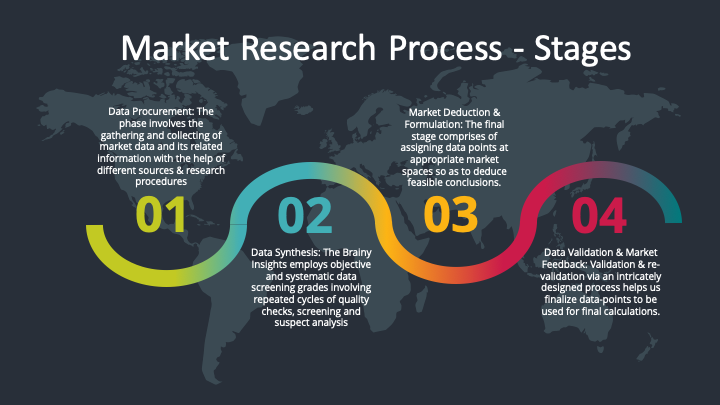
The phase involves the gathering and collecting of market data and its related information with the help of different sources & research procedures.
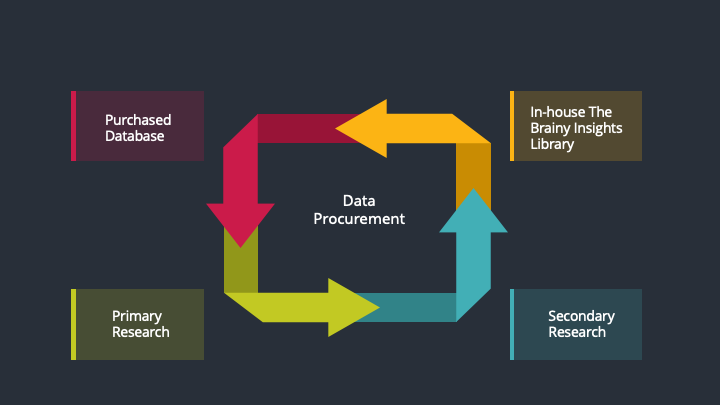
The data procurement stage involves in data gathering and collecting through various data sources.
This stage involves in extensive research. These data sources includes:
Purchased Database: Purchased databases play a crucial role in estimating the market sizes irrespective of the domain. Our purchased database includes:
Primary Research: The Brainy Insights interacts with leading companies and experts of the concerned domain to develop the analyst team’s market understanding and expertise. It improves and substantiates every single data presented in the market reports. Primary research mainly involves in telephonic interviews, E-mail interactions and face-to-face interviews with the raw material providers, manufacturers/producers, distributors, & independent consultants. The interviews that we conduct provides valuable data on market size and industry growth trends prevailing in the market. Our organization also conducts surveys with the various industry experts in order to gain overall insights of the industry/market. For instance, in healthcare industry we conduct surveys with the pharmacists, doctors, surgeons and nurses in order to gain insights and key information of a medical product/device/equipment which the customers are going to usage. Surveys are conducted in the form of questionnaire designed by our own analyst team. Surveys plays an important role in primary research because surveys helps us to identify the key target audiences of the market. Additionally, surveys helps to identify the key target audience engaged with the market. Our survey team conducts the survey by targeting the key audience, thus gaining insights from them. Based on the perspectives of the customers, this information is utilized to formulate market strategies. Moreover, market surveys helps us to understand the current competitive situation of the industry. To be precise, our survey process typically involve with the 360 analysis of the market. This analytical process begins by identifying the prospective customers for a product or service related to the market/industry to obtain data on how a product/service could fit into customers’ lives.
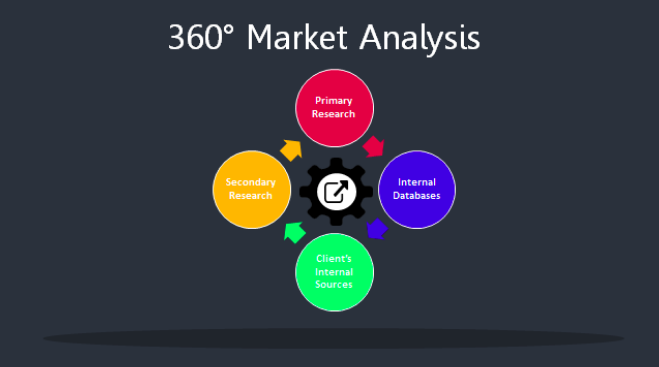
Secondary Research: The secondary data sources includes information published by the on-profit organizations such as World bank, WHO, company fillings, investor presentations, annual reports, national government documents, statistical databases, blogs, articles, white papers and others. From the annual report, we analyse a company’s revenue to understand the key segment and market share of that organization in a particular region. We analyse the company websites and adopt the product mapping technique which is important for deriving the segment revenue. In the product mapping method, we select and categorize the products offered by the companies catering to domain specific market, deduce the product revenue for each of the companies so as to get overall estimation of the market size. We also source data and analyses trends based on information received from supply side and demand side intermediaries in the value chain. The supply side denotes the data gathered from supplier, distributor, wholesaler and the demand side illustrates the data gathered from the end customers for respective market domain.
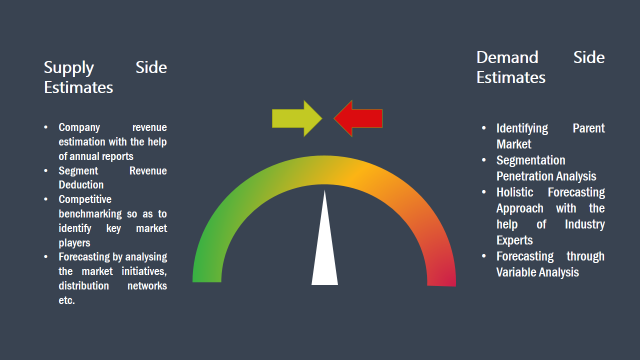
The supply side for a domain specific market is analysed by:
The demand side for the market is estimated through:
In-house Library: Apart from these third-party sources, we have our in-house library of qualitative and quantitative information. Our in-house database includes market data for various industry and domains. These data are updated on regular basis as per the changing market scenario. Our library includes, historic databases, internal audit reports and archives.
Sometimes there are instances where there is no metadata or raw data available for any domain specific market. For those cases, we use our expertise to forecast and estimate the market size in order to generate comprehensive data sets. Our analyst team adopt a robust research technique in order to produce the estimates:
Data Synthesis: This stage involves the analysis & mapping of all the information obtained from the previous step. It also involves in scrutinizing the data for any discrepancy observed while data gathering related to the market. The data is collected with consideration to the heterogeneity of sources. Robust scientific techniques are in place for synthesizing disparate data sets and provide the essential contextual information that can orient market strategies. The Brainy Insights has extensive experience in data synthesis where the data passes through various stages:
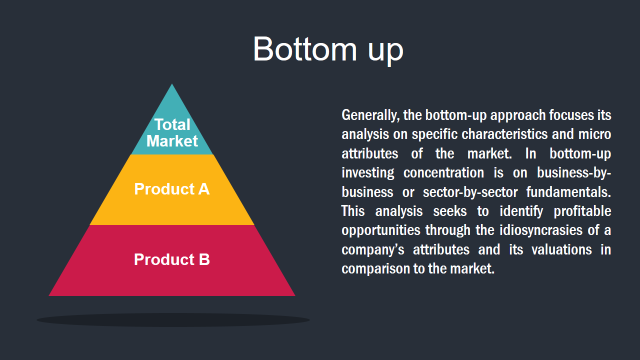
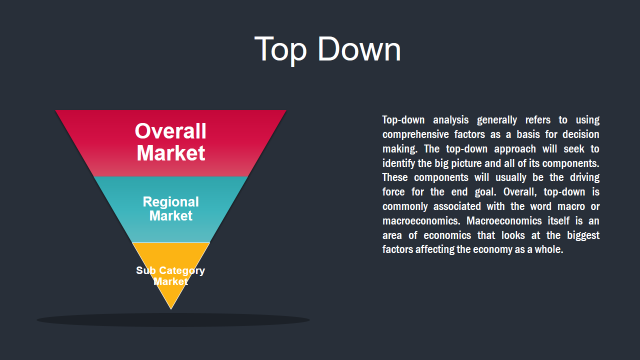
Market Deduction & Formulation: The final stage comprises of assigning data points at appropriate market spaces so as to deduce feasible conclusions. Analyst perspective & subject matter expert based holistic form of market sizing coupled with industry analysis also plays a crucial role in this stage.
This stage involves in finalization of the market size and numbers that we have collected from data integration step. With data interpolation, it is made sure that there is no gap in the market data. Successful trend analysis is done by our analysts using extrapolation techniques, which provide the best possible forecasts for the market.
Data Validation & Market Feedback: Validation is the most important step in the process. Validation & re-validation via an intricately designed process helps us finalize data-points to be used for final calculations.
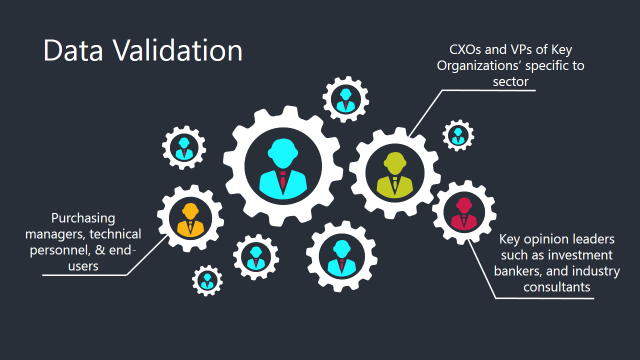
The Brainy Insights interacts with leading companies and experts of the concerned domain to develop the analyst team’s market understanding and expertise. It improves and substantiates every single data presented in the market reports. The data validation interview and discussion panels are typically composed of the most experienced industry members. The participants include, however, are not limited to:
Moreover, we always validate our data and findings through primary respondents from all the major regions we are working on.















































Free Customization
Fortune 500 Clients
Free Yearly Update On Purchase Of Multi/Corporate License
Companies Served Till Date