- +1-315-215-1633
- sales@thebrainyinsights.com

The global Hydrogen Fueling Infrastructure market was valued at USD 4.00 billion in 2024 and growing at a CAGR of 15% from 2025 to 2034. The market is expected to reach USD 16.18 billion by 2034. Hydrogen fueling infrastructure comprises a network of facilities and systems that support the refueling service. Hydrogen fueling infrastructure includes the production, storage, distribution and dispensing of hydrogen fuel. Hydrogen fuel is a new concept being adopted due to its zero-emission properties, as it contains only water vapour, which is not harmful to the environment. Refueling hydrogen takes very little time, which may lead to a decline in demand for battery-based electric vehicles, as they require a significant amount of time to charge. The refueling and charging time factor can further increase the demand for hydrogen-based vehicles. Hydrogen fuel provides a longer range to vehicles, which is more comparable to battery-based electric vehicles, and hence, they are used more frequently in long-distance journeys and freight transport. This greatly benefits the freight transport business, as fuel prices are not within their control, which leads to an increase in overall service costs and causes customers to hesitate to adopt the services, potentially resulting in business losses. Hydrogen fuel is produced through renewable energy using the electrolysis process, and this entire process is carbon-free, meaning its production does not harm the environment.
Get an overview of this study by requesting a free sample
Government Policies & Decarbonization Goals- The hydrogen fueling infrastructure market is growing due to government policies and decarbonization goals. Hydrogen infrastructure can be well established with the help of government policies. These policies have been developed to make this infrastructure financially and strategically strong. To control increasing pollution, a target of net-zero carbon emissions has been set. Many governments have set the target of net-zero carbon dioxide emission by the year 2050. For this, the government also provides financial support to build the infrastructure for hydrogen fuel.
High Capital and Operational Costs- Establishing and operating hydrogen fueling infrastructure requires significant investment. Hydrogen fueling infrastructure is significantly more expensive than electric vehicle infrastructure. Due to the high cost, private developers often do not adopt hydrogen fueling infrastructure projects, which hinders market growth. Hydrogen fuel also has a high transport cost. Due to these high costs, the adoption of electric vehicles is on the rise. Consumers have to bear the burden of this high cost, which is why they prefer vehicles that run on petrol, diesel, or electricity. Due to this, investors may suffer losses because it will affect revenue generation, and companies will not be able to make the capital gains they need for scaling.
Decarbonization of Industrial and Commercial Fleets- Decarbonization of industrial and commercial fleets will play a significant role in future growth. Both of these sectors have high emissions and cause significant environmental damage. So, to prevent this, hydrogen fuel can be adopted. The energy requirements in these sectors are extremely high, and in many cases, they persist for a prolonged period. In such a place, there is a need for an energy source that is reliable, easily accessible, and which also provides the option of fast refueling. Apart from this, hydrogen fuel also fulfils the norm of net-zero carbon emissions, which makes it an easy choice for every country to adopt. To maintain a steady supply of hydrogen fuel, industries can be integrated with refueling infrastructure. So that when needed, supply can be maintained without interruption, and the work of industries can continue without interruption.
Competition from Battery Electric Vehicles - Battery electric vehicles are more popular than hydrogen-based fuel, so consumers are more likely to adopt electric vehicles. The main reason for this is the low cost of charging electric vehicles. Additionally, the availability of charging stations is a significant factor. Electric vehicles can be easily charged at home and at the office, allowing them to be taken anywhere. To promote electric vehicles, the government has also kept their prices low, so that more people can afford to buy them. Additionally, the price of the battery has been reduced to minimize after-sales expenses. The government is also providing facilities for local manufacturing, so that demand for parts, reordering, and bulk orders can be easily met in the future.
The regions analyzed for the market include North America, Europe, South America, Asia Pacific, the Middle East, and Africa. North America emerged as the largest market for the global hydrogen fueling infrastructure market, with a 48% share of the market revenue in 2024.
There are numerous companies in North America related to hydrogen technology that are developing and improving this technology. Due to these players, it has become easier for North America to develop vehicles and at the same time, they have also improved the refueling system. Hydrogen fuel is mostly used in heavy-duty vehicles. Commercial businesses and industries benefit significantly from the use of this fuel, which is why it is used more frequently. Due to the presence of prime players, the cost of hydrogen fuel can be easily regulated in North America, and it can also be easily accessible to personal vehicle users. The growth of this market is expected to be even greater if the passenger car segment is included.
North America Region Hydrogen Fueling Infrastructure Market Share in 2024 - 48%
www.thebrainyinsights.com
Check the geographical analysis of this market by requesting a free sample
The type segment is divided into public stations and private stations. The public stations segment dominated the market, with a market share of 60% in 2024. Public stations are open to all types of consumers, resulting in a large customer base and, consequently, high revenue. Apart from refueling, other services are also provided at stations, which allows fuel stations to generate additional revenue. Apart from this, these public stations are strategically located so that customers can access them easily. Due to its strategic location, the station's visibility will increase, and the growth of hydrogen fuel will be even more substantial.
The fueling capacity segment is divided into low-capacity, medium-capacity and high-capacity. The medium-capacity segment dominated the market, with a market share of 48% in 2024. Medium-capacity hydrogen fueling stations are the most common type. Permits to open these stations are easily obtainable. Moreover, these stations can easily meet the demand of hydrogen fuel-based vehicles of all sizes, allowing for the generation of more revenue from a smaller space. Moreover, these fueling stations are built very quickly, which enables them to become operational in a short time. Moreover, in countries where the adoption of hydrogen mobility is still in its early stages, medium capacity fueling stations will prove to be more effective.
The vehicle type segment is divided into passenger cars and commercial vehicles. The passenger cars segment dominated the market, with a market share of 65% in 2024. Passenger cars have already been commercialized, and the government also offers incentives for the purchase of these cars, encouraging the adoption of more and more hydrogen-based vehicles. Hydrogen-based vehicles can play a crucial role in achieving zero carbon emissions; therefore, they are an excellent option for city commutes. People can be easily made aware of hydrogen fuel through the use of passenger cars.
| Attribute | Description |
|---|---|
| Market Size | Revenue (USD Billion) |
| Market size value in 2024 | USD 4.00 Billion |
| Market size value in 2034 | USD 16.18 Billion |
| CAGR (2025 to 2034) | 15% |
| Historical data | 2021-2023 |
| Base Year | 2024 |
| Forecast | 2025-2034 |
| Region | The regions analyzed for the market are Asia Pacific, Europe, South America, North America, and Middle East & Africa. Furthermore, the regions are further analyzed at the country level. |
| Segments | Type, Fueling Capacity and Vehicle Type |
As per The Brainy Insights, the size of the hydrogen fueling infrastructure market was valued at USD 4.00 billion in 2024 to USD 16.18 billion by 2034.
The global hydrogen fueling infrastructure market is growing at a CAGR of 15% during the forecast period 2025-2034.
The North America region emerged as the largest market for the hydrogen fueling infrastructure.
The government policies & decarbonization goals will influence the market's growth.
This study forecasts revenue at global, regional, and country levels from 2021 to 2034. The Brainy Insights has segmented the global hydrogen fueling infrastructure market based on below-mentioned segments:
Global Hydrogen Fueling Infrastructure Market by Type:
Global Hydrogen Fueling Infrastructure Market by Fueling Capacity:
Global Hydrogen Fueling Infrastructure Market by Vehicle Type:
Global Hydrogen Fueling Infrastructure Market by Region:
Research has its special purpose to undertake marketing efficiently. In this competitive scenario, businesses need information across all industry verticals; the information about customer wants, market demand, competition, industry trends, distribution channels etc. This information needs to be updated regularly because businesses operate in a dynamic environment. Our organization, The Brainy Insights incorporates scientific and systematic research procedures in order to get proper market insights and industry analysis for overall business success. The analysis consists of studying the market from a miniscule level wherein we implement statistical tools which helps us in examining the data with accuracy and precision.
Our research reports feature both; quantitative and qualitative aspects for any market. Qualitative information for any market research process are fundamental because they reveal the customer needs and wants, usage and consumption for any product/service related to a specific industry. This in turn aids the marketers/investors in knowing certain perceptions of the customers. Qualitative research can enlighten about the different product concepts and designs along with unique service offering that in turn, helps define marketing problems and generate opportunities. On the other hand, quantitative research engages with the data collection process through interviews, e-mail interactions, surveys and pilot studies. Quantitative aspects for the market research are useful to validate the hypotheses generated during qualitative research method, explore empirical patterns in the data with the help of statistical tools, and finally make the market estimations.
The Brainy Insights offers comprehensive research and analysis, based on a wide assortment of factual insights gained through interviews with CXOs and global experts and secondary data from reliable sources. Our analysts and industry specialist assume vital roles in building up statistical tools and analysis models, which are used to analyse the data and arrive at accurate insights with exceedingly informative research discoveries. The data provided by our organization have proven precious to a diverse range of companies, facilitating them to address issues such as determining which products/services are the most appealing, whether or not customers use the product in the manner anticipated, the purchasing intentions of the market and many others.
Our research methodology encompasses an idyllic combination of primary and secondary initiatives. Key phases involved in this process are listed below:
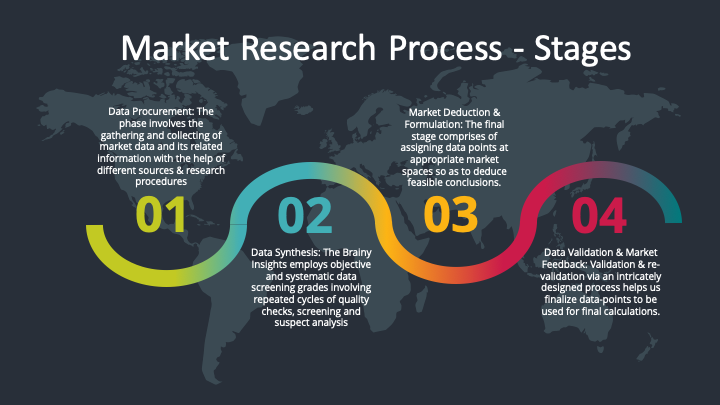
The phase involves the gathering and collecting of market data and its related information with the help of different sources & research procedures.
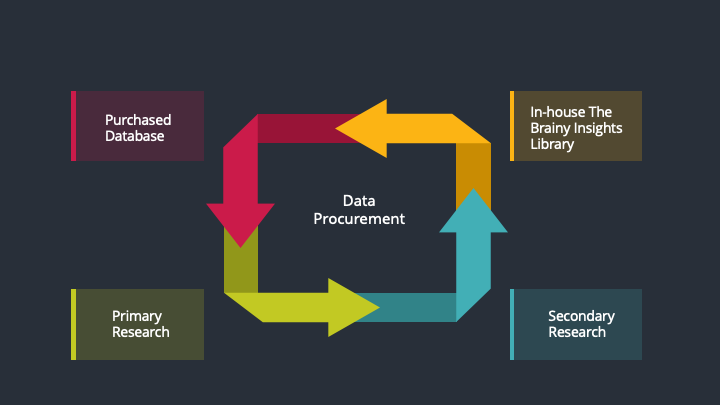
The data procurement stage involves in data gathering and collecting through various data sources.
This stage involves in extensive research. These data sources includes:
Purchased Database: Purchased databases play a crucial role in estimating the market sizes irrespective of the domain. Our purchased database includes:
Primary Research: The Brainy Insights interacts with leading companies and experts of the concerned domain to develop the analyst team’s market understanding and expertise. It improves and substantiates every single data presented in the market reports. Primary research mainly involves in telephonic interviews, E-mail interactions and face-to-face interviews with the raw material providers, manufacturers/producers, distributors, & independent consultants. The interviews that we conduct provides valuable data on market size and industry growth trends prevailing in the market. Our organization also conducts surveys with the various industry experts in order to gain overall insights of the industry/market. For instance, in healthcare industry we conduct surveys with the pharmacists, doctors, surgeons and nurses in order to gain insights and key information of a medical product/device/equipment which the customers are going to usage. Surveys are conducted in the form of questionnaire designed by our own analyst team. Surveys plays an important role in primary research because surveys helps us to identify the key target audiences of the market. Additionally, surveys helps to identify the key target audience engaged with the market. Our survey team conducts the survey by targeting the key audience, thus gaining insights from them. Based on the perspectives of the customers, this information is utilized to formulate market strategies. Moreover, market surveys helps us to understand the current competitive situation of the industry. To be precise, our survey process typically involve with the 360 analysis of the market. This analytical process begins by identifying the prospective customers for a product or service related to the market/industry to obtain data on how a product/service could fit into customers’ lives.
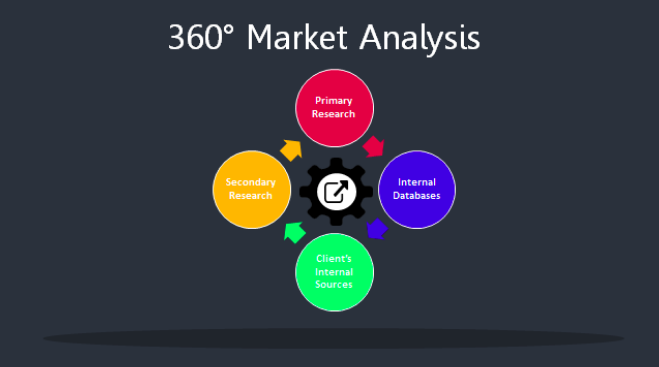
Secondary Research: The secondary data sources includes information published by the on-profit organizations such as World bank, WHO, company fillings, investor presentations, annual reports, national government documents, statistical databases, blogs, articles, white papers and others. From the annual report, we analyse a company’s revenue to understand the key segment and market share of that organization in a particular region. We analyse the company websites and adopt the product mapping technique which is important for deriving the segment revenue. In the product mapping method, we select and categorize the products offered by the companies catering to domain specific market, deduce the product revenue for each of the companies so as to get overall estimation of the market size. We also source data and analyses trends based on information received from supply side and demand side intermediaries in the value chain. The supply side denotes the data gathered from supplier, distributor, wholesaler and the demand side illustrates the data gathered from the end customers for respective market domain.
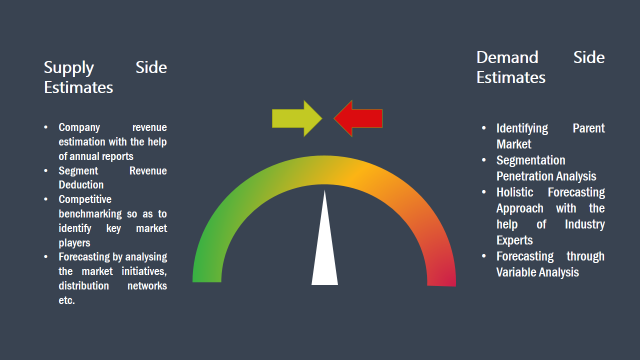
The supply side for a domain specific market is analysed by:
The demand side for the market is estimated through:
In-house Library: Apart from these third-party sources, we have our in-house library of qualitative and quantitative information. Our in-house database includes market data for various industry and domains. These data are updated on regular basis as per the changing market scenario. Our library includes, historic databases, internal audit reports and archives.
Sometimes there are instances where there is no metadata or raw data available for any domain specific market. For those cases, we use our expertise to forecast and estimate the market size in order to generate comprehensive data sets. Our analyst team adopt a robust research technique in order to produce the estimates:
Data Synthesis: This stage involves the analysis & mapping of all the information obtained from the previous step. It also involves in scrutinizing the data for any discrepancy observed while data gathering related to the market. The data is collected with consideration to the heterogeneity of sources. Robust scientific techniques are in place for synthesizing disparate data sets and provide the essential contextual information that can orient market strategies. The Brainy Insights has extensive experience in data synthesis where the data passes through various stages:
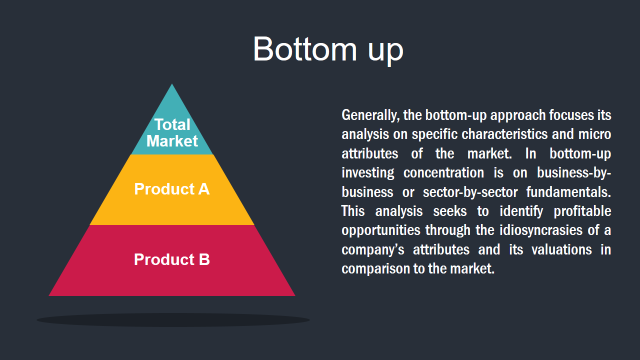
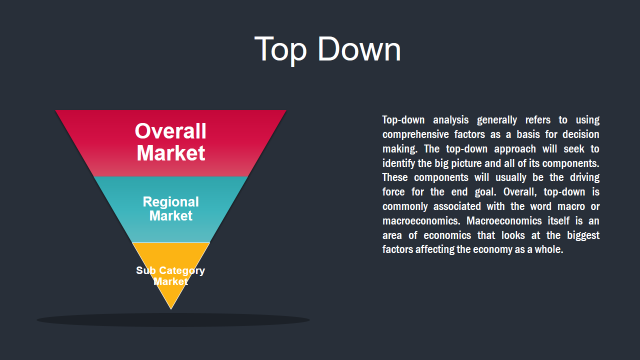
Market Deduction & Formulation: The final stage comprises of assigning data points at appropriate market spaces so as to deduce feasible conclusions. Analyst perspective & subject matter expert based holistic form of market sizing coupled with industry analysis also plays a crucial role in this stage.
This stage involves in finalization of the market size and numbers that we have collected from data integration step. With data interpolation, it is made sure that there is no gap in the market data. Successful trend analysis is done by our analysts using extrapolation techniques, which provide the best possible forecasts for the market.
Data Validation & Market Feedback: Validation is the most important step in the process. Validation & re-validation via an intricately designed process helps us finalize data-points to be used for final calculations.
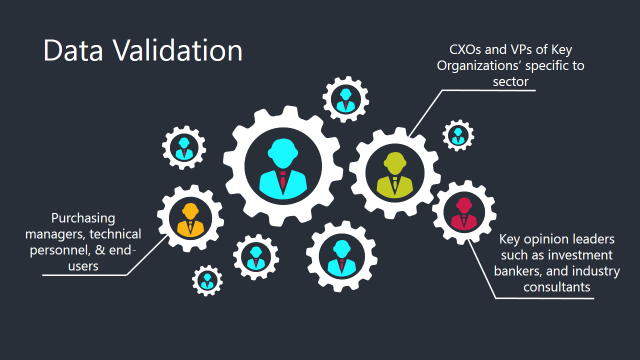
The Brainy Insights interacts with leading companies and experts of the concerned domain to develop the analyst team’s market understanding and expertise. It improves and substantiates every single data presented in the market reports. The data validation interview and discussion panels are typically composed of the most experienced industry members. The participants include, however, are not limited to:
Moreover, we always validate our data and findings through primary respondents from all the major regions we are working on.



















































Free Customization
Fortune 500 Clients
Free Yearly Update On Purchase Of Multi/Corporate License
Companies Served Till Date