- +1-315-215-1633
- sales@thebrainyinsights.com

The global cybersecurity in defence market was valued at USD 22.45 Billion in 2024 and grew at a CAGR of 12.4% from 2025 to 2034. The market is expected to reach USD 73.39 Billion by 2034. The Global Cybersecurity in Defence Market is undergoing remarkable growth and transformation. This market growth is fuelled by the rising threats within the digital space, the rapid adoption of new technologies, and the changing nature of modern warfare, which now prominently includes cyberspace as a vital battlefield. Cybersecurity in defence market encompasses a comprehensive array of technologies, services, and processes aimed at safeguarding military information systems, networks, and critical infrastructure from cyber threats, such as espionage, sabotage, data breaches, DDOS attacks, and cyberterrorism. As defence operations become more digitized—ranging from command and control to weapon systems and communication networks—the susceptibility of these assets to cyberattacks has significantly risen. This aspect has driven governments and defence organizations globally to make substantial investments in cybersecurity solutions.
Essentially, cybersecurity in defence focuses on addressing the growing vulnerability of military systems to cyber threats that can compromise operational effectiveness, expose sensitive data, disrupt critical infrastructure, or undermine command hierarchies. These risks originate from a wide range of actors, including state-sponsored hackers, cybercriminals, hacktivists, terrorist groups, and insiders. The impact of cyber-attacks on defence infrastructures can be devastating: communication channels may be disrupted, weapon systems manipulated, classified programs subjected to espionage, and civilian-military coordination compromised during emergencies. Thus, the solution designed to maintain confidentiality, integrity, and availability—the three pillars of information security—within military settings is of paramount importance, ensuring safety successfully navigated in combat arenas across myriad situational challenges faced in modern warfare landscapes, defending against adversary, covert, and overt tactics alike.
Get an overview of this study by requesting a free sample
Rising Frequency of Cyber Threats Targeting Military Infrastructure – One of the key factors driving the growth of global cybersecurity in the defence sector is the increasing frequency, scale, and sophistication of cyberattacks targeting national security networks and critical military infrastructure. In recent years, these attacks have shifted from targeting civilians and corporations to specifically focusing on defence systems—disrupting operations, stealing classified information, and compromising mission-critical assets. As modern warfare increasingly relies on digital technology, threat actors, including nation-state adversaries, cybercriminal organisations, and rogue hackers, are targeting defence networks more frequently. These attacks range from phishing campaigns targeting military personnel to highly advanced APTs (Advanced Persistent Threats) that penetrate secure systems over extended periods—a tactic used to extract sensitive data and undermine defensive capabilities. As a result, armed forces in major economies are acknowledging the urgent need to enhance their cyber resilience through investments in cybersecurity tools, protocols & infrastructures. This factor contributes to the growth and development of the global cybersecurity in defence market.
Complexity and Integration Challenges of Legacy Defence Systems – A significant challenge in the global cybersecurity market for defence is the complex task of integrating modern cybersecurity solutions with outdated military infrastructure. Many defence organisations still rely on a wide range of legacy systems developed decades ago, often without a focus on security, such as older radars, communication networks, and weapon control systems. These systems often utilise obsolete hardware and software, making it both technically difficult and expensive to upgrade them with current security technologies. The diverse and proprietary nature of these old platforms presents interoperability challenges that hinder the effective deployment of cybersecurity tools, such as real-time monitoring, automated threat detection, and patch management. Furthermore, many legacy systems lack sufficient computational power or network connectivity required to support advanced security protocols, making integration even more problematic. Defence agencies face the challenging task of ensuring operational continuity while updating their technology; sudden overhauls could disrupt critical military operations. This delicate balance significantly slows down efforts to adopt state-of-the-art cybersecurity measures quickly.
Modernization and Digitization of Legacy Defence Systems – Numerous countries continue to use outdated defence platforms that were created during the Cold War or before advancements in cybersecurity. These systems are ill-equipped against contemporary cyber threats due to a lack of encryption, real-time monitoring capabilities, and secure firmware updates. With defence agencies embarking on digital modernisation initiatives—such as updating air defence systems, radar installations, missile control platforms, and fleet management tools—the incorporation of cybersecurity measures has become a critical aspect of system upgrades. Modernisation efforts often require updating existing systems with cybersecurity enhancements or replacing outdated platforms with new-generation options that incorporate integrated security features. Governments are progressively mandating cybersecurity compliance in military procurements, compelling vendors to prove their commitment to military-grade cybersecurity standards. The shift towards digital command systems and AI-powered platforms has expanded the scope of potential cyber threats, elevating their importance in defence strategy planning. As a result, the push for modernising military assets is directly increasing the need for customised cybersecurity solutions. This factor is anticipated to provide lucrative growth opportunities in the upcoming years.
The regions analyzed for the market include North America, Europe, South America, Asia Pacific, the Middle East, and Africa. North America emerged as the most significant global cybersecurity in defence market, with a 36% market revenue share in 2024.
North America, led primarily by the U.S., holds the largest share of the global cybersecurity market in the defence sector. Robust defence budgets, cutting-edge technological capabilities, and a well-established cybersecurity landscape support this dominance. The U.S. Department of Defence (DoD) regularly allocates considerable funds to cybersecurity efforts to emphasise securing national defence systems against increasingly complex cyber threats. In recent developments, programs like Cybersecurity Maturity Model Certification (CMMC) have been launched by the DoD to enforce strict security standards across its extensive supply chain, mandating that contractors and suppliers bolster their security measures. Along with establishing the U.S. Cyber Command and continually upgrading military networks, these initiatives have driven the widespread adoption of advanced cybersecurity solutions, such as AI-powered threat detection and zero-trust architectures. Canada plays a role in the regional market, though on a smaller scale, by increasing investments in military cybersecurity and engaging in joint defence initiatives with the U.S. The cooperative defence stance between these two nations under NORAD (North American Aerospace Defence Command) and other alliances promotes coordinated cyber defence strategies and technology sharing.
North America Region Cybersecurity in Defence Market Share in 2024 - 36%
www.thebrainyinsights.com
Check the geographical analysis of this market by requesting a free sample
The component segment is divided into solutions and services. The solution segment dominated the market, with a market share of around 64% in 2024. The demand for solutions is fuelled by the need to create robust perimeter defences, rapidly detect and counter cyber threats, ensure secure communication lines, and maintain data integrity and confidentiality across various military domains, including command systems, satellite communications, and battlefield management platforms. Defence agencies are progressively embracing integrated cybersecurity architectures that merge multiple solutions into cohesive frameworks, providing extensive threat visibility and quick incident response capabilities.
The deployment segment is bifurcated into on-premises and cloud. The on-premises segment dominated the market, with a market share of around 67% in 2024. Numerous defence organisations prefer on-premises solutions for mission-critical infrastructure, including command-and-control systems, weapons platforms, nuclear systems, and classified communications networks. Several factors contribute to the dominance of the on-premises segment, including strict security regulations, concerns about data sovereignty, air-gapped operations, and the lengthy lifecycle of legacy defence systems. On-premises solutions offer direct hardware control, customised configurations, and clear security boundaries. Defence agencies also have well-established processes for integrating these solutions into their networks. This integration provides stable revenue streams for vendors that specialise in hardware appliances, locally installed software, and managed services within military environments.
The security type segment is divided into network security, endpoint security, application security, cloud security and other security types. The network security system segment dominated the market, with a market share of around 40% in 2024. Network security solutions include firewalls, intrusion detection and prevention systems (IDS/IPS), virtual private networks (VPNs), network access control (NAC), and advanced threat intelligence platforms. Defence organisations place a high priority on network security to protect sensitive information during transmission and maintain seamless connectivity among different military units and command centres. The growing complexity of cyber threats, including Distributed Denial of Service (DDoS) attacks, advanced persistent threats (APTs), and state-sponsored hacking campaigns, underscores the need for robust network security. To boost network visibility and resilience, technologies such as deep packet inspection, anomaly detection, and behavioural analytics are being implemented more frequently.
The end-user segment is divided into land force, naval force, and air force. The land forces segment dominated the market, with a market share of around 39% in 2024. A key factor contributing to the market share is the extensive and diverse nature of land-based deployments, which encompass numerous endpoints, tactical networks, and mobile data exchange systems. These systems are often targeted by cybercriminals, terrorists, and state-sponsored actors to disrupt battlefield communications or stealing intelligence. Compromised communication between ground command units and artillery can have catastrophic results. As a result, military forces have significantly increased investments in network security measures, such as endpoint protection, encryption technologies, secure radio communications enhancements, and bolstered mobile cybersecurity solutions.
| Attribute | Description |
|---|---|
| Market Size | Revenue (USD Billion) |
| Market size value in 2024 | USD 22.45 Billion |
| Market size value in 2034 | USD 73.39 Billion |
| CAGR (2025 to 2034) | 12.4% |
| Historical data | 2021-2023 |
| Base Year | 2024 |
| Forecast | 2025-2034 |
| Region | The regions analyzed for the market are Asia Pacific, Europe, South America, North America, and Middle East and Africa. Furthermore, the regions are further analyzed at the country level. |
| Segments | Component, Deployment, Security Type and End-user |
As per The Brainy Insights, the size of the global cybersecurity in defence market was valued at USD 22.45 billion in 2024 to USD 73.39 billion by 2034.
Global cybersecurity in defence market is growing at a CAGR of 12.4% during the forecast period 2025-2034.
The market's growth will be influenced by rising cybersecurity threats and espionage activities across the globe.
Shortage of skilled cybersecurity personnels could hamper the market growth.
This study forecasts revenue at global, regional, and country levels from 2021 to 2034. The Brainy Insights has segmented the global cybersecurity in defence market based on below mentioned segments:
Global Cybersecurity in Defence Market by Component:
Global Cybersecurity in Defence Market by Deployment Mode:
Global Cybersecurity in Defence Market by Security Type:
Global Cybersecurity in Defence Market by End-user:
Global Cybersecurity in Defence Market by Region:
Research has its special purpose to undertake marketing efficiently. In this competitive scenario, businesses need information across all industry verticals; the information about customer wants, market demand, competition, industry trends, distribution channels etc. This information needs to be updated regularly because businesses operate in a dynamic environment. Our organization, The Brainy Insights incorporates scientific and systematic research procedures in order to get proper market insights and industry analysis for overall business success. The analysis consists of studying the market from a miniscule level wherein we implement statistical tools which helps us in examining the data with accuracy and precision.
Our research reports feature both; quantitative and qualitative aspects for any market. Qualitative information for any market research process are fundamental because they reveal the customer needs and wants, usage and consumption for any product/service related to a specific industry. This in turn aids the marketers/investors in knowing certain perceptions of the customers. Qualitative research can enlighten about the different product concepts and designs along with unique service offering that in turn, helps define marketing problems and generate opportunities. On the other hand, quantitative research engages with the data collection process through interviews, e-mail interactions, surveys and pilot studies. Quantitative aspects for the market research are useful to validate the hypotheses generated during qualitative research method, explore empirical patterns in the data with the help of statistical tools, and finally make the market estimations.
The Brainy Insights offers comprehensive research and analysis, based on a wide assortment of factual insights gained through interviews with CXOs and global experts and secondary data from reliable sources. Our analysts and industry specialist assume vital roles in building up statistical tools and analysis models, which are used to analyse the data and arrive at accurate insights with exceedingly informative research discoveries. The data provided by our organization have proven precious to a diverse range of companies, facilitating them to address issues such as determining which products/services are the most appealing, whether or not customers use the product in the manner anticipated, the purchasing intentions of the market and many others.
Our research methodology encompasses an idyllic combination of primary and secondary initiatives. Key phases involved in this process are listed below:
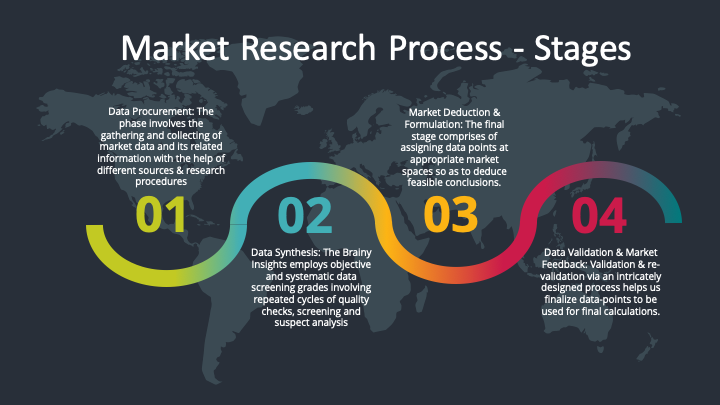
The phase involves the gathering and collecting of market data and its related information with the help of different sources & research procedures.
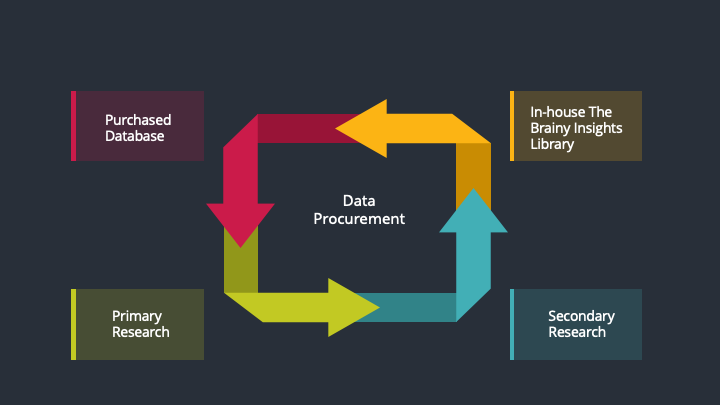
The data procurement stage involves in data gathering and collecting through various data sources.
This stage involves in extensive research. These data sources includes:
Purchased Database: Purchased databases play a crucial role in estimating the market sizes irrespective of the domain. Our purchased database includes:
Primary Research: The Brainy Insights interacts with leading companies and experts of the concerned domain to develop the analyst team’s market understanding and expertise. It improves and substantiates every single data presented in the market reports. Primary research mainly involves in telephonic interviews, E-mail interactions and face-to-face interviews with the raw material providers, manufacturers/producers, distributors, & independent consultants. The interviews that we conduct provides valuable data on market size and industry growth trends prevailing in the market. Our organization also conducts surveys with the various industry experts in order to gain overall insights of the industry/market. For instance, in healthcare industry we conduct surveys with the pharmacists, doctors, surgeons and nurses in order to gain insights and key information of a medical product/device/equipment which the customers are going to usage. Surveys are conducted in the form of questionnaire designed by our own analyst team. Surveys plays an important role in primary research because surveys helps us to identify the key target audiences of the market. Additionally, surveys helps to identify the key target audience engaged with the market. Our survey team conducts the survey by targeting the key audience, thus gaining insights from them. Based on the perspectives of the customers, this information is utilized to formulate market strategies. Moreover, market surveys helps us to understand the current competitive situation of the industry. To be precise, our survey process typically involve with the 360 analysis of the market. This analytical process begins by identifying the prospective customers for a product or service related to the market/industry to obtain data on how a product/service could fit into customers’ lives.
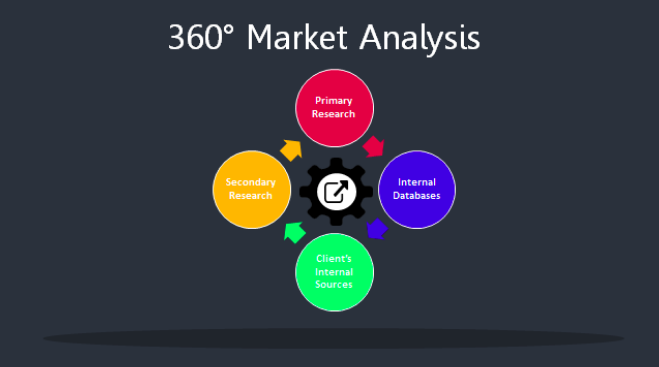
Secondary Research: The secondary data sources includes information published by the on-profit organizations such as World bank, WHO, company fillings, investor presentations, annual reports, national government documents, statistical databases, blogs, articles, white papers and others. From the annual report, we analyse a company’s revenue to understand the key segment and market share of that organization in a particular region. We analyse the company websites and adopt the product mapping technique which is important for deriving the segment revenue. In the product mapping method, we select and categorize the products offered by the companies catering to domain specific market, deduce the product revenue for each of the companies so as to get overall estimation of the market size. We also source data and analyses trends based on information received from supply side and demand side intermediaries in the value chain. The supply side denotes the data gathered from supplier, distributor, wholesaler and the demand side illustrates the data gathered from the end customers for respective market domain.
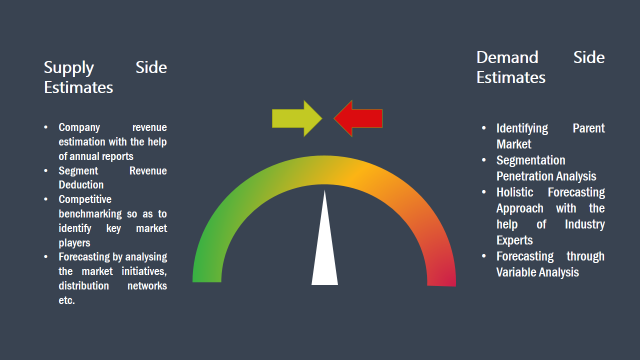
The supply side for a domain specific market is analysed by:
The demand side for the market is estimated through:
In-house Library: Apart from these third-party sources, we have our in-house library of qualitative and quantitative information. Our in-house database includes market data for various industry and domains. These data are updated on regular basis as per the changing market scenario. Our library includes, historic databases, internal audit reports and archives.
Sometimes there are instances where there is no metadata or raw data available for any domain specific market. For those cases, we use our expertise to forecast and estimate the market size in order to generate comprehensive data sets. Our analyst team adopt a robust research technique in order to produce the estimates:
Data Synthesis: This stage involves the analysis & mapping of all the information obtained from the previous step. It also involves in scrutinizing the data for any discrepancy observed while data gathering related to the market. The data is collected with consideration to the heterogeneity of sources. Robust scientific techniques are in place for synthesizing disparate data sets and provide the essential contextual information that can orient market strategies. The Brainy Insights has extensive experience in data synthesis where the data passes through various stages:
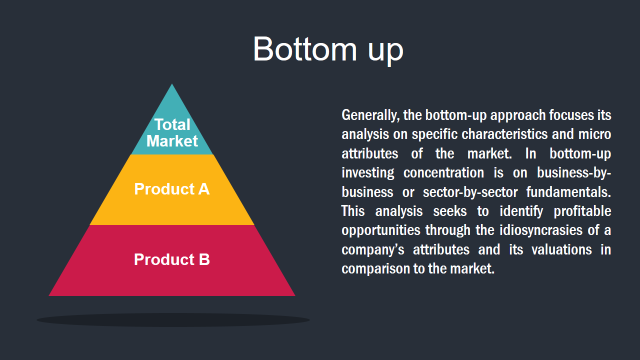
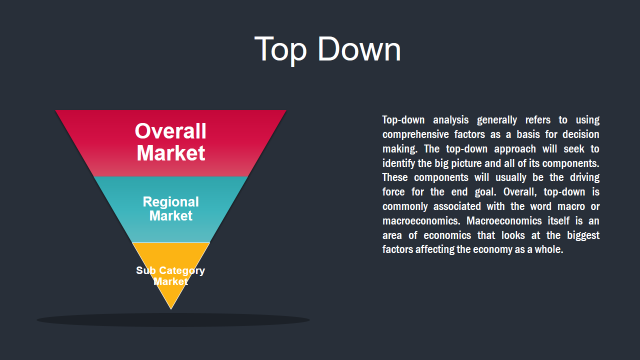
Market Deduction & Formulation: The final stage comprises of assigning data points at appropriate market spaces so as to deduce feasible conclusions. Analyst perspective & subject matter expert based holistic form of market sizing coupled with industry analysis also plays a crucial role in this stage.
This stage involves in finalization of the market size and numbers that we have collected from data integration step. With data interpolation, it is made sure that there is no gap in the market data. Successful trend analysis is done by our analysts using extrapolation techniques, which provide the best possible forecasts for the market.
Data Validation & Market Feedback: Validation is the most important step in the process. Validation & re-validation via an intricately designed process helps us finalize data-points to be used for final calculations.
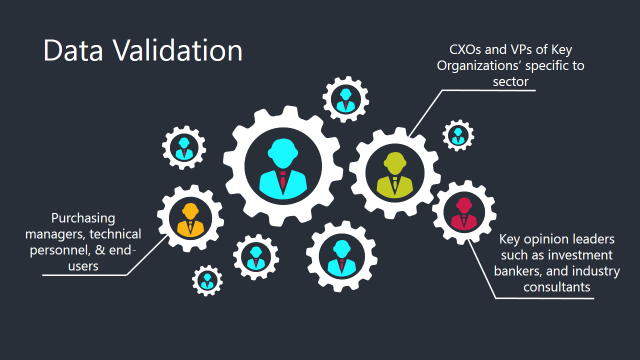
The Brainy Insights interacts with leading companies and experts of the concerned domain to develop the analyst team’s market understanding and expertise. It improves and substantiates every single data presented in the market reports. The data validation interview and discussion panels are typically composed of the most experienced industry members. The participants include, however, are not limited to:
Moreover, we always validate our data and findings through primary respondents from all the major regions we are working on.



















































Free Customization
Fortune 500 Clients
Free Yearly Update On Purchase Of Multi/Corporate License
Companies Served Till Date