- +1-315-215-1633
- sales@thebrainyinsights.com

The global counter drone systems market was valued at USD 6.4 Billion in 2024 and grew at a CAGR of 16.3% from 2025 to 2034. The market is expected to reach USD 28.97 Billion by 2034. The global market for counter-drone systems has become one of the most vibrant and quickly advancing areas within the defence, security, and commercial safety sectors. As unmanned aerial vehicles (UAVs), also known as drones, continue to proliferate in both civilian and military fields, the demand for counter-drone solutions has evolved from a specialised requirement to an essential component of mainstream security strategies. This surge in demand is driven by the widespread availability of affordable drones and their increasing use in surveillance operations, smuggling activities, terrorism-related actions, disruptive incidents, as well as escalating geopolitical tensions amid asymmetric warfare tactics. Counter-drone systems, also known as counter-unmanned aerial systems (C-UAS), comprise a complex and multidisciplinary set of technologies, processes, and strategies. These systems are designed to detect, identify, track, intercept, and neutralise unmanned aerial vehicles (UAVs) or drones that may pose threats—either intentional or accidental—to national security, public safety, commercial operations, or critical infrastructure such as power plants or airports. Beyond the physical hardware used to disable or destroy drones is an entire ecosystem at play, which includes surveillance tools for monitoring broad areas effectively while assessing hazards rapidly through advanced intelligence-gathering methods, combined with continuous communication among stakeholders. All these elements synchronise under command-and-control frameworks aimed at seamless coordination during threat scenarios where conventional aviation-security measures fall short in sensitive environments.
Get an overview of this study by requesting a free sample
Rising Security Threats from Malicious and Hostile Drones – A major driving force behind the global counter-drone systems market is the swiftly growing threat posed by unmanned aerial vehicles (UAVs), commonly referred to as drones, to security at national, regional, and organizational levels. Both state and non-state actors increasingly exploit drones for malicious activities such as espionage, surveillance, smuggling, sabotage, and terrorism. The relatively low cost of these devices, combined with their wide availability and ease of use compared to traditional aircraft, has empowered insurgents, terrorists, and criminals to weaponize them in ways that were previously exclusive to military organisations. Examples like ISIS using small quadcopters for explosive drops in Syria and Iraq, Houthi rebels deploying long-range drones to strike Saudi oil facilities, and Ukrainian and Russian forces utilising swarms of low-cost drones for reconnaissance and targeted attacks have highlighted a significant issue. Conventional air defence systems frequently struggle to detect or neutralise these small, low-flying, highly manoeuvrable drones. This challenge has created an urgent need for specialised counter-drone solutions that can safeguard both military and civilian assets. As a result, this threat is becoming one of the most powerful drivers fuelling market growth in this sector. This factor contributes to the growth and development of the global counter drone systems market.
High Capital and Budgetary Constraints – A significant restraining factor in the global counter-drone systems market is the high cost involved in researching, developing, acquiring, and deploying sophisticated counter-UAS solutions. Creating technologies that can efficiently detect, track, classify, and neutralise drones across various environments requires extensive investment in advanced radar systems, radio frequency analysis tools, acoustic sensors, electro-optical/infrared technology, AI-driven algorithms, and directed-energy weapons such as high-power lasers and microwave systems. These substantial upfront costs are often prohibitive for many governments, organisations, and private enterprises—especially those in emerging markets or regions with limited defence budgets.
For instance, advanced military forces such as those in the United States, Israel, and several NATO countries can justify and maintain multibillion-dollar investments in counter-drone research and development. In contrast, smaller nations with limited defence budgets find it challenging to keep up this pace of investment, resulting in a gap in adoption. Similarly, within the civilian sector—at airports, seaports, prisons, and stadiums—the struggle to allocate sufficient funding for permanent counter-drone systems is evident, as installation alone can involve millions of dollars in capital expenditure. Additionally, the financial strain is compounded by ongoing costs from maintenance, operator training, and system upgrades, which hinder wider market penetration. This factor is hampering the market growth and development.
Escalating Incidents of Drone-Related Security Breaches – A significant factor is the rising number of drone-related security incidents worldwide, including breaches of critical infrastructure, unauthorised airspace intrusions, smuggling operations, and disruptions at large public events. Notable examples include the 2018 disruption at Gatwick Airport in the UK, which halted flights for days and resulted in economic losses exceeding USD 10 million. Similarly impactful were the 2019 drone swarm attacks on Saudi Aramco oil facilities, which temporarily reduced global oil supplies by nearly 10%. These instances underscore how devastating drone incidents can be—not only economically but also concerning national security and public safety. Consequently, there has been an urgent push among governments, regulatory authorities, and private entities to implement robust counter-drone measures as a preventive strategy. As locations such as airports—alongside energy companies, stadiums, and government installations — increasingly adopt detection-and-neutralisation technologies to mitigate these risks, the demand for solutions continues to grow steadily. This factor is anticipated to provide lucrative growth opportunities in the upcoming years.
The regions analyzed for the market include North America, Europe, South America, Asia Pacific, the Middle East, and Africa. North America emerged as the most significant global counter drone systems market, with a 38% market revenue share in 2024.
The regional market growth and development are attributed to the convergence of factors such as strong defence budgets, advanced technological infrastructure, robust research ecosystems, and significant security threats affecting both the military and civilian sectors. This leadership is fuelled by the widespread adoption of counter-UAS solutions across various entities, including the Department of Defence (DoD), the Department of Homeland Security (DHS), the Federal Aviation Administration (FAA), as well as private sector stakeholders such as airports, energy companies, and event organisers. The DoD has committed billions to developing layered defences against drones using technologies such as high-powered microwaves and lasers for directed-energy weapons, RF jammers for disruption purposes, AI-driven detection systems, and multi-sensor fusion technologies—all aimed at combating drone swarms and hostile UAVs employed by state or non-state adversaries. The U.S. market benefits from well-established regulatory frameworks that provide legal authorisation for deploying counter-drone technologies in critical security areas, including airports, government buildings, and defence installations. Meanwhile, Canada strengthens the regional market despite having smaller defence expenditures by implementing counter-drone solutions in border security operations, safeguarding essential infrastructure, and conducting military exercises alongside NATO allies.
North America Region Counter Drone Systems Market Share in 2024 - 38%
www.thebrainyinsights.com
Check the geographical analysis of this market by requesting a free sample
The type segment is divided into ground-based counter-drone systems, airborne counter-drone systems and naval counter-drone systems. The ground-based counter-drone systems segment dominated the market, with a market share of around 46% in 2024. Ground-based counter-drone systems currently lead the global market, holding the largest share. Their dominance is due to their broad applicability across various settings such as military installations, government buildings, airports, critical infrastructure sites, and civilian events where drones increasingly pose security risks. These ground-based systems encompass technologies like radar, radio frequency (RF) sensors, electro-optical/infrared (EO/IR) cameras, and directed-energy weapons that can be deployed on both stationary and mobile platforms. The key strengths of ground-based solutions are their scalability and versatility in safeguarding both fixed locations and mobile assets.
The application segment is divided into military & defense, homeland security and commercial & civil. The military & defense segment dominated the market, with a market share of around 54% in 2024. Several factors contribute to the military's significant market share in the defence industry. Firstly, substantial defence budgets are often directed towards research and development as well as procurement efforts. Military organisations frequently invest in systems that incorporate radar arrays, RF direction-finding equipment, electro-optical/infrared (EO/IR) sensors, signal intelligence modules, electronic warfare (EW) jammers, directed-energy weapons (DEWs), and kinetic interceptors—all integrated with robust command and control (C2) systems. These advanced technologies are complex and expensive but offer high contract values. Secondly, when militaries make acquisitions, they include provisions for sustainment services such as training programs and long-term upgrade paths, which provide vendors with recurring revenue far beyond the initial sale period. Thirdly, there is a demand by armed forces for solutions to combat drone attacks. All these factors contribute to the segment growth.
| Attribute | Description |
|---|---|
| Market Size | Revenue (USD Billion) |
| Market size value in 2024 | USD 6.40 Billion |
| Market size value in 2034 | USD 28.97 Billion |
| CAGR (2025 to 2034) | 16.3% |
| Historical data | 2021-2023 |
| Base Year | 2024 |
| Forecast | 2025-2034 |
| Region | The regions analyzed for the market are Asia Pacific, Europe, South America, North America, and Middle East and Africa. Furthermore, the regions are further analyzed at the country level. |
| Segments | Type and Application |
As per The Brainy Insights, the size of the global counter drone systems market was valued at USD 6.40 billion in 2024 to USD 28.97 billion by 2034.
Global counter drone systems market is growing at a CAGR of 16.3% during the forecast period 2025-2034.
The market's growth will be influenced by rising geopolitical tensions between the countries.
High expenditure costs could hamper the market growth.
This study forecasts revenue at global, regional, and country levels from 2021 to 2034. The Brainy Insights has segmented the global Counter Drone Systems market based on below mentioned segments:
Global Counter Drone Systems Market by Type:
Global Counter Drone Systems Market by Application:
Global Counter Drone Systems Market by Region:
Research has its special purpose to undertake marketing efficiently. In this competitive scenario, businesses need information across all industry verticals; the information about customer wants, market demand, competition, industry trends, distribution channels etc. This information needs to be updated regularly because businesses operate in a dynamic environment. Our organization, The Brainy Insights incorporates scientific and systematic research procedures in order to get proper market insights and industry analysis for overall business success. The analysis consists of studying the market from a miniscule level wherein we implement statistical tools which helps us in examining the data with accuracy and precision.
Our research reports feature both; quantitative and qualitative aspects for any market. Qualitative information for any market research process are fundamental because they reveal the customer needs and wants, usage and consumption for any product/service related to a specific industry. This in turn aids the marketers/investors in knowing certain perceptions of the customers. Qualitative research can enlighten about the different product concepts and designs along with unique service offering that in turn, helps define marketing problems and generate opportunities. On the other hand, quantitative research engages with the data collection process through interviews, e-mail interactions, surveys and pilot studies. Quantitative aspects for the market research are useful to validate the hypotheses generated during qualitative research method, explore empirical patterns in the data with the help of statistical tools, and finally make the market estimations.
The Brainy Insights offers comprehensive research and analysis, based on a wide assortment of factual insights gained through interviews with CXOs and global experts and secondary data from reliable sources. Our analysts and industry specialist assume vital roles in building up statistical tools and analysis models, which are used to analyse the data and arrive at accurate insights with exceedingly informative research discoveries. The data provided by our organization have proven precious to a diverse range of companies, facilitating them to address issues such as determining which products/services are the most appealing, whether or not customers use the product in the manner anticipated, the purchasing intentions of the market and many others.
Our research methodology encompasses an idyllic combination of primary and secondary initiatives. Key phases involved in this process are listed below:
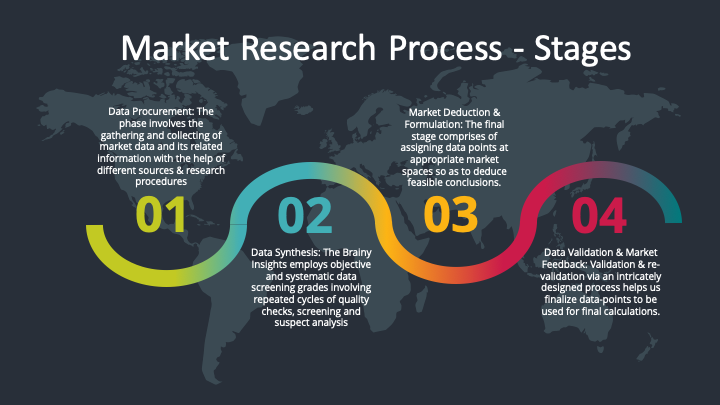
The phase involves the gathering and collecting of market data and its related information with the help of different sources & research procedures.
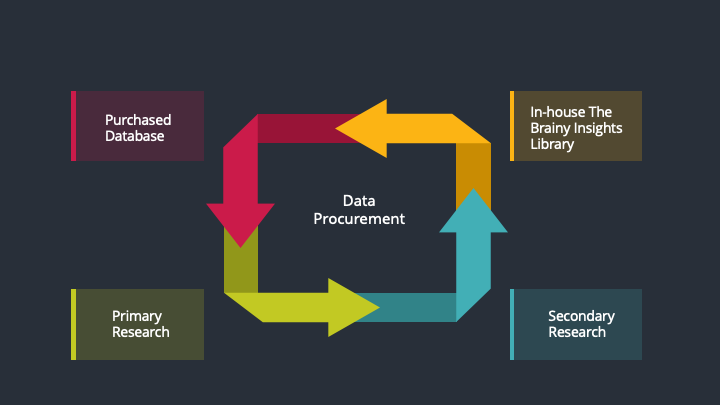
The data procurement stage involves in data gathering and collecting through various data sources.
This stage involves in extensive research. These data sources includes:
Purchased Database: Purchased databases play a crucial role in estimating the market sizes irrespective of the domain. Our purchased database includes:
Primary Research: The Brainy Insights interacts with leading companies and experts of the concerned domain to develop the analyst team’s market understanding and expertise. It improves and substantiates every single data presented in the market reports. Primary research mainly involves in telephonic interviews, E-mail interactions and face-to-face interviews with the raw material providers, manufacturers/producers, distributors, & independent consultants. The interviews that we conduct provides valuable data on market size and industry growth trends prevailing in the market. Our organization also conducts surveys with the various industry experts in order to gain overall insights of the industry/market. For instance, in healthcare industry we conduct surveys with the pharmacists, doctors, surgeons and nurses in order to gain insights and key information of a medical product/device/equipment which the customers are going to usage. Surveys are conducted in the form of questionnaire designed by our own analyst team. Surveys plays an important role in primary research because surveys helps us to identify the key target audiences of the market. Additionally, surveys helps to identify the key target audience engaged with the market. Our survey team conducts the survey by targeting the key audience, thus gaining insights from them. Based on the perspectives of the customers, this information is utilized to formulate market strategies. Moreover, market surveys helps us to understand the current competitive situation of the industry. To be precise, our survey process typically involve with the 360 analysis of the market. This analytical process begins by identifying the prospective customers for a product or service related to the market/industry to obtain data on how a product/service could fit into customers’ lives.
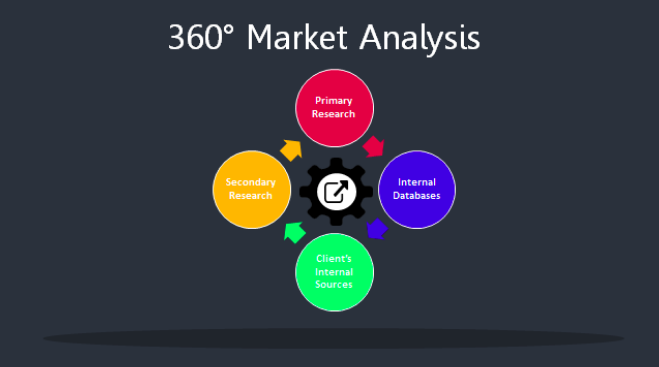
Secondary Research: The secondary data sources includes information published by the on-profit organizations such as World bank, WHO, company fillings, investor presentations, annual reports, national government documents, statistical databases, blogs, articles, white papers and others. From the annual report, we analyse a company’s revenue to understand the key segment and market share of that organization in a particular region. We analyse the company websites and adopt the product mapping technique which is important for deriving the segment revenue. In the product mapping method, we select and categorize the products offered by the companies catering to domain specific market, deduce the product revenue for each of the companies so as to get overall estimation of the market size. We also source data and analyses trends based on information received from supply side and demand side intermediaries in the value chain. The supply side denotes the data gathered from supplier, distributor, wholesaler and the demand side illustrates the data gathered from the end customers for respective market domain.
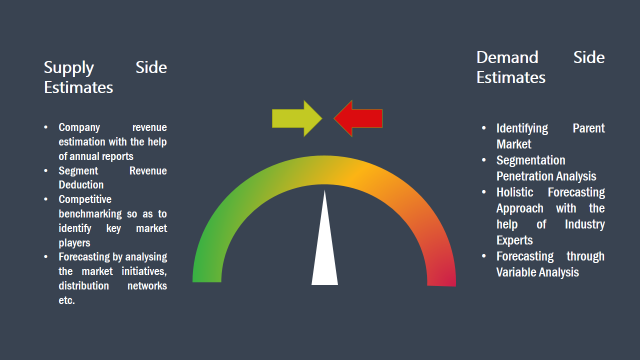
The supply side for a domain specific market is analysed by:
The demand side for the market is estimated through:
In-house Library: Apart from these third-party sources, we have our in-house library of qualitative and quantitative information. Our in-house database includes market data for various industry and domains. These data are updated on regular basis as per the changing market scenario. Our library includes, historic databases, internal audit reports and archives.
Sometimes there are instances where there is no metadata or raw data available for any domain specific market. For those cases, we use our expertise to forecast and estimate the market size in order to generate comprehensive data sets. Our analyst team adopt a robust research technique in order to produce the estimates:
Data Synthesis: This stage involves the analysis & mapping of all the information obtained from the previous step. It also involves in scrutinizing the data for any discrepancy observed while data gathering related to the market. The data is collected with consideration to the heterogeneity of sources. Robust scientific techniques are in place for synthesizing disparate data sets and provide the essential contextual information that can orient market strategies. The Brainy Insights has extensive experience in data synthesis where the data passes through various stages:
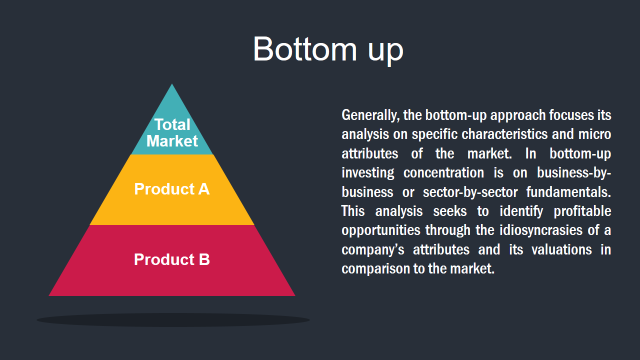
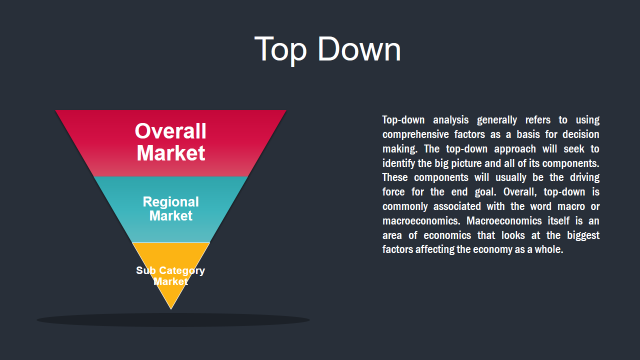
Market Deduction & Formulation: The final stage comprises of assigning data points at appropriate market spaces so as to deduce feasible conclusions. Analyst perspective & subject matter expert based holistic form of market sizing coupled with industry analysis also plays a crucial role in this stage.
This stage involves in finalization of the market size and numbers that we have collected from data integration step. With data interpolation, it is made sure that there is no gap in the market data. Successful trend analysis is done by our analysts using extrapolation techniques, which provide the best possible forecasts for the market.
Data Validation & Market Feedback: Validation is the most important step in the process. Validation & re-validation via an intricately designed process helps us finalize data-points to be used for final calculations.
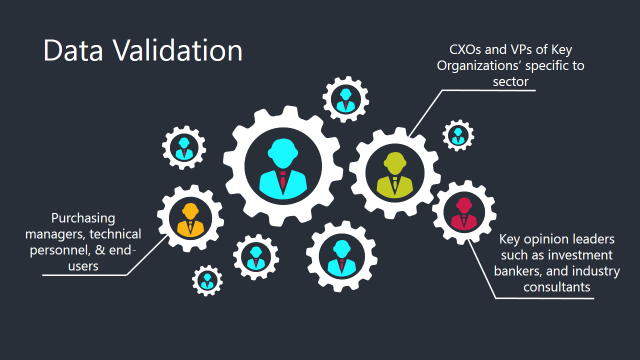
The Brainy Insights interacts with leading companies and experts of the concerned domain to develop the analyst team’s market understanding and expertise. It improves and substantiates every single data presented in the market reports. The data validation interview and discussion panels are typically composed of the most experienced industry members. The participants include, however, are not limited to:
Moreover, we always validate our data and findings through primary respondents from all the major regions we are working on.



















































Free Customization
Fortune 500 Clients
Free Yearly Update On Purchase Of Multi/Corporate License
Companies Served Till Date