- +1-315-215-1633
- sales@thebrainyinsights.com

The global autonomous transportation market was valued at USD 1.50 Trillion in 2024 and grew at a CAGR of 25.4% from 2025 to 2034. The market is expected to reach USD 14.42 Trillion by 2034. The global autonomous transportation market is a game-changing segment in the transportation and mobility ecosystem, driven by rapid advancements in artificial intelligence (AI), machine learning, sensor technology, and connectivity. This market encompasses various self-driving vehicles, including passenger cars, commercial trucks, buses, delivery robots, drones, and rail systems, which operate with minimal to no human involvement due to advanced technologies. The market is revolutionising urban mobility, as well as logistics and freight transport, by enhancing safety measures while improving efficiency. At the same time, it promises more sustainable practices, thus reducing operational costs considerably. The market's development is driven by a combination of factors, including rising urbanisation, stringent government regulations focused on traffic safety and emissions reduction, and the growing consumer demand for convenient, flexible, and cost-effective mobility solutions. Leading technology firms, car manufacturers, and logistics companies are making significant investments in autonomous vehicle (AV) research and development to bring fully autonomous systems to market within the next decade.
Autonomous transportation involves moving people and goods using vehicles that require minimal to no human input, thanks to cutting-edge technologies such as artificial intelligence (AI), machine learning (ML), sensor integration, computer vision, connectivity, and real-time data processing. This approach marks a significant shift in how mobility systems are conceived, overseen, and experienced as it transfers control from human drivers to smart embedded systems. These intelligent systems can navigate complex environments with precision and efficiency while making decisions independently. Autonomous transportation encompasses a diverse range of vehicles, including cars, trucks, buses, trains, drones, and maritime vessels, that feature varying levels of automation, from partial driver assistance to full autonomy. This transformation is not just technological; it signifies a profound shift in the philosophy of transportation, economic organization, infrastructure planning processes, regulatory frameworks, and societal behaviour.
Get an overview of this study by requesting a free sample
Rising Demand for Safe and Efficient Mobility Solutions – Around the world, road accidents continue to be a leading cause of death, with human error responsible for more than 90% of all crashes. This pressing concern over road safety is a significant factor propelling the adoption of autonomous vehicles (AVs). Autonomous systems hold great potential to significantly reduce these incidents by removing factors such as driver fatigue, distraction, intoxication, and poor judgment from the equation. Autonomous vehicles are designed to follow traffic regulations strictly, adhere to speed limits, and maintain situational awareness at all times. Advanced driver-assistance systems (ADAS) have already reduced crash rates in semi-autonomous cars, with full automation anticipated to enhance these benefits further. As governments, insurance providers, and fleet managers prioritise reducing liability and enhancing public safety, investing in autonomous technology becomes increasingly essential. This factor contributes to the growth and development of the global autonomous transportation market.
Cybersecurity Risks and Data Privacy Concerns – Developing, testing, and deploying autonomous transportation systems comes with a high price tag. The cost of constructing AV hardware—such as sensors, processors, actuators, and redundant systems—is considerably higher than that for traditional vehicles. Additionally, expenses grow when factoring in the development processes needed to train and validate AI algorithms plus maintenance of simulation platforms. Moreover, expanding autonomous vehicle services requires the development and maintenance of an expensive infrastructure, including data centres, high-definition map generation systems, software update platforms, control hubs, and fleet management solutions. In the freight and logistics sector, specifically, replacing or retrofitting fleets is capital-intensive and necessitates substantial investment with uncertain returns, particularly in short- to medium-term timelines. This economic challenge frequently restricts AV development to a handful of major players with substantial financial resources, which in turn stifles innovation diversity and poses risks of market concentration.
Growing Popularity of Electrification of Vehicles – Another key factor driving the development of autonomous transportation is the growing emphasis on environmental sustainability and the shift towards low-carbon economies. Autonomous vehicles are often designed to be electric because their propulsion systems, with simpler mechanical architecture and more responsive powertrains, align well with automation needs while complying with stricter global emission regulations. The balanced integration of electrification and autonomy fosters a positive cycle: autonomous electric vehicles (AEVs) provide quiet, zero-emission, cost-effective alternatives to traditional internal combustion engine vehicles. Advanced predictive driving algorithms enhance battery efficiency, minimise energy waste, and optimise charging cycles to maximise battery life. As countries strive to cut emissions from transportation, autonomous electric fleets—particularly in shared mobility and logistics—are regarded as a valuable strategic resource. More companies are deploying self-driving shuttles and electric buses to offer environmentally friendly transport solutions within business parks, airports, and campuses. This factor is anticipated to provide lucrative growth opportunities in the upcoming years.
The regions analyzed for the market include North America, Europe, South America, Asia Pacific, the Middle East, and Africa. North America emerged as the most significant global autonomous transportation market, with a 38% market revenue share in 2024.
The region, primarily encompassing the U.S. and Canada, leads in autonomous transportation innovation owing to its early emphasis on intelligent transportation systems (ITS), connected vehicles, and autonomous mobility solutions. The U.S. remains the central hub for autonomous transportation in North America. The country is home to key players, including Waymo (Alphabet), Tesla, and Apple, among others, who are spearheading global advancements in autonomous systems. The ecosystem is further bolstered by major tech companies, including Amazon, NVIDIA, Intel, and Qualcomm, which deliver essential computing power, connectivity solutions, and AI technology. California stands out by issuing hundreds of permits for on-road testing of autonomous vehicles. Silicon Valley is a hub for numerous AV start-ups, academic research centres, and investors, forming a rich network of knowledge and funding. Pilot programs featuring autonomous taxis, shuttles, and delivery robots in cities such as San Francisco, Phoenix, and Las Vegas are enhancing public engagement while aiding data collection initiatives.
North America Region Autonomous Transportation Market Share in 2024 - 38%
www.thebrainyinsights.com
Check the geographical analysis of this market by requesting a free sample
The component segment is divided into software, hardware and services. The hardware segment dominated the market, with a market share of around 44% in 2024. This predominance highlights the significant costs and technical intricacies associated with the physical components essential for vehicle autonomy. The investment in hardware encompasses a broad spectrum of systems, such as sensors, computing units, communication devices, powertrain elements, and safety redundancies. At the heart of this hardware are sensor suites, including LiDAR, radar systems, ultrasonic sensors, and high-definition cameras, which serve as the sensory organs for autonomous vehicles by facilitating environmental perception and obstacle detection. Although LiDAR units have historically been among the most expensive pieces within this setup due to their precision-focused role essential for safety—and while they have experienced considerable cost reductions lately—they still account for a substantial portion of overall hardware expenses. Radar sensors offer strong detection capabilities even under challenging weather conditions; meanwhile, cameras provide detailed visual information crucial for object classification tasks.
The mode of transportation segment is divided into road transportation, rail transportation, air transportation and marine transportation. The road transportation segment dominated the market, with a market share of around 73% in 2024. This prominence is due to the significant emphasis on autonomous cars, trucks, shuttles, and delivery vehicles fuelled by consumer demand, infrastructure readiness, and extensive research and development from automakers and tech firms. In Europe and Asia Pacific's smart city projects, autonomous road shuttles and buses are being introduced. These vehicles operate at low speeds along predefined routes, often located on campuses, business parks, or gated communities. They offer a cost-effective way to address mobility needs while providing accessibility benefits—especially valuable for ageing populations—and serve as an environmentally friendly solution suitable for congested urban areas.
The application segment is divided into passenger transportation, freight & logistics, defense & surveillance and construction, mining & industrial applications. The passenger transportation segment dominated the market, with a market share of around 52% in 2024. Within the passenger transportation segment, robotaxis is becoming a transformative presence by providing on-demand rides without drivers. Companies have established operations in various cities globally, contributing to growing consumer acceptance and evolving regulatory standards. These driverless taxis hold particular appeal in urban areas due to their potential to reduce congestion and pollution while offering affordable mobility solutions. Autonomous shuttles enhance robo-taxi services by operating on fixed routes within campuses, business districts, and urban areas. Designed as electric vehicles with low-speed capabilities, they emphasize "last-mile" connectivity to ensure smooth integration with other transportation methods. Cities across Europe and Asia, including Helsinki and Singapore, have launched autonomous shuttle pilots that play a significant role in increasing the market share of passenger transport solutions.
| Attribute | Description |
|---|---|
| Market Size | Revenue (USD Trillion) |
| Market size value in 2024 | USD 1.50 Trillion |
| Market size value in 2034 | USD 14.42 Trillion |
| CAGR (2025 to 2034) | 25.4% |
| Historical data | 2021-2023 |
| Base Year | 2024 |
| Forecast | 2025-2034 |
| Region | The regions analyzed for the market are Asia Pacific, Europe, South America, North America, and Middle East and Africa. Furthermore, the regions are further analyzed at the country level. |
| Segments | Component, Mode of Transportation and Application |
As per The Brainy Insights, the size of the global autonomous transportation market was valued at USD 1.50 trillion in 2024 to USD 14.42 trillion by 2034.
Global autonomous transportation market is growing at a CAGR of 25.4% during the forecast period 2025-2034.
The market's growth will be influenced by rising electrification of vehicles across the globe.
Data privacy issues and cybersecurity risks could hamper the market growth.
This study forecasts revenue at global, regional, and country levels from 2021 to 2034. The Brainy Insights has segmented the global Autonomous Transportation market based on below mentioned segments:
Global Autonomous Transportation Market by Component:
Global Autonomous Transportation Market by Application:
Global Autonomous Transportation Market by Mode of Transportation:
Global Autonomous Transportation Market by Region:
Research has its special purpose to undertake marketing efficiently. In this competitive scenario, businesses need information across all industry verticals; the information about customer wants, market demand, competition, industry trends, distribution channels etc. This information needs to be updated regularly because businesses operate in a dynamic environment. Our organization, The Brainy Insights incorporates scientific and systematic research procedures in order to get proper market insights and industry analysis for overall business success. The analysis consists of studying the market from a miniscule level wherein we implement statistical tools which helps us in examining the data with accuracy and precision.
Our research reports feature both; quantitative and qualitative aspects for any market. Qualitative information for any market research process are fundamental because they reveal the customer needs and wants, usage and consumption for any product/service related to a specific industry. This in turn aids the marketers/investors in knowing certain perceptions of the customers. Qualitative research can enlighten about the different product concepts and designs along with unique service offering that in turn, helps define marketing problems and generate opportunities. On the other hand, quantitative research engages with the data collection process through interviews, e-mail interactions, surveys and pilot studies. Quantitative aspects for the market research are useful to validate the hypotheses generated during qualitative research method, explore empirical patterns in the data with the help of statistical tools, and finally make the market estimations.
The Brainy Insights offers comprehensive research and analysis, based on a wide assortment of factual insights gained through interviews with CXOs and global experts and secondary data from reliable sources. Our analysts and industry specialist assume vital roles in building up statistical tools and analysis models, which are used to analyse the data and arrive at accurate insights with exceedingly informative research discoveries. The data provided by our organization have proven precious to a diverse range of companies, facilitating them to address issues such as determining which products/services are the most appealing, whether or not customers use the product in the manner anticipated, the purchasing intentions of the market and many others.
Our research methodology encompasses an idyllic combination of primary and secondary initiatives. Key phases involved in this process are listed below:
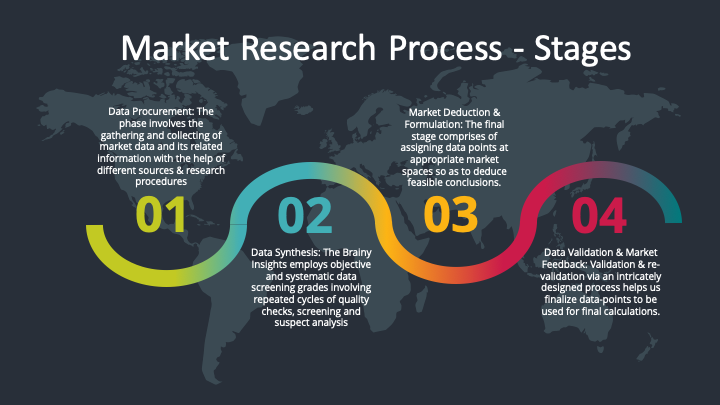
The phase involves the gathering and collecting of market data and its related information with the help of different sources & research procedures.
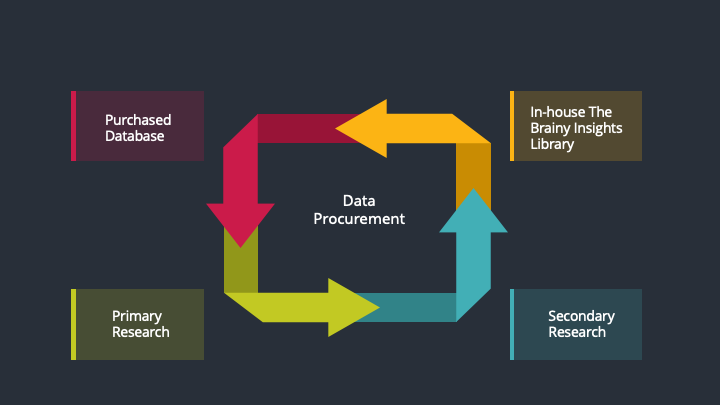
The data procurement stage involves in data gathering and collecting through various data sources.
This stage involves in extensive research. These data sources includes:
Purchased Database: Purchased databases play a crucial role in estimating the market sizes irrespective of the domain. Our purchased database includes:
Primary Research: The Brainy Insights interacts with leading companies and experts of the concerned domain to develop the analyst team’s market understanding and expertise. It improves and substantiates every single data presented in the market reports. Primary research mainly involves in telephonic interviews, E-mail interactions and face-to-face interviews with the raw material providers, manufacturers/producers, distributors, & independent consultants. The interviews that we conduct provides valuable data on market size and industry growth trends prevailing in the market. Our organization also conducts surveys with the various industry experts in order to gain overall insights of the industry/market. For instance, in healthcare industry we conduct surveys with the pharmacists, doctors, surgeons and nurses in order to gain insights and key information of a medical product/device/equipment which the customers are going to usage. Surveys are conducted in the form of questionnaire designed by our own analyst team. Surveys plays an important role in primary research because surveys helps us to identify the key target audiences of the market. Additionally, surveys helps to identify the key target audience engaged with the market. Our survey team conducts the survey by targeting the key audience, thus gaining insights from them. Based on the perspectives of the customers, this information is utilized to formulate market strategies. Moreover, market surveys helps us to understand the current competitive situation of the industry. To be precise, our survey process typically involve with the 360 analysis of the market. This analytical process begins by identifying the prospective customers for a product or service related to the market/industry to obtain data on how a product/service could fit into customers’ lives.
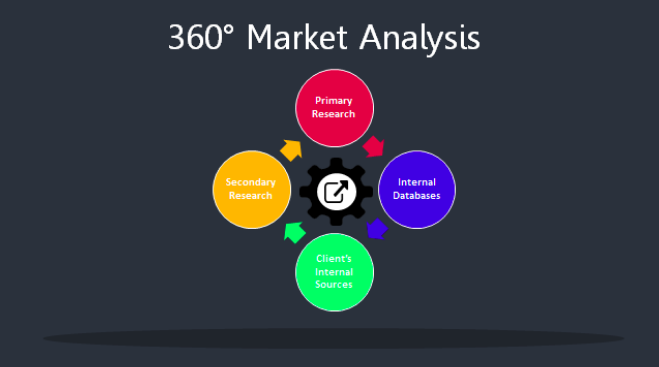
Secondary Research: The secondary data sources includes information published by the on-profit organizations such as World bank, WHO, company fillings, investor presentations, annual reports, national government documents, statistical databases, blogs, articles, white papers and others. From the annual report, we analyse a company’s revenue to understand the key segment and market share of that organization in a particular region. We analyse the company websites and adopt the product mapping technique which is important for deriving the segment revenue. In the product mapping method, we select and categorize the products offered by the companies catering to domain specific market, deduce the product revenue for each of the companies so as to get overall estimation of the market size. We also source data and analyses trends based on information received from supply side and demand side intermediaries in the value chain. The supply side denotes the data gathered from supplier, distributor, wholesaler and the demand side illustrates the data gathered from the end customers for respective market domain.
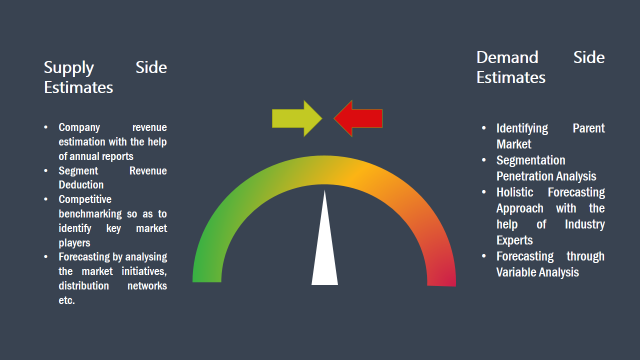
The supply side for a domain specific market is analysed by:
The demand side for the market is estimated through:
In-house Library: Apart from these third-party sources, we have our in-house library of qualitative and quantitative information. Our in-house database includes market data for various industry and domains. These data are updated on regular basis as per the changing market scenario. Our library includes, historic databases, internal audit reports and archives.
Sometimes there are instances where there is no metadata or raw data available for any domain specific market. For those cases, we use our expertise to forecast and estimate the market size in order to generate comprehensive data sets. Our analyst team adopt a robust research technique in order to produce the estimates:
Data Synthesis: This stage involves the analysis & mapping of all the information obtained from the previous step. It also involves in scrutinizing the data for any discrepancy observed while data gathering related to the market. The data is collected with consideration to the heterogeneity of sources. Robust scientific techniques are in place for synthesizing disparate data sets and provide the essential contextual information that can orient market strategies. The Brainy Insights has extensive experience in data synthesis where the data passes through various stages:
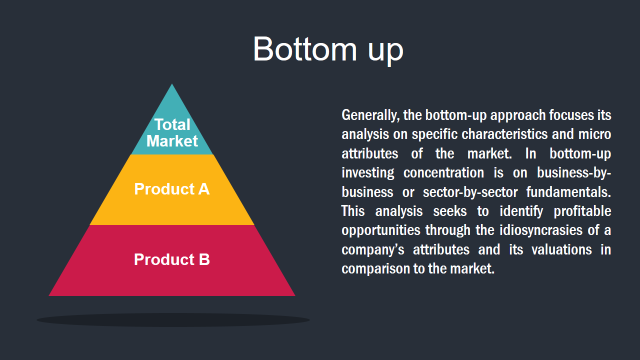
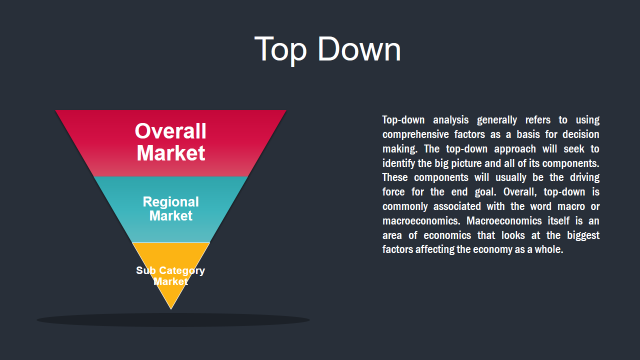
Market Deduction & Formulation: The final stage comprises of assigning data points at appropriate market spaces so as to deduce feasible conclusions. Analyst perspective & subject matter expert based holistic form of market sizing coupled with industry analysis also plays a crucial role in this stage.
This stage involves in finalization of the market size and numbers that we have collected from data integration step. With data interpolation, it is made sure that there is no gap in the market data. Successful trend analysis is done by our analysts using extrapolation techniques, which provide the best possible forecasts for the market.
Data Validation & Market Feedback: Validation is the most important step in the process. Validation & re-validation via an intricately designed process helps us finalize data-points to be used for final calculations.
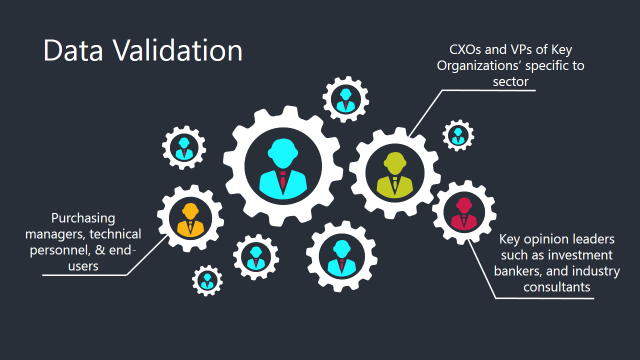
The Brainy Insights interacts with leading companies and experts of the concerned domain to develop the analyst team’s market understanding and expertise. It improves and substantiates every single data presented in the market reports. The data validation interview and discussion panels are typically composed of the most experienced industry members. The participants include, however, are not limited to:
Moreover, we always validate our data and findings through primary respondents from all the major regions we are working on.



















































Free Customization
Fortune 500 Clients
Free Yearly Update On Purchase Of Multi/Corporate License
Companies Served Till Date